
What Is the Difference Between Wood Chips and Mulch?
When you choose wood chips, you get chunky, slow-decomposing pieces that improve soil structure gradually and last for years. They are ideal for durability and aeration.
Mulch, however, usually means finer, more uniform material that breaks down faster, releasing nutrients quickly while suppressing weeds and retaining moisture effectively.
Both serve specific landscape needs, but their texture, longevity, and soil impact differ markedly. Understanding these distinctions helps optimize your garden’s health and aesthetics.

- Subtle Sweet flavor
- Chip size pieces
- Two pound bag


- 100% Organic & Peat-Free: Our organix mulch mix is 100% organic & peat-free. Peat is one of Mother…
- Intended for use in Mulch Soil: Our unique soil blend is ideal for nurturing herbs, vegetables, and…
- Better Moisture Control and Water Absorption: Our unique soil blend incorporates yucca extract for…
Key Takeaways
- Wood chips are larger, coarser pieces of wood, while mulch includes finer shredded materials like bark, leaves, or compost.
- Wood chips decompose slowly over 5+ years; mulch breaks down faster within 6 months to 2 years.
- Wood chips improve soil aeration and drainage due to their porosity; mulch forms a denser barrier for moisture retention and weed suppression.
- Mulch offers a neater, uniform appearance suitable for formal landscapes; wood chips provide a rustic, natural look with variable texture.
- Wood chips require less frequent replacement and are cost-effective long-term; mulch needs more regular replenishment for sustained benefits.
How Do Wood Chips Compare to Mulch?
| Feature | Wood Chips | Mulch |
|---|---|---|
| Texture | Chunky, coarse, irregular | Finer, shredded, uniform |
| Appearance | Rustic, natural, variable | Neat, uniform, polished |
| Decomposition Rate | Slow (lasts 2–5 years) | Fast (lasts 6 months–2 years) |
| Soil Impact | Gradual nutrient release, improves aeration | Quick nutrient release, better moisture retention |
| Weed Suppression | Good with thick layer | Excellent due to dense layer |
| Maintenance | Less frequent replenishment | More frequent replenishment |
| Best Uses | Pathways, trees, low-maintenance areas | Garden beds, formal landscapes |
| Cost | Generally lower, bulk discounts available | Varies; specialty types cost more |
Definition and Composition of Wood Chips and Mulch
Although wood chips and mulch are often used interchangeably, they differ markedly in definition and composition.
Wood chips consist of small to medium-sized pieces of chipped wood, derived from branches, trunks, bark, and sometimes roots. They’re primarily composed of hardwood or softwood, with minimal leaf debris, and typically processed using a wood chipper.
Their coarse, uniform structure decomposes slowly due to high lignin content. Wood chip mulch also provides slow nutrient release, supporting long-term soil health. Proper application and maintenance of wood chips can enhance their effectiveness and longevity.
Mulch, by contrast, is a broader category encompassing any material applied to soil for moisture retention, weed suppression, and soil health improvement. It includes organic materials like shredded bark, leaves, and compost, as well as inorganic substances like gravel and plastic.
Wood chips are one specific type of organic mulch, valued for durability and long-term ground coverage. Choosing the right mulch involves understanding the material properties and how they interact with the soil environment.
Differences in Appearance and Texture
When you take a closer look, you’ll see that wood chips have this chunky, irregular texture. It’s like nature’s way of giving it a porous surface that supports microbial activity.
On the flip side, mulch has this finer, shredded consistency that feels more uniform and dense. This finer texture allows mulch to decompose faster, offering quicker soil enrichment and nutrient release.
This difference isn’t just about how they look, though! It also impacts their porosity and how they interact with soil and moisture, which influences soil moisture retention.
So, when you’re deciding on ground cover, it’s really important to keep these distinctions in mind. They can affect both the beauty of your landscape and its function!
Chunky vs Shredded
When comparing chunky wood chips and shredded mulch, their distinct textures and sizes immediately stand out. Chunky wood chips feature larger, coarser pieces with irregular shapes, creating a rough, rustic texture.
In contrast, shredded mulch consists of finer, more uniform strands, offering a smooth, soft-to-touch surface.This fibrous mulch locks together densely, forming a consistent layer, while chunky chips remain loosely arranged with variable gaps.
The size difference affects not only appearance but also functional properties; chunky chips break down slower and provide durable coverage. Whereas shredded mulch decomposes faster, enriching soil more rapidly.
Additionally, the decomposition rate influences how frequently these mulches need to be replenished in garden beds. Understanding these textural nuances helps you choose the right material for specific landscaping needs, balancing aesthetics with practical benefits like moisture retention and soil protection.
Natural vs Uniform Look
Because wood chips come from chipped branches and trunks, they exhibit a coarser, chunkier texture with varying sizes. This gives your landscape a distinctly natural and rustic appearance. The irregularity in shape and size creates a textured groundwork ideal for informal or wildlife gardens where minimal human alteration is desired.
Additionally, wood chips last up to five years, offering durable ground cover that reduces maintenance frequency. Proper maintenance practices are essential to preserve their appearance and longevity in outdoor settings.
In contrast, mulch typically consists of finer, shredded particles with consistent size and shape. This produces a smooth, uniform surface that enhances neatness and order in formal garden designs. Mulch blends often include bark, leaves, or synthetics to maintain this polished, manufactured look.
While wood chips emphasize natural variation and depth, mulch prioritizes visual uniformity and curb appeal. Each is suitable for different aesthetic goals and landscape styles based on your desired balance between organic authenticity and refined presentation.
Porosity and Density
Although wood chips and mulch both serve as ground covers, their porosity and density substantially influence their appearance and texture. Wood chips, typically around 2 cm long, maintain substantial air pockets due to irregular stacking, enhancing root aeration and water drainage.
Mulch with finer particles, like sawdust, packs densely, reducing air gaps and increasing soil contact. This difference alters how each material looks and feels underfoot; wood chips appear coarse and loose, while fine mulch feels compact and uniform.
Larger wood chips create greater porosity and visible texture variations. Finer mulch particles produce denser, smoother surfaces with minimal air space. Bulk density fluctuates with moisture content and particle compaction. Porosity directly affects water retention and soil aeration efficiency.
Understanding these traits lets you choose the ideal ground cover for your landscape needs. Choosing materials with appropriate porosity and density can also impact soil health and plant growth over time.
Decomposition Rates and Longevity Comparison
You might’ve noticed that finer wood particles, like sawdust, tend to break down faster than those coarser wood chips. This definitely affects how often you need to replenish your mulch. Properly managing moisture by using waterproof sealants can help maintain mulch quality for longer periods.
For instance, pine bark and wood chips usually last about a year, which is pretty convenient. However, if you go for shredded hardwood mulches, they decompose more quickly. The upside? They enrich your soil with nutrients as they break down.
Organic mulches like these decompose over time, gradually improving soil health and promoting beneficial microorganisms.
Decomposition Speed Differences
When comparing wood chips and mulch, particle size plays a crucial role in their decomposition rates. Finer materials break down more rapidly than larger ones.
Wood chips, rich in cellulose, decompose faster than bark mulch, which contains more lignin, slowing decay. Shredded hardwood mulch, offering increased surface area, breaks down quicker than bark nuggets.
Additionally, wood chips mixed with foliage accelerate microbial activity, enhancing decomposition. Organic mulch generally decomposes quicker, requiring more frequent replenishment. Proper moisture conditions also significantly influence how quickly these materials break down.
Finer wood particles increase soil organic matter and cation exchange capacity (CEC). Hardwood bark decomposes slower due to lignin content. Softwood chips degrade faster than hardwood chips. Moist, warm environments amplify decomposition speed by fostering microbial growth.
Longevity and Replacement
Since wood chips decompose more slowly than most organic mulches, they offer superior longevity, often persisting for five years or more before requiring replacement. Their gradual breakdown reduces replenishment frequency, making them economical for long-term use, especially around trees or low-maintenance zones.
While wood chips maintain structural integrity over multiple seasons, they may shift on slopes or under wind. In contrast, regular organic mulches like shredded bark or straw decompose within 6 months to 2 years, necessitating more frequent replacement to sustain moisture retention and soil enrichment.
Environmental factors, such as temperature, moisture, and microbial activity, significantly influence both types’ lifespan. You can simply add new wood chips atop old layers without removal, whereas regular mulches often require annual invigorating.
Proper application and consistent depth optimize longevity and soil benefits for all mulch varieties. Additionally, maintaining appropriate moisture levels can prevent issues commonly seen in engineered wood floors, such as gaps caused by expansion and contraction, highlighting the importance of environmental control in wood product longevity.
Impact on Soil and Nutrient Release
Although wood chips and mulch both enhance soil health, their impact on nutrient release and soil enrichment differs markedly. Mulch decomposes rapidly, supplying nutrients quickly and stimulating microbial activity that benefits nutrient-demanding plants. Proper maintenance and care of soil and organic matter can further optimize these benefits.
In contrast, wood chips break down slowly, releasing nutrients gradually while improving soil structure over time but may initially deplete soil nitrogen. Understanding these differences helps you choose based on your soil’s immediate and long-term nutritional needs.
Mulch accelerates nutrient cycling, enriching soil fertility faster. Wood chips provide sustained nutrient release over extended periods. Mulch promotes rapid microbial colonization and organic matter input. Wood chips enhance soil structure and moisture retention gradually. Additionally, both materials aid in weed suppression and prevent soil erosion, contributing to overall soil health.
Effectiveness in Weed Suppression and Moisture Retention
Because effective weed suppression and moisture retention are critical for healthy plant growth, understanding how wood chips and mulch perform in these roles is essential.
Wood chips require a thick layer, at least 3 inches, to block sunlight and considerably reduce weed emergence. This thickness allows better airflow and slower decomposition, which maintains moisture longer.
Research has shown that wood chip mulch can significantly lower weed mass compared to untreated soil. Proper layering and coverage are important to maximize the protective benefits of wood chips, similar to how protective measures are critical for hardwood floor refinishing.
In contrast, mulch’s finer, denser texture forms a more uniform barrier, suppressing weeds more effectively by limiting light and air exposure at the soil surface. Mulch also reduces evaporation efficiently, conserving soil moisture, though it decomposes faster than wood chips and enhances soil structure over time.
Both materials need proper depth to optimize weed control and moisture retention, but their differing textures influence airflow and soil temperature moderation.
Cost Considerations and Availability
When budgeting for landscaping, understanding the cost variations between wood chips and mulch can help you make informed decisions. Wood chips typically range from $25 to $110 per cubic yard, with bulk orders reducing costs considerably. Considering long-term durability is also important when selecting materials for landscaping projects.
Knowing the cost differences between wood chips and mulch helps you budget your landscaping project wisely.
Mulch varies more broadly, from $25 to $400 per cubic yard, depending on type and specialty features. Delivery and installation fees can add $20–$55 per cubic yard, influenced by location and project size. Both materials are widely available in bagged or bulk forms, catering to different project scales. It is recommended to look up local mulch prices for more accurate estimates.
Wood chips: $2–$8 per 2-cubic-foot bag; mulch: $2–$13 per bag. Specialty mulches (rubber, colored) cost more than standard wood chips. Bulk discounts lower per-yard prices to $15–$40. Free delivery is possible with minimum bulk orders.
Practical Uses for Wood Chips and Mulch
Understanding the practical uses of wood chips and mulch helps you optimize your landscaping efforts for soil health, moisture management, weed control, and aesthetics.
You’ll find wood chips excel at slowly enriching soil organic matter, fostering beneficial microbes, and stabilizing pathways to reduce erosion. Their application can also protect against erosion by restabilizing soil after construction or land management projects.
Mulch, with its finer texture, enhances moisture retention, suppresses weeds more uniformly, and integrates rapidly into soil, making it ideal for permanent garden beds. Both materials insulate roots, lower evaporation, and block sunlight to inhibit weeds.
Mulch’s varied colors and textures offer superior design flexibility. Choosing wood chips for rustic borders or mulch for clean, uniform coverage lets you tailor your landscape’s function and appearance.
This also supports sustainable practices by recycling organic waste and reducing chemical fertilizer dependence.
Frequently Asked Questions
Can Wood Chips or Mulch Attract Pests to My Garden?
Yes, wood chips and certain mulches can attract pests like termites, carpenter ants, slugs, and fungal insects due to their organic, moisture-retentive nature.
To minimize risks, avoid piling them directly against wooden structures and consider pest-repellent options like cedar or cypress mulch.
Composting wood chips before use and maintaining natural predator habitats also help you manage pest populations effectively, preserving your garden’s health and balance.
How Should I Store Wood Chips to Prevent Spoilage?
You should store wood chips in thin layers under the sun or in well-ventilated spaces to minimize spoilage. Keep the pile slightly damp but never wet enough to clump or steam, balancing moisture carefully.
Stack chips below 50 feet, alternating coarse and fine pieces for airflow. Avoid dense, conical piles and turn the material periodically to prevent anaerobic decay. Choose a shaded, wind-exposed site away from flooding for ideal preservation.
Are Wood Chips Safe to Use Around Edible Plants?
“Better safe than sorry” applies here. You can safely use wood chips around edible plants if you apply them on soil surfaces, avoiding mixing fine chips into beds to prevent nitrogen depletion. Source chips from trusted suppliers to avoid herbicide residues and never use dyed or treated chips near veggies.
Dry or compost chips before use to eliminate pathogens. Keep mulch away from stems to reduce disease and place chips on pathways to minimize pest habitats effectively.
Can Wood Chips Cause Soil Acidity Issues?
You won’t face soil acidity issues using wood chips as mulch. Fresh chips may produce brief acidity during early decomposition, but this quickly neutralizes without affecting plant health.
In fact, wood chips can raise soil pH slightly over time or lower it beneficially in alkaline soils. Applying chips on the surface avoids nitrogen depletion risks, ensuring your soil chemistry remains balanced while supporting robust plant growth.
Is It Okay to Mix Wood Chips and Mulch Together?
Yes, you can blend wood chips and mulch effectively. Combining them balances moisture retention and aeration, improving soil health by providing both quick and sustained nutrient release.
Just make certain wood chips are well-aged to avoid acidity issues. A 2-4 inch layer works best for coverage and weed suppression. This mix enhances water infiltration and prevents erosion, especially on slopes, while offering a pleasing texture and longer-lasting ground cover.
Make the Smart Choice: Wood Chips or Mulch for Your Soil
When choosing between wood chips and mulch, remember their unique roles. Wood chips, with slower decomposition, offer long-lasting ground cover, while mulch breaks down faster, enriching soil more quickly.
Contrary to popular belief, neither is universally better; your choice depends on specific needs like weed control or nutrient release. By understanding their distinct properties, you can optimize your landscape’s health and appearance with precision and purpose.
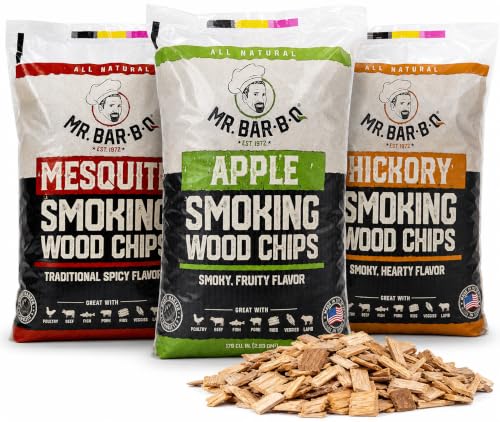
- 3-PACK VARIETY OF PREMIUM SMOKING WOOD CHIPS – Elevate every barbecue with this ultimate smoking…
- 100% NATURAL HARDWOOD SMOKING CHIPS FOR CLEAN, AUTHENTIC FLAVOR – Unlock bold, natural BBQ flavor…
- 3 BOLD FLAVORS FOR THE ULTIMATE BBQ EXPERIENCE – Elevate your grilling game with our Premium…

- ALL-NATURAL INGREDIENTS: No added fertilizers or pesticides
- USES: Potted plant decor, landscaping, terrariums, or soil supplement, soil barrier, bonsai care
- BENEFITS: Drainage, enhances appearance, water retention, blocks pesky creatures
Last update on 2026-10-06 / Affiliate links / Images from Amazon Product Advertising API