Waterproof Laminate vs LVP Flooring: Which Win for Home?
If you want budget-friendly flooring for large dry areas, waterproof laminate offers sharp wood visuals and solid scratch resistance. It also saves you money.
But if you need truly waterproof flooring that handles constant moisture or high traffic, LVP is your best bet. Its easy installation and durability justify the higher cost.
Laminate works well for living rooms or bedrooms, while LVP excels in bathrooms and basements. Exploring their pros and cons can help you pick the perfect fit for your space.
Key Takeaways
- LVP is 100% waterproof, ideal for bathrooms and basements, while waterproof laminate resists spills up to 24 hours but can swell if water penetrates.
- Waterproof laminate costs 15–25% less than LVP, making it more budget-friendly for large spaces with less moisture exposure.
- Laminate offers firmer, more realistic wood grain and better scratch resistance at comparable prices than most LVP options.
- LVP is easier to install with a forgiving click-lock system and provides a softer, warmer feel underfoot than laminate.
- LVP lasts 15–20 years in high-moisture areas; laminate typically lasts 10–15 years with prompt spill cleanup and proper maintenance.
Key Differences Between Waterproof Laminate and LVP Flooring
| Feature | Waterproof Laminate | Luxury Vinyl Plank (LVP) |
|---|---|---|
| Water Resistance | Water-resistant for about 24+ hours; core may swell if water penetrates | 100% waterproof; can withstand long-term moisture and submersion |
| Cost | Usually 15–25% cheaper than LVP; budget-friendly for large spaces | Higher upfront cost but better long-term value in wet areas |
| Durability | Strong scratch resistance with AC4–AC5 ratings | Very durable, especially premium options with 20+ mil wear layer |
| Scratch Resistance | Typically better at similar price points | Good scratch resistance; premium options match laminate |
| Installation | Click-lock system but requires more precision | Easier and faster installation with a more forgiving click-lock system |
| Comfort Underfoot | Firmer feel, similar to real hardwood | Softer and warmer, more comfortable for long standing |
| Appearance | Often has more realistic wood grain and sharper visuals | Good wood appearance but slightly more uniform texture |
| Best Rooms | Living rooms, bedrooms, hallways, low-moisture spaces | Bathrooms, basements, kitchens, laundry rooms |
| Maintenance | Requires quick spill cleanup to avoid swelling | Very low maintenance; spills and moisture cause no damage |
| Lifespan | Around 10–15 years with proper care | Typically 15–20 years, especially in wet or high-traffic areas |
| Large Space Value | More affordable for covering large areas | Better performance where moisture or heavy traffic is expected |
| Overall Strength | Best for budget, scratch resistance, and realistic wood look | Best for waterproof protection, comfort, and durability |
Cost Comparison: Waterproof Laminate vs LVP
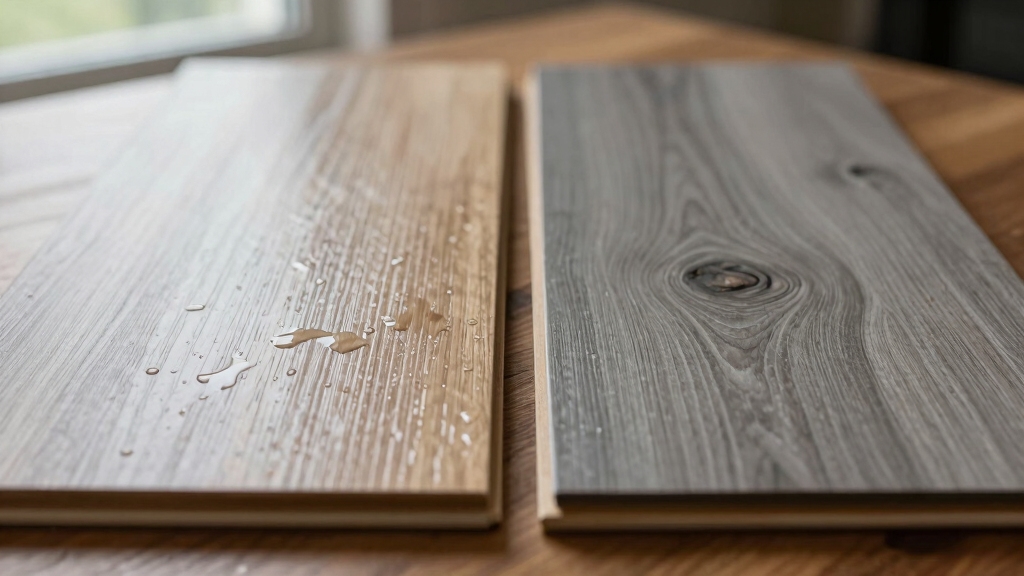
While both waterproof laminate and luxury vinyl plank (LVP) flooring offer durable, water-resistant solutions, you’ll typically find waterproof laminate costs 15-25% less than comparable-quality LVP. This price gap widens with premium products, making waterproof laminate especially appealing for large projects.
For example, choosing AC4-rated waterproof laminate can save you thousands when covering extensive square footage without sacrificing durability. If you’re budget-conscious and want solid performance, waterproof laminate is ideal for bedrooms and low-moisture areas.
In contrast, waterproof vinyl plank flooring generally costs more but can deliver better value in moisture-prone spaces. Ultimately, your choice depends on balancing upfront costs with application needs. If saving money is a priority while maintaining quality, waterproof laminate stands out as a practical, cost-effective option.
Additionally, proper installation with underlay and moisture barriers is crucial to prevent damage and ensure longevity for laminate flooring.
Water Resistance: Laminate vs LVP
When it comes to water resistance, you’ll want to carefully weigh the differences between waterproof laminate and luxury vinyl plank (LVP).
LVP is 100% waterproof, able to withstand indefinite submersion without damage. This makes it ideal for full bathrooms and areas with constant moisture.
Waterproof laminate offers excellent water resistance too, protecting against spills for 24+ hours thanks to its protective barriers. However, its wood-based core can swell if water penetrates these layers over time.
Curiously, laminate has a slight edge over LVP for quick spills due to its surface treatment. However, it’s not designed for prolonged exposure.
If you need flooring for moisture-prone spaces, LVP’s impermeability gives it a clear advantage. Waterproof laminate suits rooms with occasional, short-term exposure.
It is important to note that LVP’s synthetic, moisture-resistant PVC composition enhances its durability and water resistance compared to wood-based products.
Durability: Waterproof Laminate vs LVP
When you’re trying to decide between waterproof laminate and LVP, scratch resistance is definitely something to think about. Typically, AC4 and AC5 laminates really shine in this area and often outperform similar LVP options. That said, some premium LVP can hold its own and match those laminate scores.
Now, let’s talk about water damage. This is where things get interesting. Laminate cores can swell if moisture sneaks in, which isn’t great. On the flip side, vinyl planks are built to withstand tough conditions, so they stay intact even when faced with a lot of water.
If you’re dealing with high-traffic commercial spaces, then higher-grade LVP is usually the way to go. It’s designed for durability and can outlast laminate, making it the smarter choice when wear and tear are a constant concern.
Additionally, LVP’s high moisture resistance makes it ideal for areas prone to spills and humidity, unlike laminate which can suffer from swelling and warping.
Scratch Resistance Comparison
You’ll often find that AC4 and AC5 waterproof laminates resist scratches better than LVP flooring at similar price points. When you’re choosing flooring for high-traffic areas or homes with pets and kids, scratch resistance is key.
While premium LVP with a 20+ mil wear layer rivals laminate’s durability, more affordable LVP falls short. Consider these points when evaluating scratch resistance:
Laminate’s tougher surface withstands sharp impacts but can’t be repaired once scratched, risking delamination. LVP offers decent resistance and can handle commercial traffic in higher grades.
Both materials protect well against everyday wear, but laminate edges ahead for budget-conscious durability. Knowing this helps you pick flooring that balances longevity with maintenance needs in your space. For enhanced scratch resistance, look for LVP with UV-cured urethane coatings and ceramic reinforcement to improve durability and appearance.
Water Damage Impact
Water damage resilience plays a crucial role in flooring durability, especially in areas prone to spills or humidity.
When you choose waterproof laminate, you get strong protection against short-term water exposure, typically up to 24 hours. This is due to its water-resistant core and sealed edges.
However, if water penetrates these barriers and soaks the wood-based core, swelling and damage can occur.
On the other hand, Luxury Vinyl Plank (LVP) flooring is fully waterproof and can withstand prolonged submersion without warping or swelling. This makes it ideal for bathrooms and wet environments.
While waterproof laminate holds up well against occasional spills, LVP offers superior protection where moisture exposure is constant or severe.
Your choice should reflect the specific moisture challenges your space faces to guarantee lasting durability.
Additionally, LVP’s waterproof nature makes it particularly suitable for moisture-prone areas where engineered hardwood or laminate might fail.
Commercial Traffic Durability
Although both waterproof laminate and Luxury Vinyl Plank (LVP) offer solid durability for residential use, LVP clearly outperforms laminate in commercial high-traffic environments.
When you’re dealing with constant foot traffic, LVP’s premium 20+ mil wear layers provide superior resistance to scratches, dents, and wear compared to AC4/AC5 laminate.
Laminate’s wood-based core may delaminate under prolonged stress, while LVP maintains integrity.
For commercial settings, durability means longevity and lower maintenance costs; LVP delivers this effectively.
Consider these factors for commercial durability:
- LVP withstands heavy foot traffic without visible wear or damage.
- Laminate resists scratching well but can’t match LVP’s resilience in extreme use.
- LVP’s moisture-impervious core prevents swelling and warping in busy, damp areas.
Choosing LVP guarantees you invest in flooring that stays durable under commercial pressures.
Additionally, using adhesives with moisture-resistant properties can further enhance the longevity and stability of LVP installations in demanding commercial environments.
Installation: Laminate vs LVP
When tackling installation, both waterproof laminate and LVP feature user-friendly click-and-lock systems designed for straightforward DIY projects.
However, LVP often edges out laminate in ease of installation thanks to its slightly more forgiving locking mechanism. This lets you work faster and with less frustration.
Waterproof laminate requires more precision during fitting, making it better suited for professionals or experienced DIYers. You’ll need to make certain tight seams and apply a silicone perimeter seal to boost water protection.
While laminate installation demands careful alignment to avoid gaps or damage, LVP’s flexibility and waterproof core handle minor imperfections more gracefully.
Ultimately, if you want a hassle-free, quick install, LVP may be the smarter choice. However, with patience and skill, laminate installation can be equally successful.
Additionally, LVP installation usually requires an underlayment for cushioning, which adds comfort and soundproofing benefits.
Appearance and Texture: Laminate vs LVP
When you’re deciding between waterproof laminate and LVP, it’s good to think about how each one mimics natural wood. Laminate tends to have a more realistic wood look, which can really elevate your space. On the other hand, LVP gives off a warm, cozy vibe that makes a room feel inviting.
You might also notice that LVP feels a bit softer underfoot. This can really make a difference if you’re standing or walking around a lot. So, keeping these subtle differences in mind can help you choose the flooring that best matches your style and comfort needs.
Additionally, considering the durability and water resistance of each option is crucial for long-lasting performance in different environments.
Wood Realism Comparison
Both waterproof laminate and LVP deliver convincing wood aesthetics, but each offers distinct advantages in appearance and texture.
When you want the most realistic wood grain and detailed embossing, waterproof laminate excels with its sharper, more natural wood visuals.
LVP, meanwhile, gives you an authentic look with a slightly softer texture that enhances cozy, inviting spaces.
Consider these key points:
- Waterproof laminate mimics real wood closely with pronounced grain patterns and natural color variations.
- LVP offers varied wood tones and textures but leans toward a uniform, softer touch.
- Both styles provide a clean, modern appearance but differ in tactile feel and visual depth.
Understanding these differences helps you select the wood realism that fits your design priorities perfectly.
To maintain the beauty and longevity of both flooring types, choosing the right cleaning products is essential for preserving their appearance and finish.
Comfort and Feel
You’ll notice a distinct difference in comfort and feel between waterproof laminate and LVP flooring.
Waterproof laminate offers a firmer, more authentic wood texture, ideal if you prefer a solid underfoot sensation.
LVP, on the other hand, feels softer and warmer, providing a more cushioned experience that’s easier on your joints, especially in high-traffic areas.
Using non-slip furniture pads can help maintain stability and protect your flooring regardless of the material you choose.
| Feature | Waterproof Laminate | LVP |
|---|---|---|
| Texture | Firm, realistic wood feel | Softer, cushioned surface |
| Temperature | Cooler, less forgiving | Warmer, comfortable to stand on |
| Comfort Level | Solid support, less bounce | Gentle underfoot comfort |
Choose based on your preference for tactile sensation and room use.
Best Room Uses for Waterproof Laminate and LVP
Since selecting the right flooring depends on the specific room’s demands, understanding where waterproof laminate and LVP excel helps you make an informed choice.
Choosing the right flooring hinges on your room’s needs and where each material performs best.
Waterproof laminate offers a cost-effective, durable option for areas with occasional spills but limited moisture exposure. LVP, fully waterproof and more resistant to constant humidity, suits rooms prone to water, like bathrooms and basements.
Consider these best room uses:
Waterproof Laminate: Bedrooms, living rooms, powder rooms, where water exposure is minimal and you want a realistic wood look at a lower cost.
LVP: Full bathrooms and basements, where moisture and humidity are constant, ensuring long-term waterproof performance.
Kitchens: Both work well, but LVP is safer if leaks or spills are frequent.
Choose based on moisture levels and budget for peak flooring performance.
Maintenance and Longevity of Laminate vs LVP
Understanding where to place waterproof laminate and LVP is just the start. Knowing how to care for them and how long they last will help you protect your investment.
Waterproof laminate requires prompt spill cleanup to avoid moisture seeping into its wood-based core. This can cause swelling and delamination. Regular sweeping and damp mopping with pH-neutral cleaners keep it looking sharp without damaging the surface.
LVP’s fully waterproof nature makes it more forgiving. Spills won’t harm it, and it resists stains and scratches well, especially higher-grade options. Both flooring types handle everyday wear effectively, but LVP typically offers greater longevity in high-moisture or high-traffic areas.
With proper maintenance, you can expect waterproof laminate to last 10-15 years. LVP often endures 15-20 years, preserving your home’s aesthetics and functionality longer.
Value for Large Spaces: Laminate vs LVP
When covering large spaces, choosing between waterproof laminate and LVP hinges largely on balancing cost with performance. Waterproof laminate typically costs 15-25% less than comparable LVP, making it a smart choice if you want to save thousands on big projects.
The AC4 waterproof laminate offers excellent durability and water resistance for its price, especially in living rooms or bedrooms. However, if you need superior moisture protection or plan to install in areas with constant humidity, LVP is worth the extra investment.
Consider these factors for large areas:
- Waterproof laminate maximizes budget with solid scratch resistance and a realistic wood look.
- LVP provides 100% waterproofing and durability for high-moisture spaces.
- Installation ease favors LVP, but laminate suits precision DIY projects well.
Choosing Between Waterproof Laminate and LVP for Your Home
Balancing cost and performance is just the start when choosing between waterproof laminate and LVP for your home.
If you’re after value, waterproof laminate is 15-25% cheaper and offers excellent scratch resistance. This makes it ideal for bedrooms and large areas.
But if moisture is a concern, LVP’s 100% waterproof core is unbeatable, especially in bathrooms or basements.
Installation favors LVP for ease, while laminate demands precision but delivers a more authentic wood look.
| Factor | Waterproof Laminate | LVP |
|---|---|---|
| Cost | 15-25% less | Higher upfront cost |
| Water Resistance | 24+ hour spill protection | Fully waterproof, submersible |
| Durability | Superior scratch resistance (AC4) | Matches laminate with premium |
| Installation | Requires precision, DIY possible | Easier click-lock system |
Choose based on your space’s moisture and budget priorities.
Frequently Asked Questions
Are Waterproof Laminate and LVP Eco-Friendly Flooring Options?
You’ll find that both waterproof laminate and LVP have eco-friendly aspects, but they’re not equally green.
Waterproof laminate uses wood-based cores, which come from renewable sources, making it partially sustainable.
LVP, made from vinyl, relies on petroleum products and isn’t biodegradable but can be recycled in some programs.
If you prioritize eco-conscious choices, waterproof laminate generally has a smaller environmental footprint.
Always check product certifications and disposal options.
Can Waterproof Laminate or LVP Be Installed Over Radiant Heating Systems?
Yes, you can install both waterproof laminate and LVP over radiant heating systems, but you need to follow manufacturer guidelines carefully.
LVP handles radiant heat very well due to its vinyl composition, offering stable performance and comfort.
Waterproof laminate also works but requires precise installation to prevent warping or damage from heat fluctuations.
Always make certain the heating system’s surface temperature stays below recommended limits, usually around 85°F, to protect your flooring investment.
How Do Waterproof Laminate and LVP Affect Indoor Air Quality?
You know what they say: “You are what you breathe.” Both waterproof laminate and LVP impact indoor air quality, but LVP generally emits fewer volatile organic compounds (VOCs) thanks to its vinyl composition.
Waterproof laminate can release more VOCs during and after installation due to adhesives and wood-based cores. To protect your health, choose low-VOC certified products.
Make certain proper ventilation during installation and afterward to keep your indoor air fresh and safe.
Are There Differences in Warranty Coverage Between Waterproof Laminate and LVP?
Yes, warranty coverage differs between waterproof laminate and LVP.
You’ll find LVP usually offers longer, more comprehensive warranties, often 20 to 30 years, covering wear, water damage, and sometimes even installation issues.
Waterproof laminate warranties tend to be shorter, around 10-15 years, focusing mainly on wear and water resistance but less on prolonged moisture exposure.
Always review terms carefully to make certain your investment is protected based on your flooring’s location and usage.
Which Flooring Option Is Better for Allergy Sufferers, Laminate or LVP?
If you want a flooring that plays well with sensitive noses, LVP is your friend.
It doesn’t trap dust or allergens as much as laminate can, thanks to its non-porous surface and moisture resistance.
Plus, it’s easier to clean thoroughly, reducing irritants.
While laminate looks great, its wood core might harbor allergens if moisture seeps in.
LVP or Waterproof Laminate: The Smart Choice for Modern Homes
When choosing between waterproof laminate and LVP, consider that LVP sales have surged by over 60% in recent years due to its superior water resistance and durability.
If you want a reliable, long-lasting floor for high-moisture areas, LVP might be your best bet. However, waterproof laminate offers great value for large spaces and easier installation.
Weigh your priorities carefully to select the option that fits your home’s needs and budget perfectly.