Parquet Vs Hardwood Flooring: Which Should You Choose?
You’ll choose parquet flooring for its intricate geometric patterns that create bold, artistic focal points, perfect for entryways or formal spaces.
Hardwood flooring offers long, classic planks that enhance openness and timeless warmth, ideal for large rooms.
Parquet demands precise installation and higher cost but elevates elegance; hardwood is easier to maintain and refinish.
Both bring natural wood beauty, yet your choice hinges on style impact, durability, and spatial needs. There’s more to weigh to perfect your flooring decision.
Key Takeaways
- Parquet flooring features intricate geometric patterns using small wood blocks, while hardwood flooring uses long, parallel planks for a classic look.
- Parquet is ideal for formal, focal areas like entryways, adding artistic elegance; hardwood suits broad, open spaces with timeless spatial flow.
- Parquet often uses engineered construction for stability and pattern precision; hardwood offers solid planks that can be sanded and refinished multiple times.
- Installation of parquet requires skilled labor for precise alignment, while hardwood installation is simpler and faster with tongue-and-groove planks.
- Parquet flooring generally costs more ($15-$50/sq ft) due to complexity, while hardwood is more budget-friendly ($6-$18/sq ft) and versatile.
Parquet vs Hardwood Flooring: Side-by-Side Comparison for Easy Decision
| Feature | Parquet Flooring | Hardwood Flooring |
|---|---|---|
| Design Style | Intricate geometric patterns (herringbone, etc.) | Simple, long planks for a classic look |
| Visual Impact | Bold, artistic, and eye-catching focal point | Subtle, timeless elegance |
| Installation | Complex, requires skilled professionals | Simpler, faster installation |
| Cost Range | Higher due to design complexity | More budget-friendly overall |
| Durability | Stable, resists minor wear visually | Highly durable, refinishable multiple times |
| Maintenance | Needs careful, professional refinishing | Easier upkeep and DIY refinishing |
| Best For | Entryways, dining rooms, statement spaces | Living rooms, bedrooms, large open areas |
| Longevity | Long-lasting with proper care | Very long lifespan with refinishing ability |
What’s the Main Difference Between Parquet and Hardwood Flooring?

While both parquet and hardwood flooring bring natural warmth and elegance to your space, their main difference lies in design and construction.
Parquet and hardwood flooring both add warmth and elegance, differing primarily in design and construction.
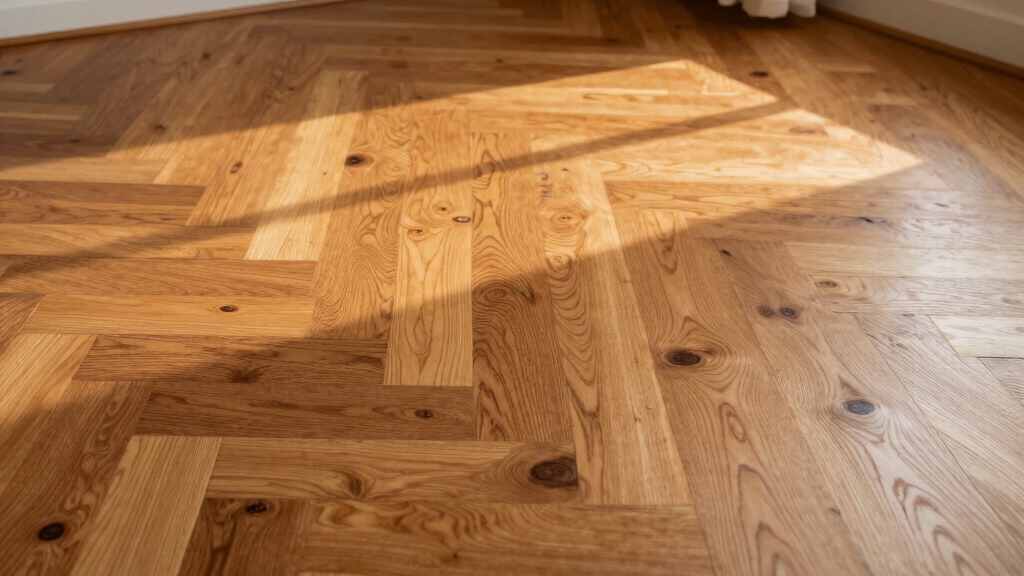
Parquet flooring showcases intricate geometric patterns like herringbone or basketweave, crafted from smaller wood blocks arranged meticulously. This offers a bold, artistic statement.
Hardwood flooring, in contrast, uses straightforward, long planks laid parallel, delivering a classic, versatile appeal.
When you choose parquet, you embrace a sophisticated, formal elegance that enhances focal areas such as dining rooms or entryways. Hardwood suits broader applications with its timeless uniformity.
Construction-wise, parquet’s engineered layers provide dimensional stability, whereas hardwood solid planks emphasize density and durability.
Understanding these distinctions helps you select flooring that complements your room’s character and usage, blending material expertise with spatial harmony.
Additionally, considering factors like surface finish and plank size when selecting your flooring can significantly influence the room’s overall visual effect and cohesion.
How Parquet Flooring Patterns Create Unique Style Statements?
You know, parquet flooring really has a way of transforming your space. Those intricate geometric designs, like herringbone and chevron, just draw the eye in, don’t they? It’s amazing how they can elevate the character of a room.
But it’s not just about decoration; these patterns actually shape the ambiance. They add depth and a certain rhythm to your floors that you can really feel. So, when you choose parquet, you’re not just picking a floor—you’re embracing a bold style statement that’s both artistic and timeless.
How cool is that? Mirage offers a variety of wood species and finishes that complement parquet’s unique style, all while being FSC certified for sustainability.
Intricate Geometric Designs
Because parquet flooring arranges wood pieces into intricate geometric patterns like herringbone, chevron, and basketweave, it transforms any space into a visual masterpiece.
You’ll notice how these precise arrangements create dynamic movement across the floor, guiding the eye and defining the room’s character.
Unlike straightforward hardwood planks, parquet’s small, uniform blocks allow you to experiment with pattern complexity, giving your floor a refined, artistic edge.
This layering of shapes adds depth and texture, elevating even simple interiors.
When you choose parquet, you’re selecting not just flooring but a crafted work of art that balances geometry with natural wood grain, turning your space into a statement of elegance and thoughtful design.
Incorporating parquet with a herringbone pattern enhances both style and spatial perception, making your room feel more dynamic and architecturally refined.
Pattern Impact On Ambiance
When you step onto a parquet floor, the intricate patterns don’t just catch your eye. They shape the entire room’s mood.
The geometric designs like herringbone or chevron draw your gaze, creating movement and rhythm that energize or calm a space depending on the pattern’s direction and scale.
You’ll notice how parquet’s mosaic effect adds sophistication, turning a simple floor into a bold artistic statement.
Unlike uniform hardwood planks, parquet’s varied grain directions play with light and shadow, enhancing spatial depth and ambiance.
Whether in an entryway or dining room, these patterns elevate your interior’s formality while masking minor wear.
Choosing parquet means you’re not just installing flooring; you’re crafting an immersive style experience that defines your room’s character.
Additionally, selecting parquet flooring with warm, natural tones can further enhance the inviting atmosphere created by its patterns.
Why Hardwood Planks Offer Classic, Versatile Looks?
Hardwood planks really do bring a timeless design to the table, don’t they? They fit right into any interior style, making it super easy to incorporate them into your home. Whether you’re going for something classic or leaning towards a modern vibe, the straightforward, linear layout of hardwood adapts beautifully.
Plus, they create such a warm and cohesive atmosphere. It’s like they’ve this natural ability to enhance the flow of your room without being too overpowering. Honestly, with hardwood, you’re getting a versatile foundation that just elevates your space effortlessly.
Choosing from popular colors like warm honey and golden tones can add a cozy, inviting glow that enhances natural light and warmth.
Timeless Design Appeal
Although parquet flooring captures attention with its intricate patterns, hardwood planks offer a timeless design appeal that effortlessly blends with any interior style.
When you choose hardwood, you embrace a classic look defined by clean, linear planks laid in parallel. This simplicity creates a versatile canvas, enhancing spatial flow and complementing both traditional and modern décor without overwhelming the room.
The natural grain and warm tones of hardwood add depth and character, allowing light to interact gracefully with the floor’s surface. Its straightforward layout emphasizes room proportions and furniture placement, making your space feel open and balanced.
Hardwood’s enduring elegance guarantees your floor remains stylish through evolving trends, making it a smart, lasting choice for any home. Additionally, hardwood floors can be installed over radiant heating systems, with engineered wood providing improved heat stability for comfort and durability.
Adaptable Interior Styles
Because hardwood planks feature clean, linear designs, they easily adapt to a variety of interior styles, making them a reliable choice for any space you envision.
Their classic simplicity complements everything from sleek modern minimalism to warm, rustic charm.
You can highlight natural grain patterns, enhancing spatial flow without overwhelming the room.
Hardwood’s uniform planks create a seamless canvas that balances furniture and decor, allowing your personal style to shine.
Unlike parquet’s intricate patterns, hardwood offers subtle versatility, blending effortlessly with textured fabrics, bold colors, or muted tones.
Whether you’re designing a cozy bedroom or an expansive living area, hardwood planks provide timeless elegance and spatial harmony.
Their adaptability guarantees your flooring remains a lasting foundation for evolving interior trends and your unique aesthetic vision.
Additionally, choosing prefinished hardwood flooring with factory-applied finishes ensures consistent durability and reduces installation time, enhancing both practicality and style.
How Parquet and Hardwood Flooring Costs Compare?
When comparing parquet and hardwood flooring, cost plays a pivotal role in your decision-making process.
Parquet, with its intricate geometric patterns, demands more labor, pushing prices between $15 and $50 per square foot installed. This investment reflects the artistic statement you create in your space.
Hardwood flooring, offering straightforward linear planks, typically costs less, ranging from $6 to $18 per square foot, making it a budget-friendly option for classic elegance.
Engineered parquet may use cheaper base woods, sometimes balancing costs against solid hardwood.
Ultimately, consider how each flooring’s price aligns with your aesthetic goals and spatial design. Parquet’s complexity adds sophistication but at a premium, while hardwood provides timeless versatility without stretching your budget as much.
Before installation, it is important to assess the condition of the existing hardwood to ensure a successful and durable flooring project.
How Installation Differs Between Parquet and Hardwood Flooring?
When you’re installing parquet, you’ll find yourself working with intricate geometric patterns that really require a keen eye for detail and a steady hand. It’s a bit of a puzzle, honestly!
On the flip side, hardwood flooring is a whole different ballgame. With its long, uniform planks, the installation process is much more straightforward and linear—definitely easier to handle if you’re looking for something less complicated.
Now, think about the size differences. Parquet blocks are smaller and uniform, which adds to the challenge, while hardwood boards are lengthy. This size difference not only affects how you lay them down but also how each material can transform your space during the installation process.
Additionally, when dealing with engineered hardwood, it’s important to consider the adhesive removal process if ever you need to replace or repair the flooring.
Pattern Complexity Requirements
Although both parquet and hardwood flooring bring warmth and character to your space, their installation demands differ substantially due to pattern complexity.
Parquet flooring involves laying small, uniform blocks in intricate geometric patterns like herringbone or chevron. This requires precise alignment and careful planning to achieve that bold, artistic statement.
You’ll need to take into account how each piece fits spatially to maintain the seamless flow of the design.
Hardwood, on the other hand, uses long, linear planks installed parallel for a classic, uniform look. This makes the process more straightforward and less time-consuming.
When choosing parquet, you’re embracing complexity that elevates a room’s elegance. Meanwhile, hardwood offers simplicity and versatility with a cleaner installation rhythm.
Your choice depends on whether you want intricate artistry or timeless ease.
Proper staggering of hardwood planks during installation enhances the floor’s structural integrity and visual appeal, which is less critical in parquet patterns.
Professional Skill Necessity
Since parquet flooring relies on intricate mosaic patterns like herringbone and chevron, it demands the expertise of skilled professionals to guarantee precision and flawless alignment.
You’ll need an installer who understands the spatial rhythm and visual balance these small, uniform blocks create, ensuring each piece fits perfectly to maintain the pattern’s integrity.
Hardwood flooring installation is more straightforward; it uses long, linear planks with tongue-and-groove joints that streamline placement and require less specialized skill.
When you choose parquet, expect meticulous labor to achieve that sophisticated, artistic statement. Hardwood’s simpler layout offers versatility and faster installation.
Knowing these differences helps you appreciate the craftsmanship parquet demands versus the efficiency of hardwood fitting, guiding your decision based on aesthetic priorities and installation complexity.
Material Size Differences
You’ll notice that parquet flooring uses smaller, uniform blocks compared to the long, linear planks typical of hardwood. This difference profoundly shapes installation.
With parquet, you’ll carefully arrange countless petite pieces into intricate geometric patterns, demanding precision and patience to achieve seamless alignment. The smaller size allows for artistic expression but requires a skilled touch to maintain consistent spacing and pattern fidelity.
Hardwood planks, longer and wider, simplify layout with straightforward tongue-and-groove connections, letting you establish uniform linear runs quickly.
Spatially, parquet’s compact blocks adapt elegantly to smaller or focal areas, creating visual texture, while hardwood’s expansive planks enhance openness and flow in larger rooms.
Understanding these material size differences helps you anticipate installation complexity and design impact, ensuring your flooring choice harmonizes with your space’s character and your skill level.
Which Flooring Lasts Longer and Handles Wear Better?
When considering which flooring lasts longer and handles wear better, you’ll find both parquet and hardwood bring distinct strengths to the table.
Hardwood’s dense solid planks offer remarkable durability and can be sanded and refinished multiple times, ensuring longevity and preserving their classic beauty.
Hardwood’s solid planks provide lasting durability and can be refinished repeatedly to maintain timeless elegance.
Parquet flooring, with its engineered cross-layered construction, excels in stability and scratch resistance, especially in controlled indoor environments.
- Hardwood withstands dents and scratches better and allows easier localized repairs.
- Parquet’s geometric patterns cleverly mask minor wear, maintaining aesthetic appeal over time.
- Both require proper care, but hardwood’s refinishability often gives it an edge in lifespan.
Choosing depends on your space’s use and desired visual impact, balancing enduring strength with artistic expression.
Maintenance Needs of Parquet vs. Hardwood Flooring
Understanding how to care for parquet and hardwood floors guarantees their lasting beauty and performance. You’ll sweep or vacuum regularly to keep grit off both surfaces.
Hardwood lets you sand and refinish easily with uniform planks, while parquet demands professional refinishing to respect its directional patterns. Parquet’s intricate designs cleverly disguise minor scuffs, but avoid moisture on either floor, as both dislike dampness.
| Aspect | Parquet Flooring | Hardwood Flooring |
|---|---|---|
| Cleaning | Regular sweeping, gentle mopping | Regular sweeping, gentle mopping |
| Refinishing | Professional, pattern-sensitive | DIY-friendly, uniform sanding |
| Scratch Visibility | Less visible due to patterns | More visible on flat planks |
| Moisture Tolerance | Low, avoid spills | Low, avoid spills |
| Durability | Stable engineered layers | Solid, easier dent repair |
Best Rooms for Parquet and Hardwood Flooring
Consider how the unique qualities of parquet and hardwood flooring can elevate different rooms in your home.
Parquet’s intricate patterns add artistic flair, perfect for spaces where you want to make a bold statement. Hardwood’s classic linear planks bring warmth and versatility, adapting seamlessly to various interiors.
Here are the best rooms to showcase each:
- Parquet: Entryways and dining rooms, where its geometric designs create a refined focal point and hide minor wear.
- Hardwood: Bedrooms and large open living areas, offering timeless comfort and easy refinishing.
- Both: Hallways and wide corridors, balancing durability with visual appeal, depending on your style preference.
Choosing the right flooring highlights your spatial vision while respecting each material’s strengths.
When Is Hardwood Flooring the Smarter Choice?
Although parquet flooring offers stunning patterns and engineered stability, hardwood flooring often proves the smarter choice for those prioritizing longevity and ease of maintenance.
You’ll appreciate hardwood’s classic linear planks, which adapt seamlessly to any space and style. Its ability to be sanded and refinished multiple times extends its lifespan, making it ideal for high-traffic areas or staircases.
Hardwood’s simpler installation and uniform look also suit broad, open rooms where spatial harmony matters most.
| Feature | Hardwood Flooring | Parquet Flooring |
|---|---|---|
| Longevity | Refinishable 5-6 times | Professional refinishing needed |
| Maintenance | Easy, routine cleaning | Pattern-sensitive upkeep |
| Spatial Fit | Large open areas, stairs | Pattern focal points only |
Deciding Between Parquet and Hardwood Flooring: Key Factors
Choosing between parquet and hardwood flooring comes down to how you want your space to feel and function.
Parquet offers intricate patterns that make a bold, artistic statement, perfect if you want your floors to be a focal point. Hardwood provides a timeless, versatile look that adapts to any room with ease.
Consider these key factors:
- Design Impact: Parquet’s geometric patterns add formal elegance. Hardwood’s straight planks create classic warmth.
- Durability & Maintenance: Hardwood is easier to refinish repeatedly. Parquet resists scratches well but needs professional care.
- Cost & Installation: Hardwood is generally more affordable and simpler to install. Parquet demands skilled labor and higher investment.
Weigh these to align your flooring choice with your aesthetic goals and spatial needs.
Frequently Asked Questions
Can Parquet Flooring Be Installed Over Radiant Heating Systems?
Yes, you can install parquet flooring over radiant heating systems, but you’ll want to make sure the system maintains a consistent, moderate temperature to prevent wood movement or warping.
Parquet’s engineered layers offer excellent dimensional stability, making it a smart choice for such setups. Just make sure your installer is experienced with radiant heat, and acclimate the wood properly.
This way, you’ll enjoy both warmth and stunning geometric patterns enhancing your space.
How Do Parquet and Hardwood Flooring Affect Indoor Air Quality?
You’ll find parquet and hardwood flooring both contribute positively to indoor air quality by minimizing dust and allergens compared to carpets.
You’ll appreciate parquet’s engineered layers reducing off-gassing, while hardwood’s solid planks offer natural breathability and fewer chemical treatments.
You’ll maintain cleaner air by choosing low-VOC finishes and ensuring proper ventilation.
Both options balance aesthetic warmth and material integrity, enhancing your space’s health and elegance simultaneously.
Are There Eco-Friendly Options Available for Parquet and Hardwood Flooring?
Yes, you can find eco-friendly options for both. Look for parquet and hardwood made from sustainably harvested wood certified by FSC or similar bodies.
Engineered parquet often uses less precious hardwood on top, conserving resources. Bamboo and reclaimed wood also offer beautiful, sustainable alternatives.
Choosing low-VOC finishes will maintain your space’s air quality. These choices let you craft elegant floors with mindful materials that honor your design and the planet.
What Types of Finishes Are Best Suited for Parquet Floors?
You’ll want finishes that highlight parquet’s intricate patterns while safeguarding its layers.
Water-based polyurethane offers a clear, durable coat that keeps the wood’s natural beauty vivid without yellowing.
Alternatively, oil-based finishes deepen color and add warmth but may alter tones over time.
Consider hardwax oils for a matte, natural feel that accentuates grain direction.
Whichever you choose, make certain it penetrates well and enhances parquet’s elegant geometry.
How Do Parquet and Hardwood Flooring Impact Home Resale Value?
You’ll find both parquet and hardwood flooring boost your home’s resale value, but in different ways.
Parquet’s intricate patterns create a distinctive, upscale vibe that appeals to buyers seeking elegance and artistry.
Hardwood’s classic, versatile look attracts those wanting timeless durability and easy maintenance.
Choosing depends on your target market: parquet impresses with bold style, while hardwood offers broad appeal and long-term investment confidence.
Both elevate your space beautifully.
Choosing Between Parquet vs Hardwood Flooring Made Easy
Choosing between parquet and hardwood flooring comes down to your style and space needs. Did you know parquet flooring can boost home value by up to 5% thanks to its intricate patterns?
If you want a timeless, versatile look, hardwood planks are your go-to. Consider your room’s vibe, maintenance willingness, and budget.
Either way, both options bring warmth and elegance, transforming your floors into a stunning foundation for your living space.