
15 Gauge Finish Nailer vs 16 Gauge: What to Choose?
You’ll want a 15-gauge finish nailer for heavy-duty trim and structural tasks. Its thicker nails offer superior hold and resistance to stress.
A 16-gauge nailer works better for delicate trim and cabinetry. It uses thinner nails that reduce splitting and leave smaller holes.
Both gauges require matching nailers: angled for 15-gauge and straight for 16-gauge. This optimizes access and finish quality.
Understanding these differences helps you pick the right tool and avoid common pitfalls.

- METABO HPT FINISH NAILER: The 15 Gauge 2-1/2″ Angled Finish Nailer (NT65MA4) is the ideal power…
- ACCEPTS: 15-gauge angled DA nails from 1-1/4″ up to 2-1/2″ in length
- LIGHTWEIGHT AND MANEUVERABLE FINISH NAILER: At only 4.2lbs, the Metabo HPT finish nailer is…
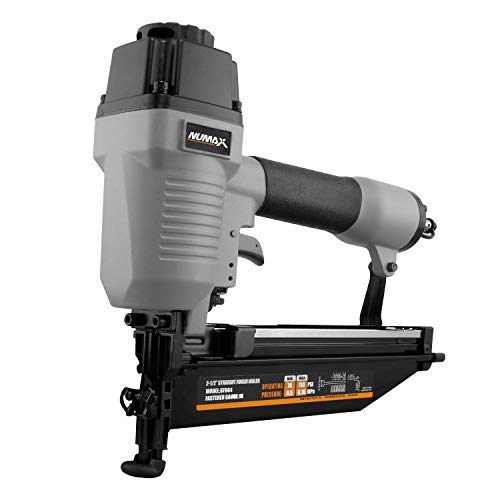
- Construction Applications: Designed for trim, furniture trim, rail moulding, crown moulding, window…
- Compatible Nails: 16 gauge glue collated straight finish nails from 1″ – 2-1/2″
- Built to Last: One piece hardened steel drive blade results in a durable pneumatic tool resistant to…
Key Takeaways
- 15-gauge nails are thicker with larger heads, offering superior holding power for heavy trim and structural applications.
- 16-gauge nails are thinner, reducing splitting risk and leaving smaller holes for easier finishing on delicate woodwork.
- Use 15-gauge angled nailers for tight corners and heavy-duty trim; 16-gauge straight nailers suit flat surfaces and lighter trim.
- 15-gauge nails require more putty and sanding due to larger holes, while 16-gauge nails minimize finishing time and surface damage.
- Choose 15-gauge for large baseboards, stairs, and doors; 16-gauge is ideal for cabinetry, paneling, and fine molding work.
Comparison Between 15 Gauge vs 16 Gauge Finish Nailer
| Feature | 15 Gauge Finish Nailer | 16 Gauge Finish Nailer |
|---|---|---|
| Nail Thickness | Thicker shank (approx. 1.8mm) | Thinner shank (approx. 1.6mm) |
| Holding Power | High – Ideal for heavy trim and structural work | Moderate – Suitable for lighter trim |
| Best For | Doors, stairs, large baseboards | Cabinetry, paneling, moldings |
| Splitting Risk | Higher on delicate wood | Lower risk on thin materials |
| Hole Size | Larger holes, more putty required | Smaller holes, easier finishing |
| Nailer Type | Typically angled nailer | Typically straight nailer |
| Finishing Work | More sanding and filling needed | Minimal patching required |
What Are the Key Differences Between 15 and 16 Gauge Finish Nailers?
While both 15 and 16 gauge finish nailers serve similar purposes in finish carpentry, they differ substantially in nail thickness, holding power, and application suitability.
You’ll find 15-gauge nails thicker with larger heads, making them ideal for heavy trim like doors, stairs, and large baseboards. Their angled nailers offer better maneuverability in tight corners.
On the other hand, 16-gauge nails are thinner, producing smaller holes and requiring less finishing work, perfect for cabinetry, paneling, and delicate moldings.
These use straight nailers for flat runs and accommodate shorter nails starting at 3/4″. You’ll want to choose 16-gauge for projects prioritizing a finer surface finish and lower splitting risk.
Both gauges offer strength beyond brads but differ in balancing power versus finesse. Choosing the right finish nailer also involves considering the nail head size and its impact on holding strength and visible finish.
How Nail Thickness Affects Holding Power and Stability?
When it comes to choosing nails, you might want to consider the thickness. Thicker 15-gauge nails really shine when it comes to holding power and stability. They’re especially great for heavy trim and structural joints. You can trust them to keep everything securely in place.
On the other hand, if you’re working on finer finish projects, 16-gauge nails could be more your style. They strike a nice balance between strength and minimizing wood splitting, which is super important when you’re dealing with delicate materials.
Many hardwood floor nailers are designed to accommodate both 15- and 16-gauge nails, providing adjustable depth controls to ensure precise and secure fastening.
Nail Thickness Impact
Understanding how nail thickness impacts holding power and stability is crucial when selecting between 15-gauge and 16-gauge finish nailers.
The 15-gauge nails, being thicker with a shank diameter around 1.8mm, provide superior grip and greater resistance to shear forces.
This makes them ideal for heavy-duty trim and structural applications.
Their larger heads enhance stability but leave bigger holes.
In contrast, 16-gauge nails, approximately 1.6mm thick, strike a balance between strength and subtlety.
They reduce the risk of splitting delicate wood and minimize visible entry holes.
This thinner profile still offers adequate holding power for most finish carpentry tasks.
When you choose between these gauges, consider that thicker nails improve stability under stress but may demand more finishing work.
Thinner nails preserve wood integrity and aesthetics with slightly less holding strength.
Additionally, selecting the appropriate nail thickness for the substrate material helps prevent joint failure and ensures long-term stability.
Holding Power Comparison
Nail thickness directly influences the holding power and stability of finish nailers. When you use 15-gauge nails, their thicker 1.8mm shank and larger heads provide superior grip, making them ideal for heavy trim like doors and stairs.
This increased diameter translates to higher withdrawal resistance, ensuring your structural trim stays firmly in place under stress. In contrast, 16-gauge nails, at approximately 1.6mm thickness, offer moderate holding power suitable for lighter applications such as cabinetry and moldings.
While 16-gauge nails don’t grip as strongly as 15-gauge, their smaller shank reduces the risk of splitting delicate woods. Both outperform brad nails, but your choice depends on balancing required holding strength with material sensitivity and finishing needs.
Additionally, selecting nails based on material compatibility helps prevent damage like splitting or surface defects, ensuring optimal long-term stability.
Stability Differences Explained
Although thicker nails generally provide stronger holding power, the stability of your finish largely depends on how nail thickness interacts with the material’s density and grain.
When you use 15-gauge nails, their larger shank and head diameter create a robust grip but increase splitting risk in thin or delicate wood. This can compromise stability despite the nail’s strength.
Conversely, 16-gauge nails, being thinner, penetrate more gently, reducing wood stress and splitting. This enhances stability in finer trim.
However, they offer slightly less holding power, so they’re best for medium-density materials and lighter applications.
Understanding this balance helps you select the right gauge: 15-gauge for heavy, structural trim where maximum grip is critical, and 16-gauge for delicate or fine woodwork where preserving material integrity maintains long-term stability.
It’s also important to confirm nailer/gauge compatibility to avoid jams and ensure smooth installation.
Hole Size Differences in 15 and 16 Gauge Nails and Their Impact on Finishing
When you drive 15-gauge nails, they leave noticeably larger holes compared to 16-gauge nails, which directly impacts your finishing work. The thicker 15-gauge nails, typically around 0.072 inches in diameter, create bigger entry points requiring more putty and sanding to achieve a smooth surface.
In contrast, 16-gauge nails, approximately 0.064 inches thick, produce smaller holes that minimize filler use and reduce finishing time. These smaller holes also lower the risk of splitting delicate trim pieces, helping preserve wood integrity.
When precision and minimal repair are priorities, 16-gauge nails offer a cleaner finish. However, if holding power trumps hole size, you’ll accept more extensive patching with 15-gauge nails. Understanding this trade-off helps you select the ideal gauge for your project’s finish quality.
Additionally, using hardened nails can improve corrosion resistance and increase the longevity of the fastener in your project.
Best Gauge Nails for Heavy-Duty Trim and Structural Work
For heavy-duty trim and structural work, you’ll want nails that deliver maximum holding power and stability. The 15-gauge nail is your best bet here.
Its thicker shank, ranging from 13/64″ to 3/16″ in head diameter, provides superior grip, essential for securing doors, stairs, and large casing. The larger heads increase stability but leave bigger holes, so plan for additional putty and sanding.
The 15-gauge’s design, paired with angled finish nailers, allows you to maneuver tight corners efficiently, shooting nails from 1-1/4″ up to 2-1/2″ in length. While heavier than 16-gauge nails, the added strength prevents nail pull-through and enhances structural integrity.
Use 15-gauge nails when your project demands durability over subtle aesthetics, especially in load-bearing or high-impact trim applications. Proper design and maintenance of tools, like finish nailers, are essential for effective fastening performance and longevity.
Why 16 Gauge Nails Are Ideal for Delicate Trim and Cabinetry?
When you’re diving into projects with delicate trim and cabinetry, it’s crucial to choose nails that won’t split the wood. That’s where 16 gauge nails really shine! Their thinner shank means they’re less likely to cause any damage to your beautiful materials.
Plus, because they create smaller entry holes, you won’t have to deal with a ton of putty and sanding afterward. This helps keep the wood’s finish looking pristine.
So, if you’re after a balance of subtlety and holding power, 16 gauge nails are definitely the way to go for all your fine, detailed work. Additionally, using the correct staple or cleat size ensures optimal stability and avoids damage during installation.
Reduced Splitting Risk
Although 15-gauge nails provide superior holding power, they increase the risk of splitting thinner or more delicate wood pieces.
When you work with fragile cabinetry or fine trim, the thicker 15-gauge shank applies greater lateral force, causing cracks or splits along the grain.
In contrast, 16-gauge nails have a slimmer 1.6mm diameter that penetrates wood fibers more gently, reducing stress during insertion. This means you can fasten delicate moldings and panels without compromising structural integrity.
The lower splitting risk translates to less rework, fewer visible defects, and a cleaner finish. If your project demands precision and preservation of fine wood surfaces, choosing 16-gauge nails helps maintain material integrity while delivering adequate holding strength for most finish carpentry tasks.
Additionally, selecting fasteners and adhesives with moisture resistance ensures long-lasting durability and protects delicate woodwork from environmental damage.
Smaller Entry Holes
Choosing 16-gauge nails not only reduces splitting but also leaves smaller entry holes, which is a key advantage for delicate trim and cabinetry.
These smaller holes mean less putty and sanding, saving you time and preserving the wood’s integrity. When working with fine moldings or fragile materials like MDF, 16-gauge nails minimize damage and maintain a cleaner finish.
Key benefits of 16-gauge nails’ smaller entry holes:
- Thinner 1.6mm shank creates less surface disruption.
- Reduced need for filler and finishing work.
- Minimizes visible nail marks on delicate surfaces.
- Lowers risk of wood splitting during installation.
- Ideal for cabinetry, paneling, and window casings.
Using 16-gauge nails guarantees you get a precise, professional finish without compromising the wood’s appearance. For best results, always follow proper cutting techniques and safety measures to maintain wood integrity during installation.
Choosing Angled 15-Gauge vs. Straight 16-Gauge Nailers
Since angled 15-gauge finish nailers excel in tight corners and heavy trim applications, you’ll want to use them for tasks demanding high holding power and maneuverability.
Straight 16-gauge nailers, on the other hand, suit flatter surfaces and lighter trims, minimizing wood splitting and finishing work. Your choice depends on trim thickness, work area accessibility, and desired finish quality.
| Feature | Angled 15-Gauge Nailer | Straight 16-Gauge Nailer |
|---|---|---|
| Nail Thickness | Thicker (15-gauge) | Thinner (16-gauge) |
| Nail Length Range | 1-1/4″ to 2-1/2″ | 3/4″ to 2-1/2″ |
| Best Use | Heavy trim, corners | Light trim, flat surfaces |
| Holding Power | High | Medium |
| Hole Size | Larger, more putty required | Smaller, easier finishing |
How to Choose Between 15 and 16 Gauge Nails for Your Project?
When deciding between 15 and 16 gauge nails for your project, you need to take into account factors like holding strength, wood type, and finishing requirements.
Choose 15-gauge nails if you require maximum grip on heavy trim or structural elements like stairs and doors. Opt for 16-gauge nails when working with delicate woods or fine cabinetry where minimizing splitting and hole size is critical.
Consider these points:
- Use 15-gauge for large casing or baseboards needing strong hold.
- Select 16-gauge for paneling, window casings, and moldings.
- Remember 15-gauge nails leave larger holes, demanding more putty.
- 16-gauge nails cause less wood splitting and finer finish.
- Match nailer type: angled for 15-gauge, straight for 16-gauge applications.
This approach makes certain you balance strength and finish quality efficiently.
Common Mistakes When Using 15 and 16 Gauge Finish Nailers
Although 15 and 16 gauge finish nailers offer distinct advantages, users often make errors that compromise both hold and finish quality.
Using 15 or 16 gauge finish nailers incorrectly can weaken hold and ruin the finish quality.
One common mistake is using 15-gauge nails on delicate trim, which increases splitting risk due to thicker shanks and larger heads.
Conversely, applying 16-gauge nails on heavy structural trim can lead to insufficient holding power.
Another frequent error is improper nail depth setting. Driving nails too deep or leaving them proud affects both strength and appearance.
Additionally, failing to align the nailer correctly causes angled or misplaced nails, weakening joints. Neglecting surface preparation also contributes to poor nail adhesion.
Tips to Minimize Splitting and Finishing Work With Both Gauges
To minimize splitting and reduce finishing work with both 15 and 16 gauge finish nailers, you need to carefully select nail length and adjust depth settings based on wood type and thickness.
Using the correct nail length prevents drive-through or insufficient holding, while proper depth avoids surface damage.
Follow these tips for prime results:
- Use thinner 16-gauge nails on delicate or thin wood to lower splitting risk.
- Set depth for nails to sit just below the surface, minimizing hole size and putty needed.
- Pre-drill pilot holes for hardwoods or dense trim when using 15-gauge nails.
- Choose nail length that penetrates at least 1.5 times the thickness of the material underneath.
Use angled 15-gauge nailers in tight corners to reduce stress and wood splitting.
Frequently Asked Questions
Can 15 and 16 Gauge Nails Be Used Interchangeably in the Same Nailer?
No, you can’t use 15 and 16 gauge nails interchangeably in the same nailer. Each nailer is designed to accommodate a specific gauge due to differences in nail thickness, head size, and magazine design.
Using the wrong gauge can cause jamming, misfires, or damage to the tool. Always match your nails to the nailer’s specified gauge to guarantee peak performance and avoid costly repairs or safety issues.
What Maintenance Is Required for 15 Vs 16 Gauge Finish Nailers?
You’ll want to regularly clean and lubricate both 15 and 16 gauge finish nailers to keep them firing smoothly.
Check for bent or dirty nails that can cause jams. Inspect the magazine and feed system, as 15-gauge angled nailers might need extra attention in tight corners.
Replace worn O-rings and seals to prevent air leaks. Keep nails dry to avoid rust, ensuring consistent performance regardless of gauge.
Are 15 Gauge Nails More Expensive Than 16 Gauge Nails?
Yes, 15 gauge nails tend to be more expensive than 16 gauge nails. Their thicker shank and larger head require more material, which drives up cost.
Additionally, 15 gauge nails are less commonly produced in bulk compared to 16 gauge, affecting price. If you’re balancing budget with project strength needs, consider that 16 gauge nails offer good holding power at a lower price point.
This makes them a cost-effective choice for many tasks.
Which Gauge Nailer Is Better for Outdoor Trim Projects?
When tackling outdoor trim, you want strength and durability. The 15-gauge nailer edges out the 16-gauge. Its thicker nails provide superior holding power, essential against weather and movement.
But beware: those larger nails leave bigger holes, demanding more putty and sanding. If your project uses delicate wood or you prioritize a cleaner finish, the 16-gauge might suit you better. Choose based on your trim’s toughness and finish needs.
How Do Nail Length Options Differ Between 15 and 16 Gauge Nailers?
You’ll find 15-gauge nailers shoot nails ranging from 1-1/4″ to 2-1/2″, perfect for heavier trim and structural joints.
On the other hand, 16-gauge nailers handle a slightly broader range, from 3/4” up to 2-1/2″.
This versatility lets you choose shorter nails for delicate work or longer ones when needed.
Upgrade Your Finish Work with the Correct Gauge
When your project demands strength without sacrificing finesse, choosing between 15 and 16 gauge nails is like selecting the right brush for a masterpiece.
The thicker 15 gauge offers robust holding power for heavy trim, while the slimmer 16 gauge glides through delicate cabinetry with minimal surface disruption.
By understanding their differences, you’ll wield your finish nailer with precision, ensuring every nail drives cleanly and every joint stands firm.
Craftsmanship that lasts and impresses.
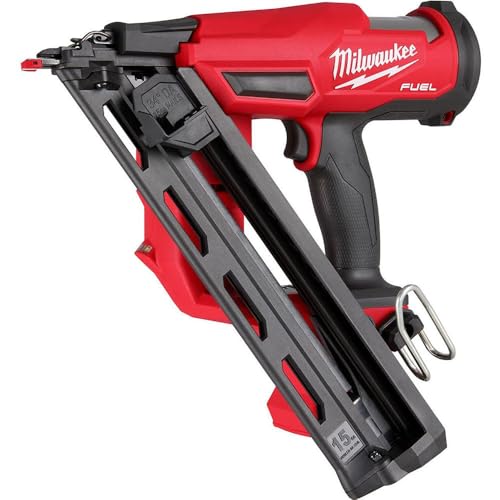
- Tool free jam clearing latch; Sequential and contact actuation firing modes
- Tip storage on magazine; LED work light; Reversible belt hook; Battery operated
- International products have separate terms, are sold from abroad and may differ from local products,…

- FASTENERS: 16-gauge finish nails in lengths ranging from 1-in up to 2-1/2-in
- AWARD: Rated the Pro Preferred Nailer for 7 years running (2014 – 2020) by Builder and Developer…
- TRIGGER: Selective actuation switch lets the user easily select bump fire or sequential fire modes
Last update on 2026-03-29 / Affiliate links / Images from Amazon Product Advertising API