
Does Tung Oil Darken Wood? Tips for a Perfect Finish
When you apply tung oil, it does darken wood by enriching its natural tones with a subtle amber or golden hue, depending on the species. This deepening enhances grain visibility without causing yellowing or significant discoloration.
Lighter woods gain a warm glow, while darker woods deepen slightly. Proper application with thin coats and surface prep helps control how much darkening occurs. To fully optimize tung oil’s effect and maintain your desired finish, understanding species variations and techniques is key.
Key Takeaways
- Tung oil slightly darkens wood by deepening natural colors and adding subtle amber or golden hues without significant discoloration.
- Darkening varies by wood species, with darker woods showing more depth and lighter woods gaining gentle warmth.
- Multiple thin coats increase amber tones and grain vibrancy, while proper preparation ensures even color enhancement.
- Tung oil penetrates deeply, highlighting grain and natural patterns with a matte to satin finish that enriches wood’s appearance.
- Compared to other oils, tung oil darkens less and resists yellowing, preserving wood’s true color over time.
How Tung Oil Affects Wood Color?

While tung oil darkens wood to varying degrees depending on the species, it primarily enhances natural colors and grain patterns, enriching the wood’s depth and warmth.
You’ll notice that darker woods exhibit a more pronounced darkening effect, while lighter woods gain a subtle amber or golden tint without significant darkening. It is important to maintain indoor humidity to minimize moisture-induced discoloration and damage when applying tung oil finishes.
Tung oil penetrates wood fibers deeply, creating a durable, slightly translucent layer that highlights grain structure and color uniformly, unlike surface-only finishes. This penetration ability allows tung oil to provide a flexible finish that resists cracking, making it ideal for woods subject to humidity changes.
Its matte to satin finish boosts color vibrancy by enhancing light reflection and contrast.
Importantly, tung oil doesn’t yellow or discolor over time, preserving the wood’s true tone better than other oils like linseed oil.
To predict the exact color impact, always test tung oil on a small, inconspicuous wood area before full application.
Impact of Tung Oil on Pine Wood
Because of pine’s porous nature, tung oil absorbs more slowly and requires multiple coats to achieve an even, durable finish.
You’ll notice that tung oil imparts only a slight amber hue to pine, less than boiled linseed or Danish oil.
The amber tone develops gradually with each coat and remains stable over time, avoiding the orange tint common with other oils.
Pine’s knots and grain absorb tung oil unevenly, so sanding beforehand is essential for uniformity.
The oil’s thickness leads to longer drying times between coats, and it has a strong odor similar to boiled linseed oil.
Tung oil creates a harder, more water-resistant finish than BLO, but you’ll need periodic reapplication on high-traffic pine surfaces.
Buffing after curing enhances protection and shine, helping your pine maintain a natural, warm appearance without significant darkening.
Tung Oil’s Effect on Walnut Wood
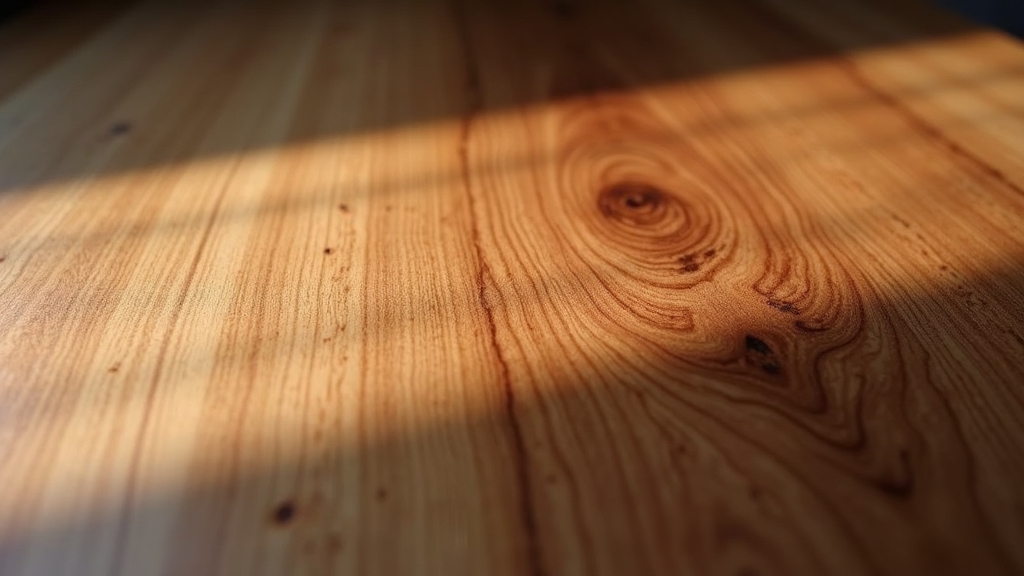
Tung oil interacts differently with walnut wood compared to pine, offering a subtle amber hue that enhances walnut’s natural warmth without markedly darkening it. Regular maintenance using gentle cleaning methods will help preserve this natural finish.
When applying tung oil to walnut, expect a slight ambering effect that’s more visible on lighter sapwood than on darker heartwood.
To achieve a smooth satin finish, apply 5–8 coats, allowing 24–72 hours of drying time between coats, and sand lightly with 320-grit paper. Multiple coats are often necessary to achieve pore filling and a desirable surface.
Remove excess oil after each application to avoid stickiness.
Tung oil penetrates deeply, providing moderate water resistance while maintaining a natural, food-safe finish ideal for walnut serving boards.
It doesn’t darken walnut greatly over time, unlike polyurethane. For best results, thin with mineral spirits to speed drying and ensure even absorption.
Enhancing Teak Wood With Tung Oil
When you apply tung oil to teak wood, you’ll notice a distinct deepening and vibrancy in the wood grain that enhances its natural beauty. This effect results from tung oil’s polymerization, which penetrates and cross-links within the wood fibers, highlighting the grain while providing a sleek finish. Tung oil is eco-friendly and non-toxic, making it a safe choice for outdoor furniture and surfaces that may come into contact with food. Proper maintenance of both the wood and any finishing products is essential to preserve this enhanced appearance over time.
To enhance teak wood with tung oil effectively:
- Apply thin, continuous coats for controlled darkening and uniform penetration.
- Remove excess oil immediately to avoid over-saturation and blotchiness.
- Test on a small, inconspicuous area first to gauge color change and absorption.
- Use multiple coats to fill pores, increasing water resistance and durability.
Tung Oil and White Oak: Color Changes Over Time
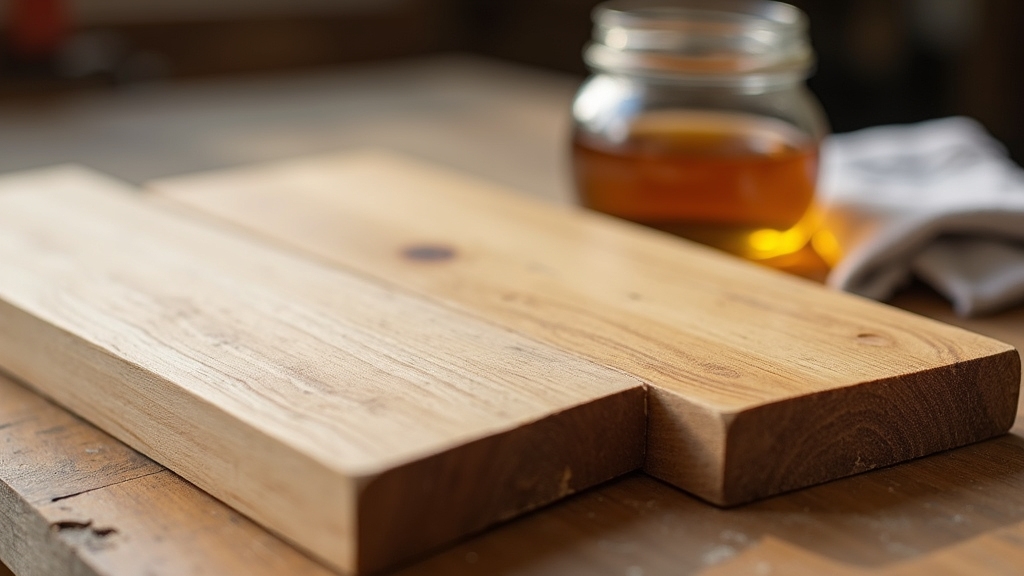
Although white oak naturally exhibits minimal color change over time, applying tung oil can subtly enhance its warmth and grain depth without causing significant darkening. Proper maintenance, such as periodic inspection and care, ensures the finish remains durable and effective.
Pure tung oil maintains clarity and resists yellowing, allowing the wood’s natural tone to remain largely unchanged. When you apply thin coats, the oil cures uniformly, avoiding heavy darkening or amber hues common with other finishes like boiled linseed oil. Proper application involves thin coats, avoiding solvents or thinning agents, to ensure optimal curing and appearance.
Over years, tung oil may darken white oak slightly but far less than alternative oils. Periodic reapplication preserves hydration and prevents uneven discoloration or dull patches. Regular upkeep is key to preventing surface degradation and maintaining the wood’s natural beauty.
You’ll notice a soft luster developing that highlights the grain rather than obscuring it. Overall, tung oil offers a stable, natural finish that enriches white oak’s character with minimal color alteration.
Differences Between Pure and Modified Tung Oil
Since drying time and finish characteristics vary considerably, choosing between pure and modified tung oil depends on your project’s requirements for cure speed, appearance, and durability.
Pure tung oil is raw, requiring many thin coats and long cure times. Modified (polymerized) tung oil dries faster and forms a harder surface film. Pure tung oil is more suitable for small objects or specialized applications rather than large surfaces, due to its slow curing and softer finish. Similar to fire suppression agents, the choice of oil finish impacts effectiveness and durability in specific applications.
Consider these key differences:
- Drying Time: Pure tung oil takes days to weeks. Modified dries in hours to a day.
- Appearance: Pure oil yields a natural matte finish with subtle amber hues. Modified produces a glossier, darker look.
- Durability: Modified tung oil offers superior hardness and water resistance. Pure oil penetrates deeply but is less abrasion-resistant.
- Composition: Pure oil is raw pressed oil. Modified oil is partially polymerized or blended with solvents and dryers for faster curing.
Choose based on your balance of finish speed, look, and protection needs. Many commercial products labeled as “tung oil finish” are actually oil-varnish blends, offering better durability than pure tung oil alone.
Techniques to Control Darkening When Using Tung Oil
Selecting between pure and modified tung oil sets the stage for how your wood’s appearance will evolve, especially regarding darkening. To control this, thin pure tung oil with mineral spirits or citrus solvents, commonly a 50-50 mix, to improve penetration and reduce surface buildup, resulting in a lighter finish. Pure tung oil dries to a honey color for a natural look, which influences how much the wood darkens.
Apply thin, multiple coats rather than thick layers, wiping off excess oil promptly after each application to prevent sticky, dark residues. Sand wood finely and precondition with sealers if necessary to limit absorption. Using a water-based polyurethane finish over tung oil can add durable protection while maintaining a clear finish.
Guarantee proper environmental conditions: moderate temperature, good airflow, and low humidity speed curing and reduce darkening. Use lint-free rags or natural bristle brushes for even application. Testing on scrap wood helps predict final color changes.
Frequently Asked Questions
How Long Does Tung Oil Take to Fully Cure on Wood?
Tung oil typically takes 2 to 3 weeks to fully cure on wood, ensuring maximum hardness and water resistance.
You’ll notice surface dryness much sooner—around 12 to 24 hours—but full polymerization occurs internally over weeks.
Factors like temperature, humidity, wood type, and coat thickness affect curing time.
Applying thin coats and allowing ample drying time between layers helps.
Rushing or over-applying can leave a tacky, uneven finish that compromises durability.
Is Tung Oil Food-Safe for Wooden Kitchenware?
Yes, pure tung oil is food-safe for wooden kitchenware, including cutting boards and bowls, as certified by the FDA (CFR 21: Sec. 175.300).
You must verify the product contains 100% pure tung oil with no synthetic additives. Always check labels carefully, since many commercial finishes labeled “tung oil” aren’t truly pure or food-safe.
Follow application and curing instructions strictly to maintain safety and durability in food-contact uses.
Can Tung Oil Be Used on Outdoor Furniture?
Yes, you can use tung oil on outdoor furniture. It offers excellent water resistance by forming a durable, cross-linked barrier that prevents moisture penetration.
Its UV resistance minimizes fading and discoloration, preserving wood’s natural appearance. Tung oil also resists mold, scratches, and doesn’t become rancid, ensuring long-lasting protection.
Just remember to reapply it every 6 to 12 months and lightly sand before each application for the best results.
How Often Should Tung Oil Be Reapplied on Wood Surfaces?
You should reapply tung oil on indoor wood surfaces every 6 to 12 months, depending on usage and dryness.
High-traffic pieces may need more frequent maintenance.
For outdoor wood, plan on 1 to 4 applications yearly, increasing frequency with exposure to sunlight, rain, or wind.
Watch for signs like loss of water beading, dryness, or dullness to know when to reoil and maintain protection effectively.
Does Tung Oil Protect Wood From Water Damage?
Of course, you want water to soak into your wood, right?
Well, luckily, tung oil doesn’t think so.
When you apply multiple coats and let it cure fully, it forms a waterproof barrier that effectively blocks water molecules.
This means your wood resists spills, humidity, and even outdoor moisture without damage.
Just remember, for maximum protection, apply on bare wood and allow at least a week to cure properly.
Master Tung Oil Application Without Unwanted Darkening
So, you want tung oil without the darkening drama? Well, good luck with that. Nature’s idea of protection includes a bit of color change.
Whether you’re working with pine, walnut, teak, or white oak, tung oil will deepen the wood’s character, not keep it pristine.
But hey, if you’re precise with your technique and choose between pure or modified formulas wisely, you can control the darkening. Just don’t expect a miracle.