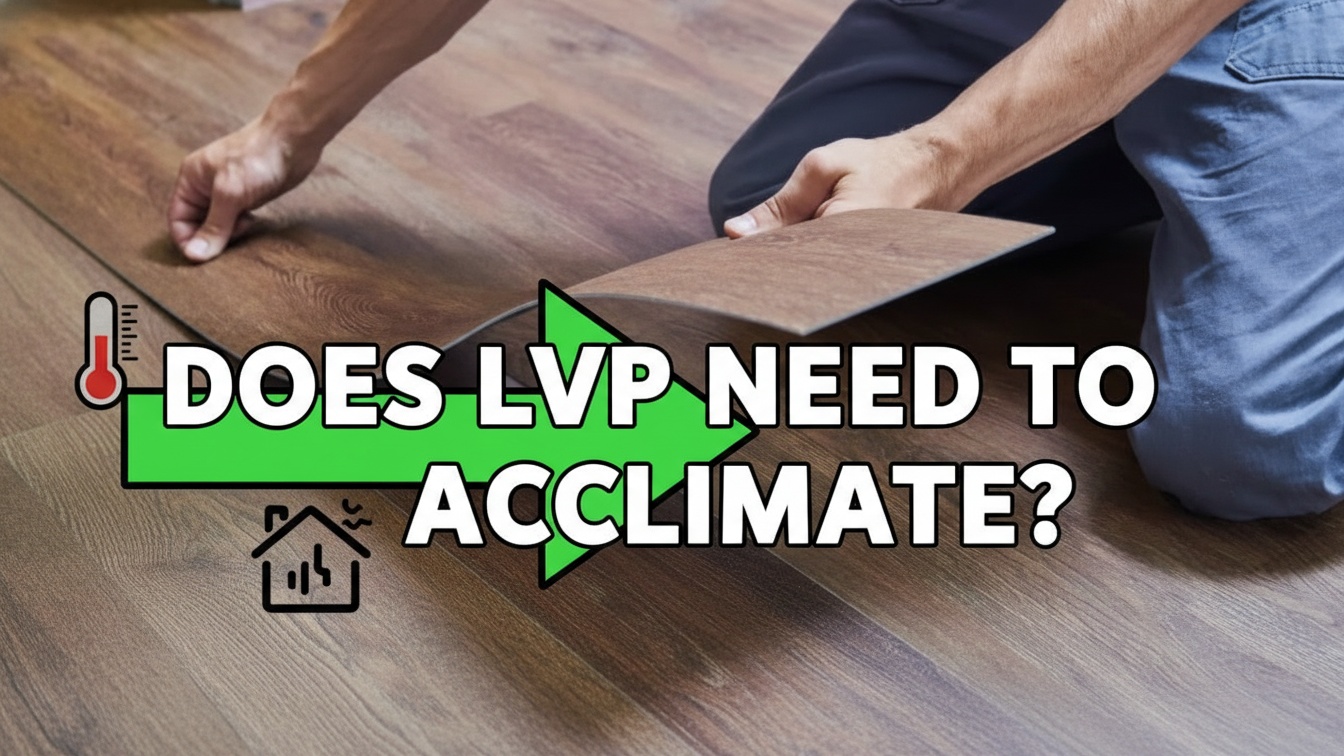
Does LVP Need to Acclimate: Avoid Flooring Failure
Yes, you should acclimate LVP to prevent warping, buckling, or gapping after installation. Most standard luxury vinyl planks require 24 to 48 hours in a controlled environment with stable temperatures between 65°F and 85°F and relative humidity from 35% to 75%.
Thicker or engineered-core planks may need longer. Some rigid-core or click-lock products might not require acclimation; always check manufacturer guidelines. Understanding these essentials helps assure a durable, flawless floor.
Key Takeaways
- Most LVP products require at least 24 to 48 hours of acclimation to stabilize dimensionally before installation.
- Rigid core LVP often needs little to no acclimation; always verify manufacturer instructions.
- Maintain room temperature between 65°F and 85°F and humidity between 35% and 65% during acclimation.
- Place planks flat, spread out, and avoid direct sunlight or heat sources to ensure even acclimation.
- Skipping acclimation risks warping, gapping, buckling, and may void flooring warranties.
Understanding the Importance of Acclimation for LVP
Although it might seem like a simple step, acclimating luxury vinyl plank (LVP) flooring is vital to preventing dimensional changes such as expansion or contraction that cause warping, buckling, or gapping after installation.
You need to allow the core and wear-layer materials to reach equilibrium with the room’s temperature and humidity. This stabilizes plank edges and seams, reducing post-installation movement and minimizing defects.
Acclimation prevents expansion, contraction, warping, buckling, or gapping, which are common issues if the material is installed without proper adjustment. Unlike some engineered wood options, many SPC floors do not require acclimation because of their stone polymer composite core.
Maintaining room temperature between 65°F and 85°F and relative humidity within 35%–75% during acclimation is critical. You should store unopened boxes flat in the installation room, opening ends or spreading planks to improve air circulation.
Keep planks away from direct sunlight or heat sources to prevent uneven exposure. Proper acclimation guarantees dimensional stability, optimizes adhesive performance, and supports long-term floor integrity.
Recommended Acclimation Duration for Different LVP Types
When determining the appropriate acclimation duration for luxury vinyl plank (LVP) flooring, you must consider the specific type and construction of the product.
Rigid core or click-lock LVP often requires minimal to no acclimation due to its dense, stable core. Thicker or larger planks demand extended acclimation to guarantee dimensional stability and reduce the risk of moisture damage.
Rigid core LVP typically needs little to no acclimation, while thicker planks require longer for stability. Composite or engineered core LVP varies, with some needing longer periods to equilibrate.
Follow these guidelines:
- Standard LVP: 24 to 48 hours minimum acclimation
- Rigid core/click-lock: Often exempt; verify manufacturer instructions
- Thicker/larger planks: Extend acclimation beyond 48 hours
- Engineered/composite cores: Acclimate 48 to 72 hours or more
Always prioritize manufacturer recommendations for precise timing. It is essential to acclimate vinyl flooring to help the planks adjust to room temperature and humidity before installation.
Environmental Conditions Required During Acclimation

To make certain dimensional stability during acclimation, you need to maintain room temperatures consistently between 65°F and 85°F. This stable temperature range must be held for at least 48 hours prior to installation to prevent expansion or contraction.
Equally important is controlling relative humidity, which should remain between 35% and 65% throughout the acclimation period to ascertain material equilibrium.
Store unopened LVP boxes flat and in their original packaging, away from direct sunlight, heating vents, and exterior doors to avoid exposure to temperature extremes.
Running your HVAC system to replicate normal living conditions helps maintain consistent indoor climate settings and ensures the flooring performance after installation.
Avoid fluctuations or extremes, as vinyl’s porosity makes it sensitive to environmental changes. Proper acclimation is critical because failure to do so can lead to issues like buckling or warping after installation.
Best Practices for Proper LVP Acclimation
To ensure your LVP acclimates properly, it’s important to maintain a prime temperature range, typically between 60°F and 80°F. This helps guarantee dimensional stability throughout the acclimation period.
When it comes to storing the LVP, make sure to place the boxes flat on clean, dry pallets or surfaces. Try to avoid stacking them tightly against walls; this way, you’ll promote even airflow around all edges, which is key for proper acclimation. Proper acclimation minimizes post-installation movement of the flooring materials, helping prevent issues like gaps and buckling.
Also, don’t forget about ventilation! Keeping the area well-circulated is essential. Just be cautious not to expose the materials to direct sunlight or heat sources, as this can lead to localized warping. Taking these steps will help ensure your LVP is ready for installation!
Additionally, acclimating flooring in the installation room helps the material adjust to the specific moisture and temperature conditions it will be exposed to.
Optimal Temperature Range
Although LVP acclimation tolerances vary by manufacturer, maintaining ambient temperatures between 65°F and 85°F (18°C to 29°C) is generally ideal for stabilizing plank dimensions before installation.
You should ensure this temperature range remains stable during acclimation, installation, and shortly after to prevent dimensional changes. Proper preparation, including moisture management, is essential to avoid future flooring issues.
Some manufacturers allow wider ranges (55°F–100°F) in uncontrolled environments but still require a minimum 48-hour acclimation. Avoid temperatures above 85°F, especially with radiant heat or sunlight, to prevent thermal degradation.
Proper acclimation prevents expanding, contracting, or buckling after installation, ensuring the flooring adjusts correctly to the home’s specific environmental conditions flooring acclimation benefits.
Follow these critical temperature guidelines:
- Maintain 65°F–85°F during acclimation for best dimensional stability.
- Use extended acclimation (48–72 hours) for thicker or rigid-core planks.
- Avoid rapid temperature fluctuations that cause plank movement.
- Adjust acclimation time when materials come from extreme climates.
Proper Material Placement
Maintaining stable temperatures during acclimation sets the foundation for dimensional stability, but proper material placement is equally important in achieving uniform adjustment.
Remove LVP planks from outer packaging to promote airflow around each plank. Keep boxes sealed or partially open at the ends to prevent moisture damage. Proper storage—stacking cartons with open ends and staggering for ventilation—facilitates adequate airflow and environmental adjustment.
Place materials in the exact installation room on a dry, cured subfloor. Avoid garages, attics, or basements. It is essential to maintain ideal temperature and humidity levels during this period to ensure effective acclimation.
Lay planks flat, in small stacks spaced from walls, to expose edges for airflow. Spread planks across the room, shielding them from direct sunlight to avoid uneven expansion.
Stack configurations should allow airflow on all sides. Packs should be elevated or spaced to prevent bending and moisture accumulation.
Adhering to these detailed placement practices guarantees consistent acclimation and reduces installation issues. Monitoring the moisture content of planks before and during acclimation helps ensure they reach acceptable levels for installation.
Airflow and Ventilation
Proper airflow and ventilation play a critical role in ensuring luxury vinyl plank (LVP) acclimates uniformly to the installation environment. You must maintain consistent air circulation to prevent moisture buildup and temperature fluctuations that cause plank expansion or contraction.
Follow these best practices for ideal airflow and ventilation:
- Open boxes and spread planks individually to maximize air exposure, or keep boxes flat in small groups away from vents and sunlight.
- Ensure room temperature stays between 65°F and 80°F with relative humidity at 35%-75%. This controlled environment allows the material to adjust to room temperature and humidity effectively. Maintaining consistent humidity levels is essential to prevent unwanted expansion or contraction.
- Use natural ventilation in vacant homes but avoid acclimating directly on uncured concrete to prevent moisture interference.
- Maintain these conditions for at least 48 hours before installation, adjusting duration for extreme weather or thicker products.
Precision here ensures your LVP performs flawlessly post-installation.
Factors That Influence Acclimation Time
When it comes to acclimating your LVP, one of the first things you’ll want to consider is the material composition. The core density and wear layer thickness really play a big role in how long the acclimation process takes, as these factors influence the plank’s response to temperature and humidity changes.
And then there are environmental conditions to think about. Things like temperature and humidity can really impact how quickly the planks settle in. If it’s too moist or too dry, you might find that the acclimation takes longer than expected.
Ideally, you should allow the vinyl planks to acclimate for about 48 hours in the room where they will be installed to ensure optimal adjustment.
Material Composition Impact
Because the material composition of LVP markedly affects its acclimation needs, understanding the interplay between core type, wear layer, and plank dimensions is essential.
You’ll notice that:
- Rigid SPC/WPC cores stabilize faster, requiring shorter acclimation than flexible PVC cores.
- Thicker wear layers and harder topcoats slightly slow thermal transfer but reduce visible dimensional changes.
- Larger, thicker planks have higher thermal mass, extending time to reach room equilibrium.
- Integrated cushion/backing layers may trap moisture, lengthening acclimation duration.
Additionally, selecting adhesives with proper moisture resistance is crucial when installing LVP to prevent warping during and after acclimation.
Environmental Condition Effects
Although material composition plays a critical role, environmental conditions markedly influence how long LVP requires acclimation. You should maintain indoor temperatures between 65–85°F (18–29°C) to minimize dimensional shifts.
Rapid swings or prolonged exposure outside this range can extend acclimation up to 72+ hours.
Stable relative humidity, ideally 35–75%, prevents plank swelling or shrinkage.
Humidity outside this range increases acclimation time and installation risks.
Rooms with varying HVAC zones or uneven airflow require separate monitoring, as microclimates cause inconsistent plank behavior.
To expedite equilibration, open boxes and spread planks for airflow. It is important to note that some manufacturers recommend leaving boxes sealed during acclimation, so always check specific manufacturer guidelines.
Avoid direct sunlight or vents.
Larger, open-plan spaces demand longer acclimation due to slower air and moisture equalization. Proper flooring acclimation also ensures dimensional stability and reduces the risk of warping.
Additionally, thicker, wider planks acclimate slower, and rigid-core products typically require less time than flexible vinyl.
Risks and Exceptions Related to LVP Acclimation
When you skip acclimation, you risk warping, gapping, buckling, and uneven surfaces caused by temperature and humidity mismatches between storage and installation sites.
Proper acclimation is essential because it allows the flooring to adjust to environment before installation, minimizing these risks. These issues compromise both aesthetics and function, potentially voiding warranties. However, some exceptions exist:
Skipping acclimation can lead to warping, gapping, buckling, and uneven floors from temperature and humidity differences.
- Rigid core and specific Shaw LVP products often don’t require acclimation.
- Click-lock designs may be exempt if installed in stable environments.
- Controlled indoor conditions with temperatures between 65°F and 85°F reduce risk.
- Pre-conditioned materials from climate-controlled warehouses need less adjustment.
To mitigate risks, extend acclimation beyond 48 hours after cold exposure. Make certain airflow by opening boxes and maintain stable temperature and humidity.
Always prioritize manufacturer guidelines and consider professional assessments for subfloor moisture and site conditions to guarantee peak installation outcomes.
Frequently Asked Questions
Can LVP Acclimation Be Skipped During Summer Installations?
You can’t cut corners with LVP acclimation during summer installations. Skipping it risks plank expansion, buckling, and warranty denial due to high humidity and temperature fluctuations.
Unless the manufacturer explicitly states no acclimation is needed and your environment stays stable (65–85°F, controlled humidity), you should acclimate for 24–72 hours.
This guarantees dimensional stability, avoids costly callbacks, and keeps your installation solid under summer’s unpredictable conditions.
How Does Acclimation Affect Warranty Claims?
Acclimation directly impacts your warranty claims because skipping it often voids coverage.
When you don’t acclimate LVP for the recommended 48-72 hours at 65-85°F, moisture and temperature differences cause expansion or contraction, leading to warping, buckling, or gaps.
Manufacturers usually reject claims for these defects if acclimation isn’t followed precisely. To make certain your warranty stays valid, you must strictly adhere to the specific acclimation guidelines provided by the manufacturer.
Is Acclimation Necessary for LVP Over Radiant Heating?
Think of acclimation as a handshake between your LVP and radiant heat. It’s essential to avoid future conflicts. Yes, you need to acclimate LVP over radiant heating by running the system at normal temperature for 24–72 hours before installation.
Keep the heat stable during acclimation and after installation to prevent expansion stresses, adhesive failure, or warranty issues. Follow your product’s specific guidelines precisely to guarantee a durable, trouble-free floor.
What Tools Measure Room Humidity for Acclimation?
You can measure room humidity for acclimation using digital hygrometers, which provide direct RH and temperature readings with easy displays.
For more precision, thermo-hygrometers or psychrometers let you derive RH from dry and wet-bulb temperatures. Data-logging humidity sensors record RH trends over time, ideal for monitoring stability.
Analog dial hygrometers are budget-friendly but need calibration, while multi-parameter meters offer thorough environmental data when humidity must be assessed with other factors.
Can Acclimated LVP Be Stored Before Installation?
Absolutely, you can store acclimated LVP before installation—but timing and conditions matter. Keep it in the installation room or a climate-controlled space, maintaining stable temperature (65–85°F) and humidity within manufacturer limits.
Keep planks sealed or stacked flat to avoid warping. Short-term storage for days is fine; prolonged storage needs stable conditions to prevent dimensional changes. If opened, install soon, as exposure can cause gradual drift affecting fit and warranty.
Smart Finish: Locking in LVP Performance with Proper Acclimation
You can’t rush LVP acclimation. It’s the bridge between delivery and flawless installation. By giving your flooring 48 to 72 hours in controlled conditions, you prevent warping, buckling, and gaps caused by temperature and humidity shifts.
Keep humidity between 30-50% and temperature stable around 65-85°F to guarantee dimensional stability. Remember, skipping this step is like building on quicksand. Your meticulous work risks unraveling before it even begins.