
Birch Plywood vs Pine Plywood: Practical Buyer’s Guide
If you need plywood with superior strength, density, and durability, birch plywood outperforms pine. Birch offers higher bending and compressive strength, better screw holding, and fewer knots, making it ideal for heavy-duty or precision projects.
Pine is lighter, easier to work, and more affordable, but is less durable and prone to dents and warping. Depending on your project’s demands, you’ll find important distinctions in performance, workability, and cost that impact your material choice.

- Value Pack: Get 20 sheets of ~3MM thickness, each measuring 11.8 x 11.8 inches
- Individually Wrapped for Protection: Each piece is securely wrapped in non-toxic POF shrink film,…
- Premium Quality: Our 1/8 inch baltic birch plywood has A-grade wood veneer on both sides, with a…
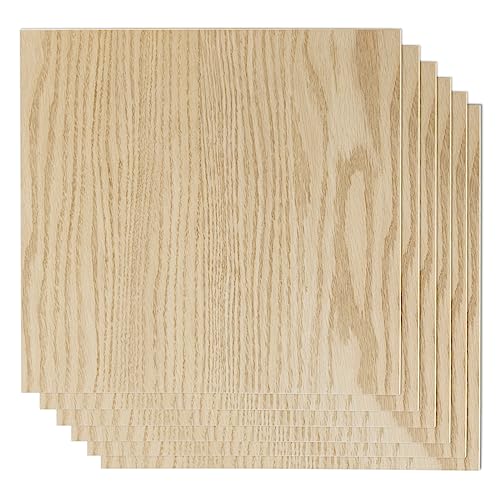
- 【Strong& Durable Plywood】: Red oak wood craft board, the surface is natural pattern, reddish in…
- 【High Quality】: Three-layer plywood is made of high-quality glue, no irritating smell,…
- 【Choose Laser Cutter Wood】: Craft wood smoothly glide through laser cutters and scroll saws,…
Key Takeaways
- Birch plywood is denser, stronger, and more durable than pine plywood, making it better for load-bearing and high-stress applications.
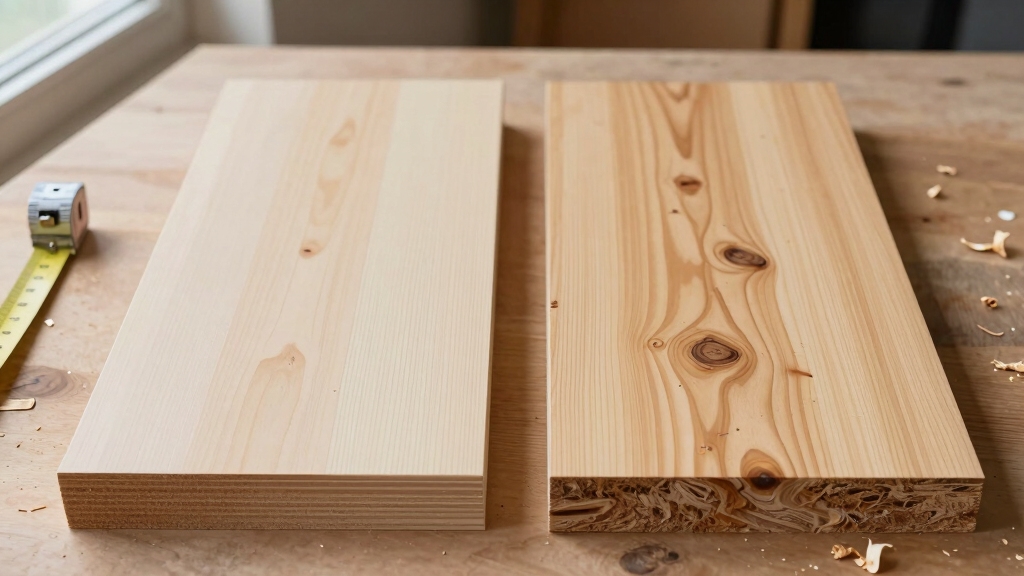
- Birch has a smoother, closed-grain surface with fewer knots, ideal for fine finishes and veneers, while pine shows more knots and voids.
- Pine plywood is lighter and more flexible but less resistant to dents, scratches, and moisture compared to birch plywood.
- Birch requires sharper tools and slower cutting due to hardness, whereas pine is easier to work with but prone to warping and tear-out.
- Birch plywood offers superior screw-holding, edge compression, and dimensional stability, making it preferable for furniture and structural uses over pine.
Side-by-Side Comparison: Birch Plywood vs Pine Plywood
| Feature | Birch Plywood | Pine Plywood |
|---|---|---|
| Wood Type | Hardwood plywood | Softwood plywood |
| Strength & Density | High strength, dense and rigid | Moderate strength, lighter weight |
| Surface Quality | Smooth, uniform grain, fewer knots | Visible knots, more natural variation |
| Durability | Highly durable, resists dents and wear | Softer, more prone to damage |
| Workability | Requires sharper tools and precision | Easy to cut and handle |
| Moisture Stability | Better dimensional stability | More prone to warping |
| Cost | Higher upfront investment | More affordable option |
| Best Uses | Furniture, cabinetry, structural projects | Interior panels, furniture frames, DIY |
Strength Comparison of Birch and Pine Plywood

Although both birch and pine plywood serve common structural and cabinetry purposes, birch plywood consistently delivers superior mechanical strength due to its hardwood veneers and tighter grain structure.
You’ll notice birch plywood exhibits higher bending strength (modulus of rupture) and tensile strength than pine plywood, attributed to its dense hardwood layers. Its cross-grain lamination reinforces bending capacity, enabling birch panels to sustain higher ultimate loads before failure at identical thicknesses and ply counts.
Additionally, birch’s higher density and greater hardness contribute significantly to its durability in demanding applications. The cross-grain construction of plywood also provides structural stability, which enhances its overall performance.
Compressive strength is also greater in birch plywood, allowing it to bear higher working loads in furniture applications. When fastening, birch plywood’s veneer hardness enhances screw withdrawal and edge compression resistance, improving joint performance and longevity.
In contrast, pine plywood’s softer, more flexible veneers result in lower mechanical strength and faster degradation under load.
Density and Weight Differences
Did you know that birch plywood is quite a bit denser than pine plywood? Birch has a density of around 720 kg/m³, while pine falls in the range of 450-600 kg/m³. This difference in density really affects how much the sheets weigh and how they’re handled.
In fact, birch sheets can weigh up to 16% more than their pine counterparts, which can make a noticeable difference when it comes to transporting and installing them. Birch plywood also tends to provide a cleaner, lighter, and neater look due to its fine grain and lower porosity compared to pine.
On top of that, because birch is denser, it usually has fewer voids and knots. This means you can expect better structural uniformity with birch plywood compared to pine.
Additionally, the cross-graining technique used in birch plywood construction enhances its strength and resistance to warping, making it more stable for various applications. So, if you’re considering which type to use for your project, think about how these density and weight differences might play into your decision!
Comparative Density Analysis
When comparing birch plywood to pine plywood, you’ll notice a significant difference in density, which directly impacts their weight and structural properties.
Birch plywood typically ranges from 680 to 760 kg/m³, whereas pine plywood varies between 460 and 620 kg/m³, depending on species and core composition.
This density disparity results in birch sheets weighing approximately 37–38 kg per 18 mm panel (2440×1220 mm), compared to about 32 kg for pine at similar thickness and size.
Higher density in birch contributes to superior stiffness, bending strength, and screw-holding capacity, owing to fewer voids and denser cores. Using the appropriate adhesive compatibility for plywood density ensures strong, durable bonds in flooring or cabinetry projects.
Plywood density is generally higher than solid timber due to the compression during manufacture that increases overall panel density. Variations in veneer thickness, pressing parameters, and moisture content further influence measured densities.
Weight Impact on Handling
Because birch plywood has a substantially higher density, typically between 680 and 760 kg/m³ compared to pine’s 450 to 650 kg/m³, you’ll find birch panels considerably heavier at equivalent dimensions.
For example, an 18mm thick birch sheet measuring 1220x2440mm weighs about 37 kg, whereas a pine sheet of the same size and thickness weighs roughly 28 kg.
This 30% weight increase affects manual handling; birch’s weight demands more effort during transport and installation, potentially requiring additional labor or mechanical assistance. When removing or handling glued materials, such as flooring, understanding the impact of weight on manual labor is crucial to avoid injury or damage.
Conversely, pine plywood’s lighter mass facilitates easier movement and faster on-site handling. The denser nature of birch also correlates with increased pressing pressures during manufacture, which adds to its structural integrity but elevates weight.
Because weight equals density times volume, the fixed sheet size means weight differences directly reflect density variations between birch and pine (weight formula). Ultimately, your choice impacts ergonomics and logistics, where pine offers mobility advantages and birch suits stationary, heavy-duty applications.
Void and Knot Presence
Weight differences between birch and pine plywood also reflect in their internal composition, particularly regarding voids and knots.
Birch plywood’s higher density (650-760 kg/m³) produces minimal voids and knots due to its fine grain and consistent veneer layers. This contributes to its mechanical properties comparable to solid wood, such as strength and rigidity. Its closed grain texture also enhances surface smoothness and finish quality.
In contrast, pine plywood, with density ranging from 450 to 630 kg/m³, exhibits more voids and knots owing to its porous structure and texture variability.
When evaluating void and knot presence, consider:
- Birch’s rotary-peeled veneers reduce voids and guarantee structural uniformity.
- Pine’s porous core and BB grades increase knot frequency and wormholes.
- Birch’s uniform veneers support clean finishes with negligible knot defects.
Workability and Handling Characteristics
When you cut birch plywood, you’ll notice its smooth texture and fine grain really deliver clean edges. However, keep an eye out for the occasional wavy grain; that can definitely pose some challenges. Birch is known for its fine even texture, which contributes to its clean-cut appearance. Its stable core structure also helps prevent warping during installation, adding to its reliability.
On the other hand, pine plywood is a bit softer, which makes shaping it easier. This softness also means less wear on your tools, but it does come with a downside, it’s more prone to dents during handling. Still, its ability to accept adhesives and finishes well makes it a cost-effective option for many projects.
Now, both types of wood accept adhesives and finishes really well. Birch, with its fine surface, is fantastic for precise staining. Pine, while softer, still offers reliable adhesion.
Cutting and Shaping
While birch plywood‘s higher density and hardness demand sharper tools and precise feeds for cutting and shaping, pine plywood offers easier workability with standard tools due to its lower density and softer texture. These differences reflect the varying Janka hardness values between birch and pine, influencing tool wear and cutting techniques.
Birch’s fine, even texture yields clean cuts ideal for intricate detailing, though its occasional wavy grain requires careful handling. Its excellent workability makes it especially suitable for furniture and cabinetry projects that require smooth finishes.
Pine’s straight grain allows straightforward cuts but needs support to prevent tear-out. The softer nature of pine also means it generally produces less resistance during machining compared to denser hardwoods.
When shaping, birch holds curves well due to elasticity, while pine’s flexibility risks warping under stress. Key considerations:
- Birch demands precise tooling and slower feeds to avoid stubble break and tool damage.
- Pine tolerates duller blades and faster processing but requires backing during cuts.
- Birch’s smooth veneers minimize splintering; pine’s lower density reduces tool wear and speeds routing.
Finishing and Adhesion
Although both birch and pine plywood require careful surface preparation for ideal finishing, their differing grain structures and resin contents demand distinct approaches.
Birch’s fine, closed-grain face needs minimal sanding; start with 120–150 grit and finish with 220–320 grit for smooth clear coats and uniform stain absorption without blotching. Its smooth, fine-grained surface is especially suitable for veneers and laminates. The closed grain texture also helps reduce moisture absorption, contributing to better finish durability.
Pine’s open grain, knots, and resin pockets require extra filling and sanding. You’ll need a sanding sealer or pre-stain conditioner to prevent blotchiness and reduce finish coats.
Birch accepts adhesives reliably due to dense veneers, ensuring strong bonds without aggressive pre-treatment. Pine’s variable porosity demands careful adhesive selection and clamping. For edge-banding, birch edges bond cleanly. Pine edges benefit from extra sanding or veneer backers.
Visual Appeal and Grain Patterns

Because visual appeal hinges on both color consistency and grain characteristics, birch and pine plywood offer distinctly different aesthetics that influence their suitability for various design projects.
Birch plywood features pale cream to light reddish-brown tones with uniform coloration and fine, straight grain, providing a smooth, modern look. Its fine-grained texture and smooth surface make it ideal for painting or staining to achieve high-quality finishes.
Additionally, birch’s color works well with warm, natural tones to create inviting interiors. Pine plywood displays warm yellow to pale brown hues with greater color variation and pronounced, knotty grain for a rustic feel.
Consider these points:
- Birch’s consistent grain and color simplify veneer matching and yield predictable stain results.
- Pine’s open grain and knots require more surface preparation for smooth finishes but add character.
- Birch’s minimal defects suit contemporary designs; pine’s knots and resin streaks enhance country-style projects.
Durability and Resistance to Damage
When evaluating birch and pine plywood for durability and damage resistance, birch clearly outperforms pine due to its higher density and hardness.
Birch’s density (650-750 kg/m³) and Janka hardness (1300-1600) provide superior strength, resisting dents and scratches better than pine, which has lower density (450-550 kg/m³) and hardness (300-500). Its natural moisture resistance and dimensional stability make it a preferred choice for flooring and cabinetry.
Birch’s cross-graining enhances bending strength (85-95 N/mm²) and dimensional stability, reducing warping risks. Birch wood is commonly used for high-end furniture and flooring because of its durability and strength.
Pine’s flexibility and moderate moisture resistance make it less durable under heavy loads or high-traffic use.
| Property | Birch Plywood | Pine Plywood |
|---|---|---|
| Density (kg/m³) | 650-750 | 450-550 |
| Janka Hardness (J) | 1300-1600 | 300-500 |
| Bending Strength (N/mm²) | 85-95 | 50-60 |
Cost Analysis and Value for Money
While birch plywood commands a premium price due to its superior quality and durability, pine plywood offers a markedly more affordable option for comparable sheet sizes and thicknesses.
Birch plywood offers unmatched quality at a premium, while pine provides an affordable alternative for similar sizes and thicknesses.
You’ll find birch sheets priced around $42 to $45 for 1/2″ to 3/4″ thickness, whereas pine ranges from $13 to $22 for similar dimensions. For example, a Sanded Pine BC 19/32, 4×8 sheet is priced around $21.47, illustrating pine’s affordability. This cost disparity impacts your budget allocation appreciably.
Consider these factors when evaluating value for money:
- Initial Cost: Pine plywood costs nearly half or less than birch for equivalent thickness.
- Long-Term Durability: Birch’s durability can reduce replacement frequency, justifying its higher upfront cost.
- Availability and Sourcing: Pine is widely available and easier to source, lowering indirect expenses.
Common Applications for Birch Plywood
Evaluating cost differences between birch and pine plywood sets the stage for understanding where birch plywood truly excels in application.
You’ll find birch plywood preferred in furniture and cabinetry, especially for cabinet carcasses, face frames, tabletops, and shelves, thanks to its smooth, uniform faces and superior screw-holding capacity. Plyco’s Premium Birch Plywood, sourced from Eastern Europe, offers an FSC-certified quality that ensures responsible forest management.
Its consistent core enables reliable veneering and finishing, making it ideal for drawer boxes and cabinet backs with clean edges. In joinery and interior fit-outs, birch’s dimensional stability and machinability make it a go-to for door cores, wall panelling, counters, and retail fixtures.
Structurally, it suits subflooring, load-bearing panels, and stair components where strength-to-weight ratio and fastener retention are critical. Additionally, birch plywood’s fine surface and stability serve specialized uses in musical instruments, CNC projects, and sports equipment manufacturing.
Typical Uses of Pine Plywood
Pine plywood frequently serves as a versatile material across various woodworking and construction projects due to its lightweight strength and ease of handling.
Pine plywood is prized for its lightweight strength and versatility in woodworking and construction projects.
You’ll find it ideal for tasks requiring a blend of durability and workability. Here are typical uses:
1. Furniture Making: Pine plywood offers a strong yet lightweight base for chairs, tables, and shelves.
It provides a smooth finish suitable for staining or painting, enhancing both durability and aesthetics.
Its manageable thickness makes it easy to work with for custom pieces, which is highly valued in furniture crafting.
2. Interior Wall Paneling: Its light color and visible grain make it perfect for rustic or modern wall designs.
It can be easily stained or sealed to add warmth and polished appeal to interiors.
This plywood is also suitable for cabinetry finishes when treated with aesthetic coatings, offering a cost-effective option.
3. Floor Underlayment: You can rely on it as a stable, flat subfloor supporting hardwood, tiles, or vinyl.
It prevents warping and ensures even load distribution in construction projects. Furthermore, pine plywood’s strength supports heavy loads to keep top flooring securely in place.
Frequently Asked Questions
How Do Birch and Pine Plywood Impact Indoor Air Quality?
You’ll find that both birch and pine plywood impact indoor air quality mainly through adhesives used and surface treatments.
Birch’s denser, stable structure reduces moisture-related VOCs and microbial growth risks.
In contrast, pine’s softer, knotty core may increase these issues if finishes fail.
Emissions depend more on adhesive type and edge sealing than species.
Using low-formaldehyde or no-added formaldehyde resins and proper sealing minimizes long-term indoor VOCs regardless of your choice.
Are Birch and Pine Plywood Environmentally Sustainable Choices?
You might find it striking that both birch and pine plywood can be environmentally sustainable choices when sourced responsibly.
Birch plywood often comes with widespread FSC or PEFC certification, ensuring legal, sustainable harvesting, though it demands careful supplier verification.
Pine plywood’s faster growth and plantation origins boost yield per hectare.
Both store biogenic carbon effectively, but manufacturing’s resin use and transport impact require attention.
Opting for certified, low-emission products enhances your sustainability commitment.
What Are the Best Adhesives for Bonding Birch Versus Pine Plywood?
For birch plywood, you should use Titebond II for reliable bonding with extended open time, or Better Bond X-Press for veneers.
Ensure you prepare phenolic surfaces with 80G sanding and cellulose thinner cleaning.
For pine plywood, PVA glue works well for strong, water-resistant bonds, while polyurethane offers versatility and gap-filling.
Epoxy provides superior strength for both but requires longer curing.
Match adhesive choice to surface prep and application needs.
How Do Birch and Pine Plywood Perform in Sound Insulation?
You’ll find birch plywood performs better in sound insulation due to its higher density, offering 20–25 dB reduction at standard thicknesses.
Enhanced birch variants with rubber or cork cores boost noise reduction to ≥32-35 dB.
Pine plywood lacks specific sound reduction data and generally has lower density, resulting in poorer airborne sound insulation.
For technical applications needing sound control, birch plywood and its advanced variants are your superior choice.
Can Birch or Pine Plywood Be Used for Outdoor Decking?
You can’t just slap untreated plywood outside and expect it to shrug off rain like a superhero.
Both birch and pine plywood need exterior-grade glue, complete sealing of all edges, and protective finishes to survive outdoor decking.
Marine-grade or pressure-treated variants perform best, lasting decades if maintained well.
Without these treatments, expect rapid moisture damage, swelling, and rot.
Use corrosion-resistant fasteners and make certain proper ventilation to maximize lifespan and structural integrity.
Making the Smart Choice Between Birch and Pine Plywood
Choosing between birch and pine plywood is like selecting the right tool for a specific task. You want precision, strength, and durability tailored to your project’s demands.
Birch plywood offers superior strength, density, and a refined appearance, making it ideal for high-quality finishes. Pine plywood, lighter and more cost-effective, suits applications where budget and ease of handling matter.
Understanding these differences guarantees you make an informed decision that balances performance and value.
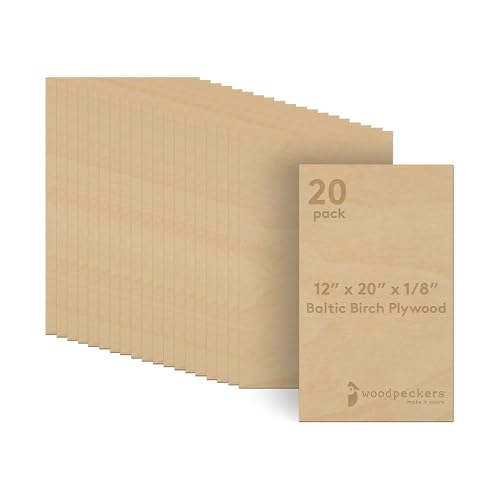
- STRONG, DURABLE, HEAVY-DUTY – These craft wood pieces of multi-coated Baltic Birch plywood offer…
- BEAUTIFUL WOOD, BEAUTIFUL PROJECT- Baltics-grown birch plywood is prized by woodworkers everywhere….
- CHOOSE LASER CUTTER WOOD – The layers of the Baltic Birch sheets of thick plywood are designed to…

- Ideal For Craft Projects And General Purposes
- Brand Name: Ufpi Lbr & Treated
- Product Dimensions: 24.0 X 24.0 X 0.5″
Last update on 2026-03-31 / Affiliate links / Images from Amazon Product Advertising API