Best Way to Cut Foam Board Insulation: Shaping Precision
To cut foam board insulation cleanly, start by measuring and marking your cut lines carefully with a straightedge and pencil.
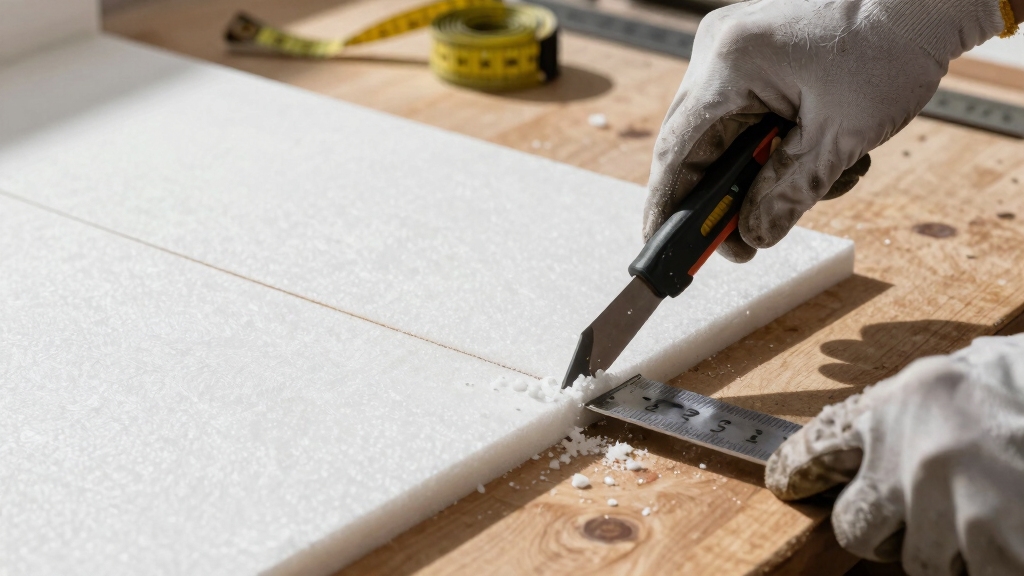
Use a sharp 9mm utility knife with snap-off blades, scoring multiple times at less than a 45-degree angle to avoid crushing the foam.
For thicker boards or smoother edges, a hot wire cutter or jigsaw with proper speed control works well. Always support the board steadily and swap dull blades promptly.
Ready to explore more tips for flawless, professional cuts?
Key Takeaways
- Use a sharp 9mm utility knife with snap-off blades and score foam multiple times before snapping for clean, precise cuts.
- Support and steady the foam board on a flat surface, marking cut lines clearly with a straightedge guide for accuracy.
- For larger or intricate cuts, consider a hot wire cutter with adjustable heat for smooth edges and minimal debris.
- When using a jigsaw, maintain steady feed, control speed, and monitor blade temperature to avoid angled or rough cuts.
- Always wear gloves and eye protection, ensure good ventilation, and keep blades fresh by snapping off dull segments regularly.
How To Measure And Mark Foam Board For Accurate Cuts?
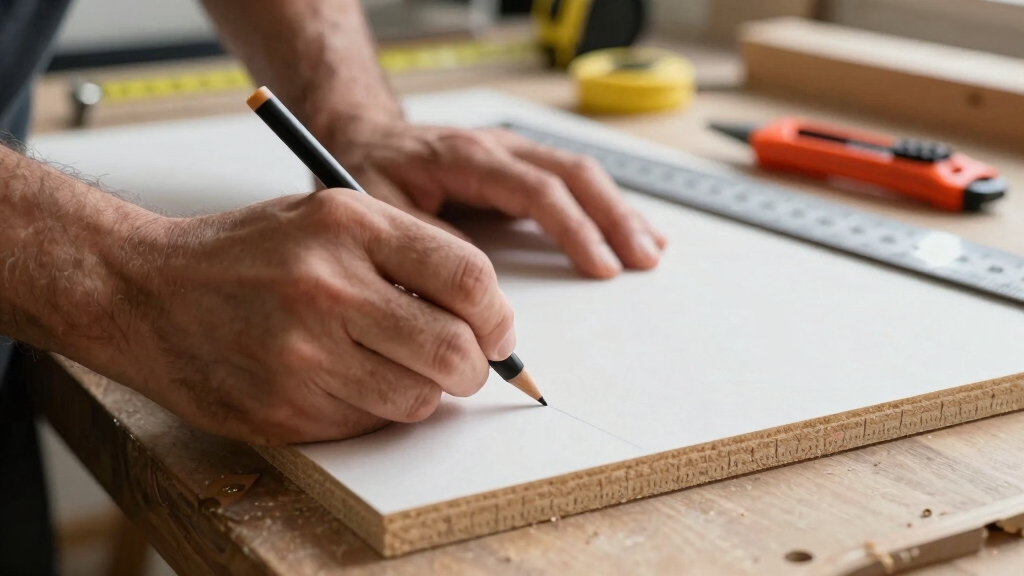
Before you start cutting foam board insulation, you need to measure and mark your material with precision to guarantee clean, accurate cuts.
Begin by using a tape measure or ruler to determine the exact dimensions required.
Employ a T-square or straightedge to draw crisp, straight lines on the foam surface.
For enhanced accuracy, consider using a chalk line or laser level to guide your markings, especially on larger boards.
Always double-check your measurements before marking to avoid costly mistakes.
Clearly mark the cut lines with a pencil or fine-tip marker, ensuring they’re visible but not too thick.
These guidelines will serve as your cutting path, so take your time to make them as precise as possible.
A well-marked foam board is the foundation for smooth, professional cuts.
Using proper measurement tools and accessories helps ensure precise and repeatable cuts for a professional finish.
Choosing The Best Knife For Cutting Foam Board
When you’re cutting foam board, you really can’t go wrong with a sharp utility knife. It’s the go-to tool for getting those clean, precise edges.
If you’re working with rigid foam, like XPS, then I’d recommend grabbing a 9mm blade. Trust me, it makes a difference!
Oh, and don’t forget to keep some extra blades handy! You’ll want to swap out dull segments quickly to maintain that sharp cut.
Regularly snapping off worn blade tips is a game changer. It helps you achieve those smooth cuts without crushing the foam. Happy cutting!
For enhanced control and precision, consider using a tool with a variable speed trigger to adjust your cutting speed as needed.
Utility Knife Advantages
Choose a sharp utility knife to get the cleanest, most precise cuts on foam board insulation. This tool offers excellent control, letting you score straight lines and deepen cuts gradually without tearing the foam.
You’ll want a knife with snap-off blades so you can quickly refresh the edge, maintaining sharpness for smooth edges every time. Utility knives, especially 9mm models, work well on various foam types like XPS and EPS, outperforming thicker tools like putty knives by leaving cleaner cuts and less mess.
Plus, their lightweight design helps reduce hand fatigue during longer projects. By using a steady hand and guiding the blade along a straightedge, you’ll slice through foam boards effortlessly, achieving professional results without specialized equipment or complex setups.
For enhanced precision in finish work, consider tools that offer tool-free depth adjustment to maintain consistent cutting depth and control.
Blade Type Recommendations
Selecting the right blade type is essential for making clean, precise cuts on foam board insulation. For XPS rigid foam, a 9mm utility knife with snap-off segments works best, giving you sharp edges and excellent control.
If you’re cutting EPS foam, opt for a long utility knife with replaceable blades to reduce jagged cuts. Dollar knives also provide smooth results on thicker 1.5-inch foam boards.
Avoid thick putty knives for EPS since thinner blades cut more cleanly. When working with foam boards thicker than an inch, score multiple times with a sharp blade before snapping off the piece.
Keeping your blade sharp and using a straightedge guide will help you achieve straight, professional cuts every time. Choose blades designed specifically for foam for the best results.
For larger or more intricate cuts, consider using tools with variable speeds to adjust the blade speed for cleaner and more controlled cuts.
Sharpness Maintenance Tips
Maintaining a sharp blade is essential for achieving clean, precise cuts on foam board insulation. It directly affects both your efficiency and the quality of your work.
To keep your utility knife in top shape, regularly snap off dull blade segments if you’re using snap-off blades. For fixed blades, sharpen them carefully with a fine whetstone or replace them when they lose their edge.
Always clean off foam residue after each use to prevent buildup that dulls the blade. Store your knife safely to avoid accidental damage or dulling.
Using blades with heat-resistant coatings can also help maintain sharpness by reducing material buildup and blade wear during cutting.
Cut Foam Board With A Utility Knife: Step-By-Step
Start by ensuring your utility knife has a sharp, fresh blade. Dull edges won’t produce clean cuts and can damage the foam.
Measure and mark your cutting line clearly using a ruler or T-square for accuracy. Place the foam board on a stable surface, then align a straightedge along your marked line.
Hold the utility knife at less than a 45-degree angle and score the foam gently along the line, applying moderate pressure. Don’t try to cut through in one pass; make several shallow passes to deepen the cut gradually.
Once the cut is deep enough, apply firm, steady pressure to snap the foam cleanly along the scored line. This method keeps edges straight and minimizes tearing or crumbling.
For best results, work slowly and carefully as with removing adhesive layers to avoid damaging the material beneath.
Using A Hot Wire Cutter For Smooth Foam Board Edges
Glide the hot wire cutter steadily along your marked line to achieve smooth, precise edges on foam board insulation.
Before starting, guarantee the wire is heated evenly and taut.
Hold the cutter firmly, guiding it with a steady hand to avoid jagged edges or uneven cuts.
The heated wire melts through the foam, so you don’t need to apply much pressure; just keep a consistent speed.
Use a straightedge as a guide to maintain perfectly straight cuts.
Make sure your workspace is well-ventilated and wear protective gear since melting foam can release fumes.
With practice, this method delivers clean, professional results, eliminating dust and crumbling common with knives or saws.
The hot wire cutter is ideal for detailed, smooth-cut foam board edges.
For best results, maintain stable temperature and humidity conditions in your workspace to prevent material warping during cutting.
Handsaw Vs. Jigsaw: Cutting Thick Foam Boards Explained
When it comes to cutting thick foam boards, you might be wondering which tool is the best fit for your project.
A handsaw can give you solid control, which is great, but it does tend to create quite a bit of mess with foam dust flying everywhere. It’s something to consider if you’re working in a space where cleanup is a concern.
On the other hand, if you’re tackling a large PIR project, a jigsaw can really speed things up. However, you’ll want to keep an eye on the blade heating up, as that can lead to uneven cuts, which is definitely something you want to avoid.
For woodworking projects requiring precision, tools with features like an adjustable fence and preset stops can ensure accurate cuts and repeatable results, much like the adjustable fences found on top biscuit joiners.
Handsaw Cutting Advantages
Choosing the right tool for cutting thick foam boards can markedly impact your project’s outcome and cleanup.
Using a handsaw gives you solid control and steady, straight cuts, especially on dense PIR insulation. While it creates more mess than precision knives, it’s simple, affordable, and doesn’t require power.
You can manage the pace to avoid overheating or blade flex, common with jigsaws.
| Advantage | Feeling | Result |
|---|---|---|
| Precise control | Confident | Cleaner, straighter cuts |
| No power needed | Independent | Flexible work locations |
| Affordable | Practical | Budget-friendly |
| Steady pace | Patient | Reduced blade wear |
Handsaws let you work steadily without power worries, making them reliable for thick foam board cutting. When working with materials like foam board or hardwood floors, using gentle attachments or tools designed for the surface can help minimize damage and maintain clean edges.
Jigsaw Performance Considerations
While handsaws give you reliable control for cutting thick foam boards, jigsaws offer a faster alternative, especially for larger PIR insulation projects.
When using a jigsaw, choose a blade designed for foam, like Bosch’s T 313AW3 with a wavy edge, to reduce mess and achieve cleaner cuts.
Be aware the blade heats up during use, which can cause it to flex and create uneven or angled cuts.
To counter this, adjust the jigsaw’s speed settings and maintain a steady, controlled feed rate.
You’ll move through polystyrene insulation faster than manual saws, but you’ll need to monitor blade temperature and pressure carefully.
Keep your cut lines clearly marked and steady the board to guarantee straightness.
This method balances speed with acceptable accuracy for large-scale foam cutting.
Using the correct abrasive grit and sanding techniques afterward can help smooth any rough edges created by the jigsaw, improving the final finish for installation sanding grit progression.
Cleanup and Precision Comparison
You’ll often find that cleaning up after cutting thick foam boards varies considerably between handsaws and jigsaws.
Handsaws tend to create a lot of foam dust and uneven debris, requiring extra sweeping or vacuuming. The jagged cuts also leave rough edges that might need sanding or trimming.
On the other hand, jigsaws produce less mess, especially when equipped with a wavy knife edge blade like the Bosch T 313AW3. However, jigsaw blades can heat up and cause slight flex, which might affect cut precision if you don’t adjust the speed properly.
Common Mistakes When Cutting Foam Board And How To Avoid Them
Even if you have the right tools, cutting foam board insulation can still lead to frustrating mistakes that compromise your project’s fit and finish.
Cutting foam board insulation demands care to avoid mistakes that affect your project’s fit and finish.
Avoid these common errors to make sure clean, precise cuts:
- Using dull blades: A dull utility knife tears the foam, producing rough edges. Always snap off to reveal a fresh blade segment before cutting.
- Skipping measurement checks: Rushing measurements causes waste and misfits. Double-check dimensions and mark clearly with a straightedge before cutting.
- Applying too much pressure: Pressing hard can crush or deform the foam board. Instead, score lightly on the first pass and deepen the cut gradually with multiple passes.
DIY Tips For Building A Hot Wire Cutting Table At Home
Setting up a hot wire cutting table at home can transform your foam board projects by delivering factory-like precision and speed.
Start by building a sturdy wooden frame sized to support your largest foam sheets. Attach a tensioning strip across the frame to hold the nichrome wire tightly.
This wire heats up and melts through the foam cleanly. Connect the wire to a variable power supply so you can adjust heat for different foam densities.
Use a straightedge as a guide to keep cuts perfectly straight. Remember to secure your workspace for safety, including gloves and eye protection.
With this setup, you’ll slice through thick foam boards quickly and smoothly, avoiding dust and jagged edges common with knives or saws.
Frequently Asked Questions
How Should I Safely Dispose of Foam Board Scraps?
You should safely dispose of foam board scraps by first checking local recycling programs, as some accept rigid foam insulation.
If recycling isn’t available, break scraps into smaller pieces to reduce volume and place them in sealed bags to prevent scattering.
Avoid burning foam since it releases toxic fumes. Consider reusing scraps for crafts or insulation patches.
Always wear gloves and a mask when handling scraps to minimize dust inhalation and skin irritation.
Can Foam Board Insulation Be Painted After Cutting?
Yes, you can paint foam board insulation after cutting it. Just make sure the surface is clean and dry before you start.
Use water-based latex paint or foam-safe spray paint to avoid damaging the foam. Avoid solvent-based paints, as they can melt the foam.
Apply a primer first for better adhesion and durability. Paint in thin, even coats, allowing each layer to dry fully before adding the next. This keeps your finish smooth and lasting.
What Are the Best Storage Methods for Unused Foam Boards?
You know what they say: a stitch in time saves nine.
To keep your unused foam boards in top shape, store them flat in a dry, cool area away from direct sunlight to prevent warping and discoloration.
Stack boards evenly and avoid heavy loads on top. Cover them with a protective sheet to keep dust and moisture out.
This way, you’ll preserve their integrity and avoid costly replacements later.
How Does Foam Board Insulation Perform in Extreme Temperatures?
Foam board insulation performs well in extreme temperatures by maintaining its thermal resistance, helping you keep your space insulated year-round.
Rigid foam boards like XPS and polyiso resist heat and cold, but polyiso may lose some R-value in very low temperatures.
You should also consider moisture resistance since trapped water can reduce effectiveness.
Are There Eco-Friendly Alternatives to Traditional Foam Board Insulation?
You should know that traditional foam insulation contributes greatly to greenhouse gas emissions during production.
Thankfully, eco-friendly alternatives like sheep’s wool, cork board, and recycled denim offer sustainable options without sacrificing insulation quality.
These materials are renewable, biodegradable, and often safer for indoor air quality.
By choosing them, you’ll reduce environmental impact and improve your home’s health.
Look for certifications to guarantee you’re getting genuinely green products.
Turning Simple Sheets into Seamless Success
Cutting foam board insulation is like sculpting your ideas into reality. Each precise mark and smooth cut shapes your project’s foundation.
By measuring carefully, choosing the right tool, and avoiding common pitfalls, you’ll transform a simple sheet into a perfect fit.
Remember, your tools are extensions of your hands, guiding your vision with accuracy and ease. Embrace the process, and watch your work become a sturdy, seamless canvas for creativity.