Is Carpet Cheaper Than Flooring: Everything You Need to Know
You’ll find carpet is generally cheaper upfront than hardwood flooring, with lower material and installation costs that save you hundreds immediately.
Carpet installation is quicker and less labor-intensive, making it budget-friendly for short- to medium-term use.
However, carpet wears out faster, requiring frequent replacements that can add up over time.
Hardwood demands a higher initial investment but offers exceptional durability, long-term savings, and resale value.
Explore how these factors weigh in your flooring decision.
Key Takeaways
- Carpet has lower upfront material and installation costs compared to hardwood flooring.
- Hardwood flooring requires higher initial investment but offers longer lifespan and durability.
- Frequent carpet replacements increase long-term costs beyond initial savings.
- Carpet installation is quicker and less labor-intensive than hardwood installation.
- Hardwood flooring often adds more resale value and reduces maintenance expenses over time.
Carpet vs. Hardwood: What’s the Real Cost?

When comparing carpet and hardwood flooring, you’ll find that carpet typically costs less upfront. However, the real cost extends beyond the initial price.
Carpet material ranges from $1.50 to $4 per square foot, making it an economical choice at first glance. Hardwood, meanwhile, starts at $6 and can exceed $25 per square foot, reflecting its premium nature.
While carpet installation is generally under $1 per square foot, hardwood installation adds $3 to $5, increasing overall expenses.
However, you should consider durability. Quality hardwood lasts 50 to 100 years, dramatically outlasting carpet, which may require replacement every 5 to 15 years.
This longevity means hardwood’s higher upfront investment often results in lower long-term costs. It makes hardwood a smart, enduring choice despite the initial price gap.
Additionally, hardwood flooring can significantly enhance your home’s resale value, often making it a more valuable investment over time.
Carpet vs. Hardwood: Installation Costs Explained
Understanding installation costs is essential when choosing between carpet and hardwood flooring, as these expenses markedly impact your overall budget.
Installation costs significantly influence your budget when selecting between carpet and hardwood flooring.
Carpet installation typically costs about $1 per square foot, making it a budget-friendly option. For example, installing carpet in a 160-square-foot room costs roughly $320.
Hardwood installation, on the other hand, ranges from $3 to $5 per square foot, substantially increasing your upfront expenses; that same room could cost around $1,600 to install hardwood.
These disparities arise from hardwood’s complex preparation, precise fitting, and finishing requirements.
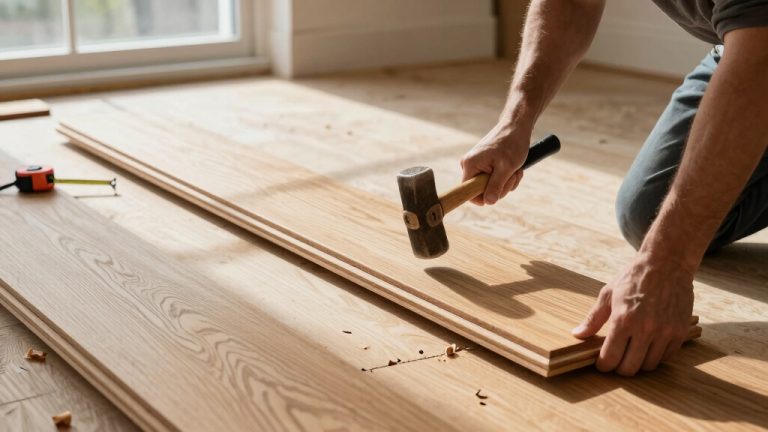
While carpet installation is quicker and less labor-intensive, hardwood demands skilled craftsmanship.
When planning your project, factor in these installation differences carefully, as they play a pivotal role in determining the total cost and impact your flooring choice.
Additionally, installation expenses can vary widely based on factors like location, project complexity, and contractor experience, further influencing your budget.
Carpet and Hardwood: Typical Lifespan
When you choose carpet, you can generally expect it to last anywhere from 5 to 15 years, depending on its quality.
So, you might find yourself replacing it a bit more often than you’d like.
On the flip side, hardwood floors really shine when it comes to longevity.
With the right care, they can last anywhere from 50 to 100 years!
That difference in lifespan is pretty significant, right?
It’s really important to keep this in mind as you consider the true cost and maintenance requirements of each flooring option.
Proper maintenance includes removing carpet pad stains to preserve hardwood floor finishes and extend their life.
Carpet Lifespan Range
Although carpet can offer a warm and inviting feel to any room, you should consider its lifespan before making a decision.
Carpet longevity varies widely based on quality and usage, which affects replacement frequency and overall cost.
Typically:
- Basic grade carpet lasts 5 to 10 years, suitable for low-traffic areas.
- High-quality carpet endures 10 to 15 years with proper care.
- Frequent foot traffic, pets, or spills can shorten carpet lifespan.
This variability means you’ll likely replace carpet multiple times over the years, increasing cumulative costs.
While carpet initially costs less than hardwood, understanding its lifespan helps you evaluate long-term value.
Factoring in replacement timing guarantees you make an informed flooring choice that fits your lifestyle and budget.
For basement installations, selecting carpet with moisture resistance is crucial to extend lifespan and prevent mold-related damage.
Hardwood Longevity Benefits
Consider how hardwood flooring can transform your space not only through its timeless beauty but also by offering unmatched longevity.
Hardwood floors can last 50 to 100 years when properly maintained, far surpassing carpet’s typical 5 to 15-year lifespan. This durability means fewer replacements and long-term savings.
Hardwood also sustains its aesthetic appeal, resisting wear and damage better than carpet.
Proper installation methods and maintaining optimal environmental conditions are essential to maximize hardwood floor lifespan.
| Flooring Type | Typical Lifespan | Maintenance Requirement |
|---|---|---|
| Carpet (Basic) | 5 – 10 years | Frequent cleaning, replacement needed |
| Carpet (High-quality) | 10 – 15 years | Professional cleaning, occasional replacement |
| Hardwood | 50 – 100 years | Periodic refinishing, minimal upkeep |
Choosing hardwood means investing in lasting quality and elegance that endures.
Replacement Frequency Comparison
Understanding the replacement frequency of flooring materials is essential for making an informed investment in your home.
Carpet generally requires more frequent replacement than hardwood due to its shorter lifespan and greater susceptibility to wear and stains.
Here’s how they compare:
- Basic carpets last 5 to 10 years, while high-quality carpets extend to 10–15 years.
- Hardwood floors, with proper maintenance, endure 50 to 100 years.
- Frequent carpet replacement adds recurring labor and material costs, increasing long-term expenses.
- Hardwood floors can be maintained through refinishing cycles, which significantly extend their usable life and reduce replacement needs.
How Flooring Durability Impacts Long-Term Costs?
When you’re considering flooring, it’s super important to think about how long different types will last.
For instance, carpets usually need replacing every 5 to 15 years, and that really depends on their quality and how much wear and tear they see.
On the flip side, hardwood floors can be a game-changer. With the right care, they can last up to a century! That really cuts down on replacement costs over time.
Regular maintenance, such as vacuuming hardwood floors with soft attachments, helps preserve their appearance and longevity.
Carpet Lifespan Considerations
Longevity plays a critical role in determining the true cost of carpet flooring over time.
When you consider carpet lifespan, you’ll see that durability directly affects replacement frequency and overall expenses.
Most carpets last between 5 to 15 years depending on quality. To manage costs effectively, consider these key points:
- Basic carpet requires replacement every 5 to 10 years.
- Higher-quality carpet extends lifespan to 10 to 15 years.
- Frequent replacement increases labor and material costs.
Because carpet wears faster than many flooring alternatives, you’ll face recurring investments.
This means initial savings might be offset by ongoing expenses.
Understanding carpet lifespan helps you budget accurately and choose materials that align with your long-term financial and aesthetic goals.
For hardwood floors, using professional-grade cleaners can help maintain durability and reduce long-term maintenance costs.
Hardwood Longevity Benefits
Although hardwood flooring often demands a higher initial investment than carpet, its exceptional durability substantially lowers your long-term costs. It reduces the need for frequent replacement and extensive repairs.
Hardwood floors can last anywhere from 50 to 100 years when properly maintained, far surpassing carpet’s typical 5 to 15-year lifespan. This longevity means you won’t face recurring expenses tied to material and labor as often, protecting your budget over time.
Additionally, hardwood’s resilience to daily wear and ease of maintenance help preserve its appearance without costly interventions. When you invest in hardwood, you’re choosing a flooring solution that balances upfront cost with enduring value, minimizing disruptions and expenses throughout your home’s lifetime. Proper installation and environmental control play a crucial role in maximizing this lifespan and ensuring long-term value.
Replacement Frequency Costs
Because carpet typically wears out faster than hardwood, its replacement frequency markedly affects your long-term flooring expenses. When you choose carpet, you’ll likely face replacement every 5 to 15 years, depending on quality. Hardwood floors, with lifespans of 50 to 100 years, substantially reduce recurring costs.
Consider these key points:
- Carpet replacement involves frequent labor and material expenses, adding up over time.
- Hardwood’s durability minimizes the need for costly replacements, offering better long-term value.
- While carpet may have lower upfront costs, repeated replacements can surpass hardwood’s one-time investment.
Ultimately, your choice impacts not just immediate expenses but long-term financial planning.
Opting for hardwood can save you money and effort, thanks to its lasting resilience and reduced replacement frequency. Additionally, engineered hardwood’s ability to be refinished multiple times extends its lifespan and value far beyond that of carpet.
Maintaining Carpet vs. Hardwood: What You Need to Know
Maintaining your flooring plays a crucial role in preserving its appearance and functionality over time. When you choose carpet, expect regular vacuuming and periodic professional cleanings to tackle trapped dirt, allergens, and stains.
Carpet fibers demand more attention to prevent wear. You’ll likely replace padding over time to maintain comfort and hygiene.
Hardwood flooring, on the other hand, offers easier upkeep.
You can keep it looking pristine with simple sweeping and occasional damp mopping, avoiding harsh chemicals that damage the finish. Since hardwood doesn’t trap allergens, it’s a healthier option requiring less intensive care.
Proper maintenance, like timely refinishing, extends hardwood’s life markedly. This makes it a durable and attractive choice that balances aesthetic appeal with practical upkeep.
Flooring and Home Resale Value: Carpet vs. Hardwood
When you’re preparing to sell your home, the type of flooring you choose can significantly influence its market appeal and resale value.
Hardwood flooring generally adds more value compared to carpet because buyers often see it as a long-lasting, elegant upgrade.
Hardwood flooring is valued for its durability and elegance, making it a preferred upgrade over carpet.
Carpet, while cost-effective, is frequently viewed as a temporary solution with less impact on resale price.
Consider these key points when deciding:
- Over half of buyers prefer homes with hardwood floors, willing to pay more.
- Hardwood offers a better return on investment than carpet in real estate.
- Carpet’s lower perceived value may reduce your home’s competitive edge.
Choosing hardwood can elevate your home’s aesthetic and financial potential, making it a smart investment for resale.
Eco-Friendliness: Carpet vs. Hardwood Flooring
Although choosing flooring often centers on cost and appearance, eco-friendliness is an important factor you should consider.
Hardwood flooring stands out as a more sustainable choice because it’s made from natural, renewable wood.
If you select responsibly sourced hardwood, it supports forest regeneration and reduces environmental impact.
Carpet, in contrast, typically contains synthetic fibers derived from petroleum, which aren’t biodegradable and contribute to landfill waste.
While some carpets use natural fibers like wool or sisal, these options tend to be pricier and less common.
Additionally, carpet’s shorter lifespan means more frequent replacement, increasing environmental costs over time.
By opting for hardwood, you invest in a durable, eco-friendly surface that balances aesthetics with sustainability.
This makes it a smarter choice if reducing your ecological footprint matters to you.
When Carpet Is the Best Budget Flooring Option
Choosing the right flooring often comes down to balancing cost with quality and longevity. Carpet can be the best budget flooring option when you need an affordable, quick solution without compromising comfort. It’s ideal if you:
Selecting flooring means balancing cost, quality, and comfort—carpet offers an affordable, cozy option for budget-conscious choices.
- Want to reduce upfront costs. Carpet materials and installation are markedly cheaper than hardwood, saving you hundreds.
- Prioritize warmth and noise reduction. Carpet naturally insulates and softens sound, enhancing comfort.
- Plan for short- to medium-term use. Carpet suits spaces that may require replacement every 5 to 15 years, fitting temporary budgets.
While hardwood offers durability and resale value, carpet delivers immediate savings and comfort. If your budget is tight or you’re furnishing rental or low-traffic areas, carpet remains a smart, cost-effective choice.
Frequently Asked Questions
Can Carpet Help With Noise Reduction in a Home?
Yes, carpet can markedly help with noise reduction in your home.
It absorbs sound vibrations, reducing echoes and muffling footsteps, making your space quieter and more comfortable.
Unlike hard flooring, carpet’s fibers and padding act as natural sound insulators.
If you want a peaceful environment, especially in multi-level homes or busy areas, choosing carpet is a smart way to minimize noise without additional soundproofing measures.
Are There Specific Carpet Types Better for Allergy Sufferers?
If you think of your home as a sanctuary, choosing hypoallergenic carpets is like inviting fresh air indoors.
You’ll want low-pile carpets made from natural fibers like wool or sisal. They resist dust mites and allergens better than synthetic options.
Look for carpets labeled as antimicrobial or allergy-friendly to reduce irritants.
Regular vacuuming with a HEPA filter also helps you keep allergy triggers at bay. This makes your space both elegant and healthy.
How Do Carpet and Hardwood Affect Indoor Air Quality?
Carpet can trap dust, allergens, and pet dander, which might lower indoor air quality unless you clean it regularly and thoroughly.
Hardwood flooring, by contrast, doesn’t harbor these particles, making it easier for you to maintain a cleaner, healthier environment.
If indoor air quality matters most, hardwood’s smooth surface allows you to reduce allergens and pollutants more effectively.
This supports better breathing and overall wellness in your home.
What Are the Best Cleaning Products for Carpet Versus Hardwood?
Imagine your carpet as a soft canvas, needing gentle care.
For carpets, use enzyme-based cleaners to break down stains and vacuum regularly to lift dirt. Avoid harsh chemicals that can damage fibers.
Hardwood floors require pH-neutral cleaners or a mix of water and vinegar for shine without harm.
Use microfiber mops to prevent scratches and avoid excess water to protect the wood’s natural beauty and longevity.
Can Carpet Be Installed Over Existing Hardwood Floors?
Yes, you can install carpet over existing hardwood floors, but you need to prepare the surface carefully.
Make sure the hardwood is clean, dry, and free of damage.
Use a quality carpet padding to protect the hardwood and improve comfort.
Avoid nailing or stapling directly into the hardwood; instead, use tack strips along the edges.
This approach preserves your hardwood while giving you the softness and warmth of carpet.
Carpet vs. Hardwood Flooring: A Complete Cost and Value Comparison
Choosing between carpet and hardwood is like picking between comfort and classic elegance.
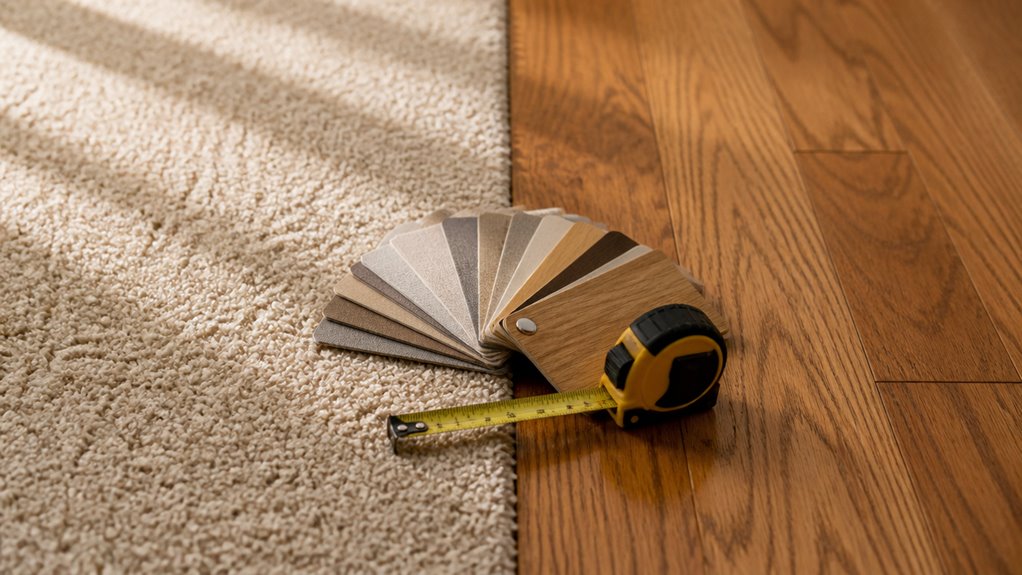
Carpet may seem cheaper upfront, but consider installation, lifespan, and maintenance before deciding.
Hardwood often demands more initial investment but can boost your home’s value and last longer, much like a timeless novel.
Ultimately, understanding your budget and lifestyle will guide you to the right flooring, whether you want the cozy embrace of carpet or the enduring charm of hardwood beneath your feet.