Concrete Floors vs Wood Floors: Pros, Cons & Key Differences
You’ll find concrete floors offer exceptional durability, resist moisture, and need minimal maintenance. This makes them ideal for high-traffic areas with a sleek, modern look.
Wood floors provide natural warmth, better insulation, and timeless aesthetic appeal. However, they require more upkeep and are vulnerable to dents and moisture.
Installation costs for concrete are generally lower, while wood demands careful preparation. Explore these contrasts further to identify the flooring that best suits your lifestyle and design goals.
Key Takeaways
- Concrete floors offer superior durability, low maintenance, and a modern aesthetic, ideal for high-traffic or industrial spaces.
- Wood floors provide natural warmth, classic beauty, and better thermal insulation, enhancing comfort in cozy, traditional interiors.
- Concrete installation is generally more affordable and simpler, while wood installation is costlier and requires precise subfloor preparation.
- Wood floors can be refinished multiple times to extend lifespan, whereas concrete repairs are rare and usually involve minor crack filling.
- Concrete has a higher initial environmental impact, but wood’s shorter lifespan and maintenance needs may increase long-term ecological costs.
Concrete Floors vs Wood Floors: Complete Side-by-Side Comparison
| Feature | Concrete Floors | Wood Floors |
|---|---|---|
| Durability | Extremely durable and resistant to wear | Durable but prone to scratches and dents |
| Lifespan | 50+ years with proper care | 20–100+ years depending on species and maintenance |
| Moisture Resistance | Excellent | Susceptible to warping and swelling |
| Maintenance | Low maintenance | Requires regular care and refinishing |
| Cleaning | Simple sweeping and mopping | Regular sweeping and careful cleaning |
| Repair Needs | Rare, typically minor crack repairs | Scratches and dents may require sanding or refinishing |
| Installation Cost | Lower ($3.50–$5 per sq. ft.) | Higher ($12–$22+ per sq. ft.) |
| Long-Term Cost | Lower overall | Higher due to maintenance and refinishing |
| Comfort Underfoot | Hard and cool surface | Warm and comfortable |
| Thermal Insulation | Lower | Higher |
| Style | Modern, industrial, contemporary | Traditional, timeless, and elegant |
| Color & Finish Options | Polished, stained, and decorative finishes | Various wood species, stains, and finishes |
| High-Traffic Performance | Excellent | Good with proper maintenance |
| Heavy Furniture Support | Excellent | May dent under heavy loads |
| Indoor Air Quality | Does not trap allergens | Can emit VOCs from some finishes |
| Environmental Impact | Higher initial carbon footprint | Renewable resource when responsibly sourced |
| Refinishing Potential | Not typically needed | Can be refinished multiple times |
| Best For | Basements, garages, modern homes, commercial spaces | Living rooms, bedrooms, traditional homes |
| Main Advantage | Durability, affordability, and low maintenance | Warmth, beauty, and comfort |
| Main Drawback | Harder and colder surface | More vulnerable to moisture and wear |
Choosing Between Concrete and Wood Floors: Which Is Right for You?

How do you determine whether concrete or wood floors best suit your needs?
Start by evaluating your space’s functional requirements and aesthetic goals.
Concrete offers a sleek, modern look with customizable finishes, ideal for minimalistic or industrial designs.
Wood provides warmth and classic appeal, fitting traditional or cozy interiors.
Consider thermal comfort: wood insulates better, retaining heat, while concrete feels cooler underfoot.
Assess maintenance capacity; concrete demands less upkeep, requiring only occasional resealing.
Wood needs regular care to avoid damage.
Budget is critical—concrete typically costs less to install and maintain, especially over large areas.
Finally, factor in your lifestyle: concrete supports heavy furniture and high traffic, while wood suits spaces prioritizing comfort.
Analyzing these parameters helps you make a precise, informed flooring choice.
Additionally, understanding the durability and maintenance differences between materials can further guide your decision.
Durability of Concrete vs. Wood Floors
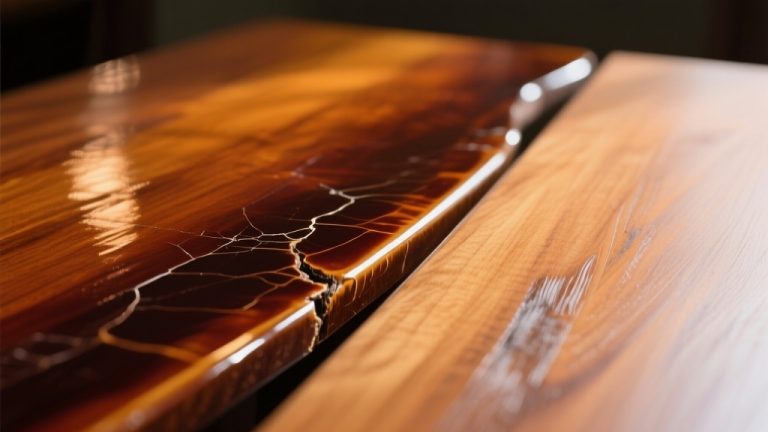
Concrete floors consistently demonstrate superior durability compared to wood floors, making them ideal for environments subject to heavy use and wear. Their dense composition resists abrasion, impacts, and moisture far better than wood, which is prone to dents, scratches, and warping under similar conditions.
Polished concrete withstands heavy furniture and machinery without structural compromise, extending its service life markedly beyond hardwood. While wood offers solid performance in residential settings, it generally requires more frequent replacement due to its susceptibility to environmental stressors.
If you prioritize longevity and minimal floor degradation, concrete provides a robust, low-failure option. Evaluating durability through resistance to mechanical stress and environmental factors clearly favors concrete floors, especially in high-traffic or industrial applications where sustained integrity and load capacity are critical.
Additionally, applying penetrating sealers to concrete floors enhances their resistance to water damage and surface wear, further extending their durability and maintaining appearance over time.
Maintenance Needs for Concrete and Wood Floors
The exceptional durability of concrete floors leads to lower maintenance demands compared to wood floors. Concrete requires minimal upkeep, usually just periodic resealing and regular cleaning.
Wood floors need more frequent attention, including refinishing and protection against moisture and scratches.
| Maintenance Aspect | Concrete Floors | Wood Floors |
|---|---|---|
| Cleaning | Simple sweeping, mopping | Regular sweeping, careful mopping |
| Sealing | Periodic resealing needed | Refinishing every few years |
| Damage Repair | Rare, minor cracks filled | Scratches, dents require sanding |
| Sensitivity to Moisture | Highly resistant | Prone to warping, swelling |
Proper moisture balance is crucial for maintaining wood floors, as excessive moisture can weaken adhesive bonds and cause damage, making moisture content effects an important factor in floor care.
Understanding these differences helps you choose a flooring system that aligns with your maintenance capabilities and lifestyle.
Installation Costs: Concrete vs. Wood Flooring
Although both flooring options serve their purposes well, you’ll find that installation costs vary markedly between concrete and wood floors.
Polished concrete floors typically cost between $3.50 and $5 per square foot. This is influenced by slab size and finish quality.
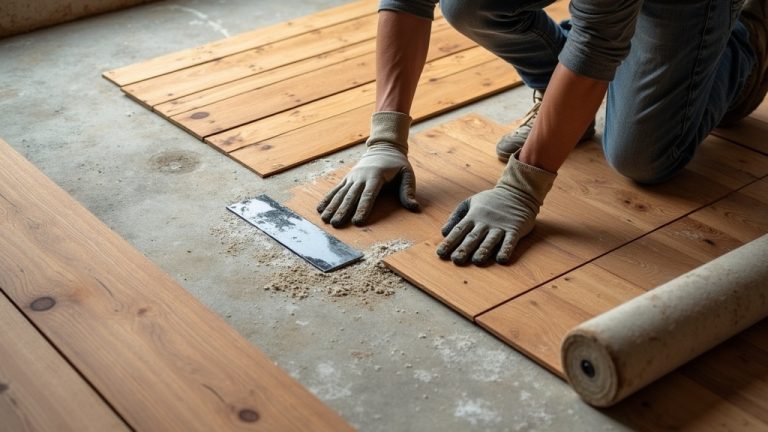
In contrast, installing high-quality hardwood, such as white oak, ranges from $12 to over $22 per square foot. This disparity arises from the more complex labor and material requirements for wood flooring, including subfloor preparation, acclimation, and precise fitting.
Concrete installation benefits from simpler processes, such as pouring, finishing, and polishing. This makes it more cost-effective, especially for large areas or new construction.
When budgeting, consider that concrete’s lower upfront installation cost often yields long-term savings due to durability and reduced maintenance demands.
Wood, on the other hand, demands a higher initial investment and ongoing care.
Proper installation of hardwood on concrete requires careful moisture testing and the use of vapor barriers to prevent damage and ensure longevity.
Comfort and Style: Comparing Concrete and Wood Floors
You know, one of the great things about wood floors is how they bring that natural warmth and softness underfoot. It really adds to the comfort of your living spaces, doesn’t it?
On the other hand, concrete floors have a totally different vibe. They give you a cooler, harder surface that fits perfectly with sleek, modern design aesthetics.
When it comes to maintenance, regular vacuuming hardwood floors helps preserve their appearance and longevity.
Warmth And Softness
When evaluating warmth and softness, wood floors clearly outperform concrete surfaces in residential environments.
Wood naturally insulates, retaining heat and providing a softer underfoot feel, which enhances comfort in living spaces.
In contrast, concrete’s rigid, cooler surface lacks this thermal capacity, resulting in a less forgiving experience, especially in bedrooms and lounges where comfort is prioritized.
The cellular structure of wood absorbs and radiates warmth efficiently, reducing cold sensation.
Concrete’s high thermal mass often feels chilly without supplemental heating.
While concrete may suit high-traffic or utilitarian areas, it compromises on tactile warmth and softness.
If you’re aiming for a floor that supports prolonged barefoot comfort and thermal insulation, wood floors deliver superior performance compared to concrete’s hard, cold surface.
Additionally, wood’s porous structure allows for better mechanical interlocking with adhesives, which can be advantageous in flooring applications requiring durable bonding.
Modern Versus Classic
Beyond warmth and softness, the choice between concrete and wood floors also hinges on their stylistic impact and comfort levels within modern versus classic design frameworks.
You’ll notice concrete floors align with sleek, contemporary aesthetics, offering polished finishes and color variations that complement minimalist or industrial interiors.
Wood floors, by contrast, emphasize classic warmth and character, enhancing traditional spaces with natural textures and tones.
Consider these factors when deciding:
- Concrete supports modern design with low maintenance and high durability.
- Wood provides superior thermal insulation and softer underfoot comfort.
- Concrete’s visual appeal suits open, airy, and minimalist layouts.
- Wood enhances cozy, intimate environments with timeless elegance.
Your choice depends on balancing the desired comfort against the stylistic statement you want to make. Additionally, wood floors offer a range of color tones and finishes that can dramatically influence the room’s atmosphere and maintenance needs.
Environmental Impact of Concrete and Wood Flooring
Environmental considerations play a crucial role in your choice between concrete and wood flooring.
Concrete production generates significant carbon emissions due to cement manufacturing, resulting in a higher initial environmental impact.
However, concrete’s exceptional durability and minimal maintenance requirements reduce its long-term ecological footprint by limiting replacement frequency and resource consumption.
Conversely, wood flooring offers renewable sourcing potential and superior thermal insulation, which can lower energy demands for heating.
Yet, you must consider that responsible forestry practices are essential to mitigate deforestation risks associated with wood.
Additionally, wood’s shorter lifespan compared to concrete may necessitate more frequent replacement, increasing overall environmental costs.
Ultimately, your decision hinges on balancing concrete’s embodied carbon and longevity against wood’s renewable nature and energy efficiency benefits.
Prefinished hardwood flooring, with its factory-applied finishes, supports healthier indoor air quality by reducing VOC emissions and off-gassing compared to site-finished wood floors.
Practical Considerations for Concrete vs. Wood Floors
Although both concrete and wood floors offer distinct benefits, evaluating their practical implications requires examining durability, comfort, maintenance, cost, and design compatibility.
You’ll find concrete excels in durability and low upkeep, while wood provides better comfort and thermal insulation.
Consider these key factors:
- Durability: Concrete withstands heavy use and supports substantial weight, outlasting wood in longevity.
- Comfort: Wood offers natural warmth and softness, enhancing living areas’ comfort, unlike cooler concrete surfaces.
- Maintenance: Concrete demands minimal maintenance with occasional resealing. Wood requires regular care to preserve appearance.
- Cost & Design: Concrete is cost-effective and suits modern aesthetics. Wood commands higher prices but delivers classic appeal.
Your choice hinges on balancing durability and maintenance against comfort and style preferences. Additionally, wood floors can be refinished multiple times to extend their lifespan, adding to their long-term value and sustainability refinishing durability.
Frequently Asked Questions
Can Concrete Floors Be Installed Over Existing Wood Flooring?
You generally shouldn’t install concrete floors directly over existing wood flooring.
Wood’s natural movement and moisture can cause cracking or delamination in the concrete.
Instead, you need to remove the wood or install a proper subfloor, like a cement backer board, to provide a stable, moisture-resistant base.
This guarantees the concrete cures properly and remains durable without structural issues caused by wood’s flexibility and organic properties.
How Do Concrete and Wood Floors Affect Indoor Air Quality?
Concrete floors typically improve indoor air quality because they don’t trap allergens, dust, or mold.
They also release no volatile organic compounds (VOCs) once cured.
Wood floors can emit VOCs from finishes and adhesives, potentially affecting air quality, especially if improperly sealed.
However, wood’s natural fibers may absorb humidity, influencing indoor moisture levels.
You should consider ventilation and sealants on both surfaces to optimize air quality based on your environment and usage.
Are There Specific Cleaning Products Recommended for Each Floor Type?
For concrete floors, use pH-neutral cleaners or mild detergents to avoid damaging the surface or sealant.
Avoid acidic or abrasive products, which can degrade polished concrete.
For wood floors, opt for specially formulated wood floor cleaners that preserve finish and prevent moisture damage.
Avoid harsh chemicals, ammonia, or excessive water, as these can warp or dull wood.
Always follow manufacturer guidelines for both floor types to maintain longevity and appearance effectively.
Can Radiant Heating Systems Be Installed With Concrete or Wood Floors?
Think of your floor as a canvas. Some surfaces embrace warmth like a sponge, others resist it like stone.
You can install radiant heating systems under both concrete and wood floors, but concrete acts as a better conductor. It distributes heat evenly and efficiently.
Wood, being an insulator, slows heat transfer. This requires careful system calibration to avoid overheating or damage.
How Do Concrete and Wood Floors Perform in Humid Climates?
In humid climates, you’ll find concrete floors perform better because they resist moisture absorption and don’t warp or swell.
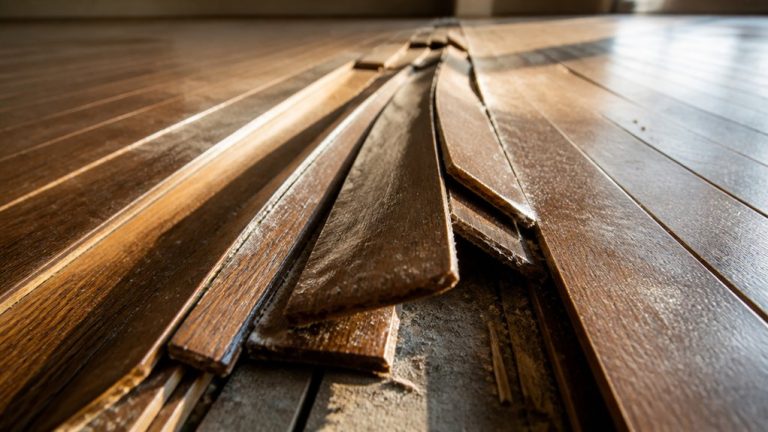
Wood floors, however, can absorb humidity, leading to expansion, warping, or mold if not properly sealed and ventilated.
You’ll need to manage wood carefully with dehumidifiers and finishes.
Concrete’s moisture resistance reduces maintenance needs, making it a more stable, long-term option where humidity fluctuates markedly.
Choose the Best Flooring Material Based on Your Lifestyle and Budget
When choosing between concrete and wood floors, you’re weighing durability against warmth, cost against style.
Concrete offers unparalleled strength and low maintenance, while wood brings natural beauty and comfort.
Think of it as a balance beam; each option has its unique tilt. By analyzing your lifestyle, budget, and environmental values, you can make a precise choice that suits your needs.
After all, your floor is the foundation of your space’s character and function.