Which Way to Lay Wood Floor: Right Layout Choice
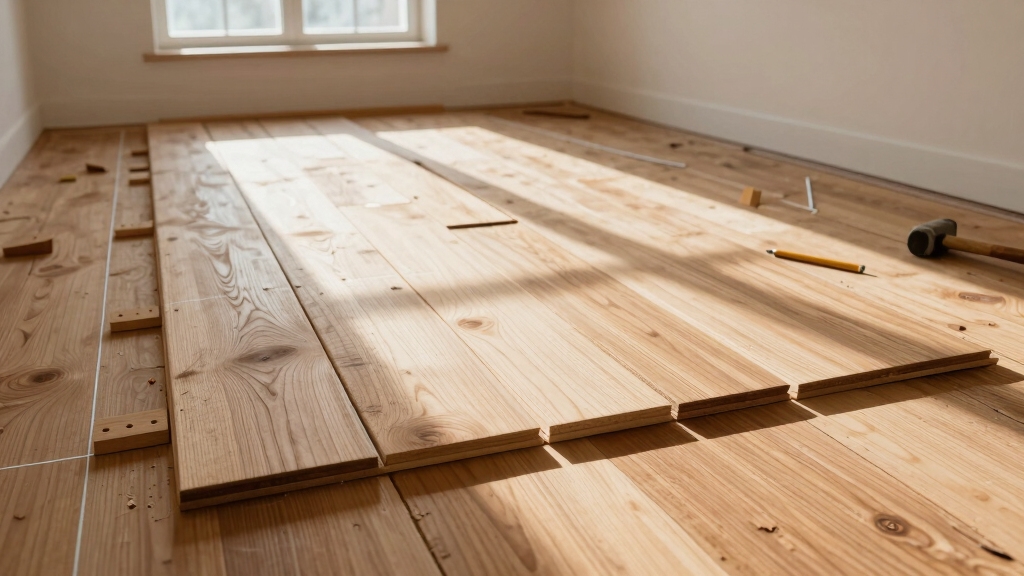
You should lay wood flooring perpendicular to the floor joists to enhance structural strength and prevent sagging. For visual appeal, run planks parallel to the longest wall to elongate the room and align with the main sightline.
Always stagger plank seams at least six inches to guarantee natural variation and durability. Secure the first row carefully with nails and maintain expansion gaps.
These foundational techniques set the stage for a professional, lasting floor, with further details refining your installation strategy.
Key Takeaways
- Lay wood planks perpendicular to floor joists to maximize stability and reduce sagging risks.
- Run planks parallel to the longest wall to visually elongate the room and enhance visual flow.
- Stagger plank end joints at least six inches apart to ensure natural variation and structural integrity.
- Use a snapped chalk line parallel to the longest wall to maintain straight, consistent rows.
- Maintain expansion gaps and secure the first row properly for durable, stable installation.
Key Factors for Choosing Wood Floor Direction

When deciding which way to lay your wood floor, you must balance structural integrity with aesthetic impact.
First, consider the floor joists’ orientation. Laying planks perpendicular to joists maximizes stability and reduces sagging risks.
However, in open layouts, you might prioritize appearance over strict structural direction.
Next, evaluate the room’s geometry and sightlines to ensure the flooring complements the space without causing visual disruption.
You also need to factor in the entire floor plan for seamless shifts between adjoining rooms.
Additionally, your installation method influences direction choices. For example, staple-down and nail-down methods require specific first-row positioning and securement techniques.
It is also important to ensure the subfloor is properly leveled using self-leveling compounds before installation to provide a stable base for the hardwood.
Why Run Planks Parallel to the Longest Wall?
Running wood planks parallel to the longest wall enhances the room’s perceived length and creates a cohesive visual flow. You’ll find this alignment visually elongates the space, making it appear more expansive.
It also aligns with the main sightline from the entryway, promoting seamless continuity throughout adjoining rooms. When you snap your chalk line parallel to the longest wall, you make certain rows remain straight and visually consistent, which contributes to a professional finish.
This direction suits straight patterns best, emphasizing linearity. While structural concerns like joist direction matter, prioritizing visual flow in open layouts improves overall aesthetics. Additionally, maintaining proper stagger distances between plank joints in this layout enhances both the floor’s durability and appearance.
When to Lay Wood Flooring Perpendicular to Floor Joists?
Visual flow often takes precedence in open layouts. However, structural integrity demands particular attention in certain installations.
You should lay wood flooring perpendicular to floor joists when subfloor stability is a concern. This orientation minimizes flex, reinforces the subfloor, and reduces sagging risks.
It’s essential for nail-down and staple-down methods to maximize durability.
Additionally, installing a minimum 1/4-inch approved subfloor over existing hardwood can further ensure a stable foundation and prevent installation issues.
| Benefit | Impact | Emotion |
|---|---|---|
| Enhanced stability | Reduces floor bounce | Confidence |
| Load distribution | Supports heavy use | Assurance |
| Subfloor bridging | Prevents sagging | Relief |
| Installation ease | Aligns with joist spacing | Control |
| Longevity | Increases lifespan | Satisfaction |
Prioritize perpendicular installation in structurally sensitive areas. This approach maintains floor integrity without sacrificing performance.
How to Stagger and Pattern Wood Floors Naturally?
To achieve a natural look in your wood floor installation, stagger the planks so their end seams never align closer than six inches between adjacent rows. This random staggering prevents weak points and creates a structurally sound floor with visual appeal.
Lay your planks parallel to the longest wall or main sightline. This ensures continuous flow and elongation of the room. Use a straight pattern for classic aesthetics, maintaining parallelism with a snapped chalk line and checking alignment frequently.
For added natural variation, vary plank lengths methodically while respecting the minimum offset. When installing floating floors, secure rows temporarily with masking tape to hold pattern integrity during adhesive curing.
This approach balances structural stability with an organic appearance, ensuring your wood floor looks both intentional and timeless. For best results, use proper cutting techniques to achieve clean, precise plank edges that enhance the overall finish.
First Row Installation Tips for a Smooth Layout
When installing the first row, position the straightest planks with the tongue side facing the room’s center to guarantee a tight, secure fit. This orientation assures easier locking with subsequent rows and prevents gaps.
Maintain a consistent expansion gap using spacers between the wall and flooring to allow for natural wood movement. Secure the first row with nails even if using a staple-down method, predrilling holes ¼ inch from the plank edge and ½ inch from the wall to avoid splitting.
Stagger seams at least 6 inches from the next row to enhance stability and appearance.
Key tips include:
- Align planks precisely using a snapped chalk line
- Check plank straightness before installation
- Use a tap block for tight groove seating
- Confirm expansion gaps uniformly
- Predrill nail holes to prevent wood damage
When removing glued-down flooring in the future, understanding the properties of polyurethane adhesive can help in planning the process effectively.
Frequently Asked Questions
How Long Should I Acclimate Wood Flooring Before Installation?
You should acclimate wood flooring for at least 48 to 72 hours before installation. This allows the wood to adjust to your home’s temperature and humidity, preventing later warping or gaps.
Store the planks flat in the room where they’ll be installed. Keep them in their packaging but open enough for air circulation.
Monitor moisture content with a meter to ensure it matches subfloor levels within acceptable ranges before you start laying.
What Tools Are Needed to Trim Door Casings for Flooring?
You’ll need a few essential tools to trim door casings for flooring: a hammer, a pry bar to remove the casing carefully, a coping saw or oscillating multi-tool for precise cuts, and a measuring tape for accuracy.
Studies show 70% of flooring issues stem from poor door clearance, so accuracy matters. Use a chisel to clean edges and a level to ensure even height. Proper tools guarantee a seamless fit beneath casings.
Can I Use Diagonal Patterns in Rooms Without Angled Walls?
Yes, you can use diagonal patterns in rooms without angled walls. Diagonal layouts add visual interest and can make a room appear larger by drawing the eye along angled lines.
However, they require more precise measurements, increased material waste, and complex cuts. Make certain you have the skill and tools for accurate installation.
Prioritize structural considerations and subfloor stability when choosing this pattern. Diagonal planks must still align properly with joists for durability.
How Do Different Installation Methods Affect Expansion Gap Size?
You’ll adjust expansion gaps based on installation methods: nail-down and staple-down require smaller gaps, usually around 1/4 inch, since the flooring is securely fastened.
Glue-down methods need moderate gaps near 1/2 inch to allow adhesive curing and slight movement.
Floating floors demand larger gaps, often 1/2 to 3/4 inch, to accommodate expansion without restraint.
Always measure gaps proportionally to room size, ensuring proper flooring performance and longevity.
What Is the Best Way to Secure Flooring During Glue Drying?
The best way to secure flooring during glue drying is to use masking tape to hold the rows firmly in place.
This prevents any shifting while the adhesive cures.
Additionally, snap a chalk line beforehand to guarantee perfect alignment.
Regularly check the flooring for parallelism and adjust as needed.
Avoid walking on the floor until fully dry to maintain bond strength and prevent movement or gaps.
The Final Decision: Choosing the Perfect Direction for Your Wood Floor
Now that you know the key factors and installation techniques, the real challenge begins. Which direction will you choose to lay your wood floor? Will you align it with the longest wall for a seamless flow or go perpendicular to joists for added strength?
How will you stagger your planks to avoid a predictable pattern? Your decisions here will define the floor’s durability and aesthetic. Choose wisely; your expertise makes all the difference.