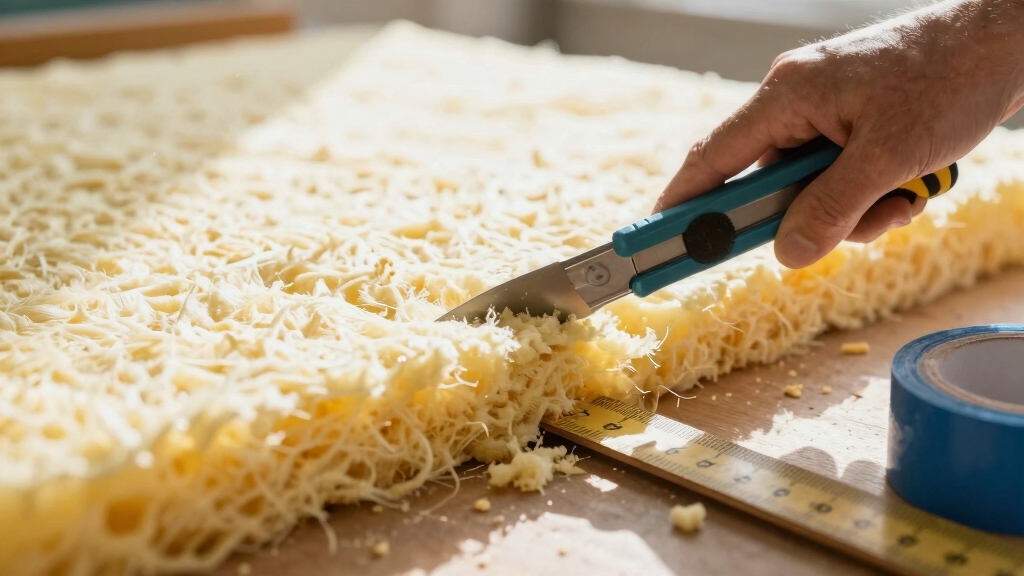
Best Way to Cut Insulation: Accurate Results
To cut insulation accurately, first measure the space carefully and mark your material with a pencil or chalk. Use a straightedge for straight lines.
For fiberglass, score the non-faced side with a sharp utility knife and snap cleanly. For foam board, use multiple shallow cuts or a fine-toothed saw for thicker pieces.
Always wear gloves, goggles, and a mask. Work in a ventilated area to minimize dust. Mastering these basics guarantees cleaner, precise cuts. Explore how to refine your technique further.
Key Takeaways
- Measure and mark insulation accurately using a tape measure and straightedge for precise, straight cut lines.
- Use a sharp utility knife for fiberglass and a retractable knife or fine-toothed saw for foam board insulation.
- Score foam board with multiple light passes rather than a single deep cut for cleaner edges.
- Wear gloves, goggles, and a mask, and work in a well-ventilated area to ensure safety during cutting.
- Clean up dust and fibers immediately using a HEPA vacuum or damp cloth to maintain a safe workspace.
Measure and Mark Fiberglass and Foam Board Insulation Accurately

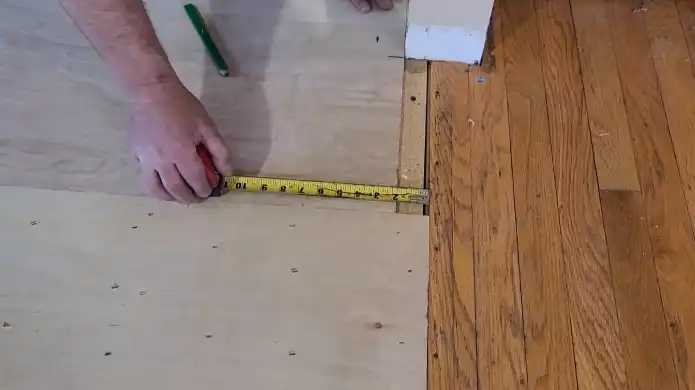
Start by measuring the exact dimensions of the space where the insulation will fit using a tape measure. Record length, width, and depth to ensure precise cuts.
Begin by carefully measuring the insulation space with a tape measure for accurate length, width, and depth.
Next, transfer these measurements onto the insulation material. Use a straightedge or ruler to span the full width and mark straight, accurate lines.
For fiberglass, mark on the non-faced backside with a pencil or chalk to avoid fiber fraying. For foam board, use a pencil or chalk on the surface, ensuring visibility and accuracy.
Employ a chalk line for longer, straight guides if needed. Double-check your measurements before cutting to prevent waste.
Accurate measuring and marking are critical to achieving tight fits and reducing gaps, which improves insulation performance and efficiency.
Properly preparing the surface and checking for moisture levels before installation helps ensure the insulation’s long-term effectiveness.
Choose the Right Tools for Fiberglass and Foam Board Cutting
After measuring and marking your insulation material accurately, selecting the proper tools for cutting is the next step to guarantee clean, precise edges.
For fiberglass batts and rolls, use a sharp utility knife or an insulation knife to avoid tearing. Keep extra blades handy since fiberglass dulls blades quickly. Employ a straightedge to guide your cuts evenly across the material.
For foam board insulation like EPS or phenolic foam, a retractable utility knife works well for straight cuts. For thicker or denser foam, consider a serrated insulation saw or circular saw with a fine-toothed blade.
A hot wire cutter offers smooth, detailed cuts for EPS, while a sharpened putty knife can slice rigid foam cleanly without dust. Choosing the right tool reduces waste and ensures fitting accuracy.
Maintaining blade sharpness by snapping off dull segments regularly helps achieve cleaner cuts and prolongs tool life when working with foam board insulation, especially using a utility knife with snap-off blades.
How to Cut Fiberglass Insulation Cleanly and Safely?
Lay your fiberglass insulation batt flat on a stable surface covered with a drop cloth to contain fibers. Always wear protective gloves, goggles, and a mask to prevent irritation.
Use a sharp utility knife with a straightedge to guide your cut. Score the backing paper on the non-faced side in one continuous motion, then snap the insulation along the scored line for a clean edge. Remember to replace dull blades often for precision.
Cut from the non-faced back side to minimize fiber fraying. Compress the batt slightly with your knee or hand for easier slicing.
Use a straightedge to ensure accuracy across the width. Work in well-ventilated areas and clean up fibers immediately after cutting. Maintaining proper ventilation is crucial to reduce airborne particles and ensure safety during the cutting process.
Clean Cutting Techniques for Foam Board Insulation
Although foam board insulation can be tough to cut cleanly, using the right tools and techniques makes the process straightforward.
Begin by measuring and marking your cut line clearly with a pencil or chalk, using a straightedge for precision.
Score the foam board lightly with a sharp utility knife, making multiple shallow passes rather than one deep cut. This approach prevents uneven edges and tearing.
For thicker or denser foam, use a fine-toothed circular saw or insulation saw, guiding the blade with a wood straightedge to maintain a 90-degree angle.
A hot wire cutter offers smooth, precise cuts on intricate shapes but works slower.
Apply firm, steady pressure, and avoid rushing to ensure clean, crisp edges. Always keep blades sharp for best results.
When working with foam insulation underlayments, selecting the right thickness, such as 3mm foam, can also aid in maintaining clean cuts and effective installation.
Stay Safe and Clean Up After Cutting Insulation
When you cut insulation, you must wear protective gear like gloves, goggles, and a dust mask to prevent irritation from fiberglass fibers or foam dust. Always work in a well-ventilated area to minimize airborne particles.
After cutting, clean up thoroughly to avoid skin irritation and respiratory issues. Follow these steps for safety and cleanliness:
Use a HEPA vacuum or damp cloth to collect dust and fibers immediately. Dispose of scraps in sealed bags to prevent fiber dispersion. Wash exposed skin with cold water to close pores and remove fibers. Change and launder clothes separately to avoid contaminating other laundry.
These practices reduce health risks and keep your workspace safe and tidy throughout the insulation installation process. Proper ventilation also helps reduce stagnant air that can trap moisture and airborne particles.
Frequently Asked Questions
How Should I Store Insulation Materials Before Cutting?
Think of insulation like fresh bread. You wouldn’t leave it out to dry and lose its fluff.
You should store insulation flat, in a dry, cool area, away from moisture and direct sunlight to keep its integrity.
Keep fiberglass batts in their original packaging or wrap foam boards in plastic to prevent damage.
Avoid stacking heavy items on top, as compression can reduce effectiveness.
Proper storage preserves performance until you’re ready to cut and install.
Can I Reuse Offcuts of Fiberglass or Foam Board Insulation?
Yes, you can reuse offcuts of fiberglass and foam board insulation if they’re intact and fit the required space.
For fiberglass, make sure offcuts aren’t compressed or damaged, as this reduces effectiveness.
Foam board offcuts must maintain their rigidity and shape to provide proper insulation.
Store offcuts flat and dry to prevent warping or moisture absorption.
Always measure carefully before reuse to guarantee precise fitting and peak thermal performance.
What Is the Best Way to Dispose of Insulation Scraps?
Think of insulation scraps as puzzle pieces that don’t fit anymore. You need to handle them carefully.
Dispose of fiberglass scraps by sealing them in heavy-duty plastic bags to prevent fiber release. Then check local regulations for hazardous waste disposal.
Foam board scraps can often go into regular construction debris bins, but confirm recycling options first. Always wear protective gear during cleanup. Never burn insulation materials, as they emit toxic fumes.
How Do Temperature and Humidity Affect Cutting Insulation?
Temperature and humidity directly impact how you cut insulation. High humidity can soften foam boards, causing uneven cuts and tearing. You should cut in dry conditions when possible.
Cold temperatures make fiberglass and foam more rigid, potentially causing brittle breaks. Warming materials slightly helps. Excessive moisture can also cause fiberglass fibers to clump, making clean slicing harder.
Always store insulation in controlled environments and adjust your cutting speed accordingly to maintain precision.
Are There Specific Brands of Tools Better for Insulation Cutting?
Certain cutting champions consistently cut cleaner and crisper.
You’ll find brands like Stanley and Olfa excel with sharp, sturdy utility knives perfect for fiberglass and foam board.
For hot wire cutters, Weller’s well-regarded tools melt EPS smoothly.
Insulation knives from Milwaukee offer reliable rigidity without ripping.
Choosing trusted tools with replaceable blades guarantees precision and prevents premature dullness.
This lets you slice through insulation swiftly and safely every time.
From Measurement to Clean Cuts: Your Insulation Success Guide
Now that you know how to measure, mark, and choose the right tools, are you ready to cut insulation like a pro?
By following clean cutting techniques for both fiberglass and foam board, you’ll guarantee precise fits and minimize waste. Remember to prioritize safety with proper gear and ventilation.
Then clean up thoroughly to avoid irritation or hazards. With these steps, you’ll achieve efficient, accurate insulation cuts every time.