
Is Cedar a Hard or Softwood: Lasting and Built to Endure
Cedar is primarily classified as a softwood because it comes from coniferous gymnosperms, which lack the vessel elements found in hardwoods. Its cellular structure features tracheids and resin canals, resulting in lower density, typically 22–36 lbs/ft³, with moderate strength.
Janka hardness ranges from 300 to 700 lbs. Despite being softwood, cedar resists rot and insects well due to natural oils and hydrophobic compounds. Some cedar species, like Spanish cedar, are hardwoods, offering different mechanical properties.
Understanding these traits will clarify cedar’s suitability for your project.
Key Takeaways
- Cedar is primarily classified as a softwood because it originates from coniferous, cone-bearing gymnosperm trees.
- The hardwood or softwood designation depends on botanical classification, not the wood’s hardness or strength.
- Some cedars, like Spanish cedar and yellow cedar, are hardwoods due to their angiosperm origin.
- Softwood cedars have simpler cellular structures with tracheids and resin canals, influencing their density and durability.
- Most commonly known cedars are softwoods, valued for their natural oils, rot resistance, and workability.
Is Cedar Hardwood or Softwood? Key Differences Explained
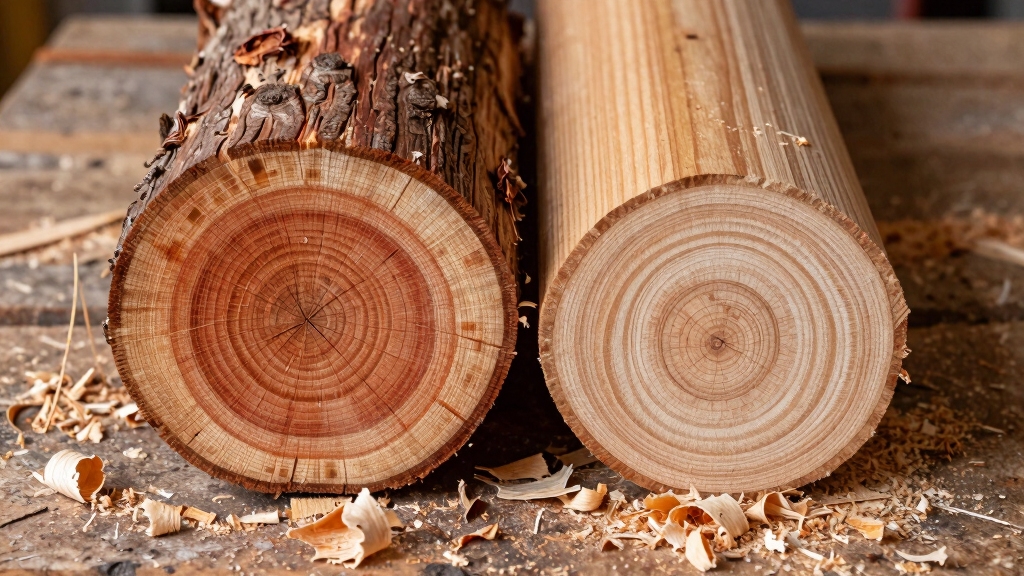
While cedar is commonly associated with softwood, its classification hinges on botanical characteristics rather than actual hardness or strength.
Cedar’s classification depends on botanical traits, not its hardness or strength.
Cedar species like Eastern and Western Red Cedar belong to the softwood group because they’re coniferous, cone-bearing gymnosperms.
In contrast, varieties such as Spanish cedar and yellow cedar come from dicot trees and are classified as hardwoods.
You’ll find that softwood cedars grow faster and have needle-like leaves, while hardwood cedars possess broader leaves and denser cellular structures.
The distinction is critical for understanding wood properties, as softwoods like Western Red Cedar exhibit lower density and Janka hardness yet maintain durability through natural oils.
Hardwood cedars typically have higher density and strength metrics. This botanical basis clarifies why cedar’s classification isn’t synonymous with its mechanical performance.
Additionally, cedar mulch’s natural oils and durability contribute to its long-lasting performance and pest resistance, traits that influence its practical use beyond simple wood classification.
What Makes Wood a Hardwood or Softwood?
You classify wood as hardwood or softwood based on its botanical origin. Hardwoods come from angiosperm trees, which have broad leaves. On the other hand, softwoods originate from gymnosperm conifers that bear needles and cones.
This distinction actually reflects some interesting differences in their growth patterns and cell structure. Usually, hardwoods are denser and have more complex vessels, while softwoods tend to feature simpler tracheids.
Now, here’s a fun fact: even though cedar is called “softwood,” it actually falls into that category because of its coniferous lineage. So, next time you hear about hardwoods and softwoods, you’ll know it’s not just about how hard the wood feels!
However, it is important to note that softwoods like cedar can be treated with fire retardant chemicals to enhance their fire resistance, especially for outdoor construction uses.
Botanical Classification Differences
Because the terms hardwood and softwood refer to botanical classification rather than the wood’s actual hardness, understanding their differences hinges on tree anatomy and reproduction.
Hardwoods derive from angiosperms, which are dicotyledonous trees producing seeds enclosed in fruit, typically with broad leaves.
Softwoods, on the other hand, come from gymnosperms, mostly conifers, that bear unenclosed seeds, often in cones, and possess needle-like leaves.
Cedar species primarily belong to the softwood group due to their coniferous origin, characterized by cones and needle foliage.
However, some cedars, like Spanish and yellow cedar, stem from hardwood angiosperms, making them exceptions.
This botanical classification impacts cellular structure: hardwoods have vessel elements for water transport, while softwoods rely on tracheids.
These differences in cellular makeup also influence the wood’s density, grain, and durability, which are key factors in project selection.
Growth and Structural Traits
Understanding growth patterns and cellular structure is key to distinguishing hardwoods from softwoods.
Hardwoods derive from angiosperm trees with vessel elements and complex cell arrangements, resulting in slower growth and denser wood.
Softwoods, like most cedars, originate from gymnosperm conifers characterized by tracheids instead of vessels, enabling faster vertical growth and lower density.
This cellular simplicity in softwoods supports quicker maturity and lighter weight, as seen in Western Red Cedar and Eastern Red Cedar.
However, some cedars, such as Spanish and yellow cedar, are angiosperms, exhibiting hardwood traits structurally.
Consequently, the botanical classification depends on reproductive and cellular features, not hardness.
You’ll note that cedar’s softwood growth traits, including resin canals and uniform tracheid structure, contribute to its workability and resistance, despite varying hardness levels across species.
For woodworking projects, understanding the dimensional stability of cedar is crucial to ensure durability and performance.
Cedar Species: Which Are Hardwoods and Which Are Softwoods?
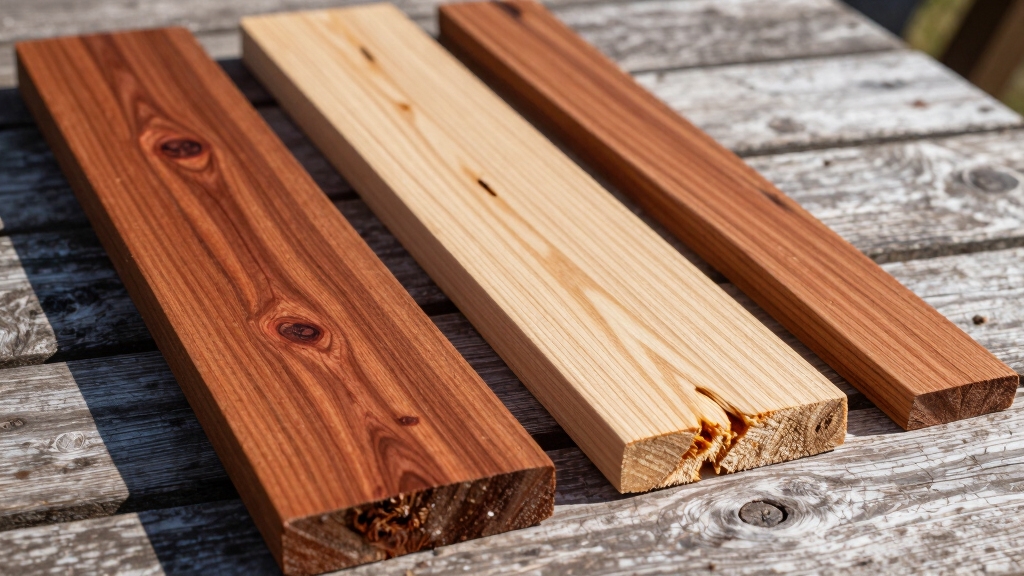
Distinguishing between hardwood and softwood cedar species hinges on their botanical classification rather than physical hardness.
Cedars from coniferous, cone-bearing gymnosperms, like Western Red Cedar and Eastern Red Cedar, are classified as softwoods.
However, species like Spanish cedar and Yellow cedar, which are dicot angiosperms, fall under hardwoods. This classification reflects their reproductive biology, not density or strength.
Proper sealing and humidity control are important to prevent mold growth on cedar wood surfaces.
| Cedar Species | Botanical Classification |
|---|---|
| Western Red Cedar | Softwood (Gymnosperm) |
| Eastern Red Cedar | Softwood (Gymnosperm) |
| Spanish Cedar | Hardwood (Angiosperm) |
You’ll notice that most familiar cedars are softwoods, despite some hardwood species sharing the cedar name. This distinction is essential for accurate material selection and understanding wood properties.
Comparing Cedar Species’ Strength and Durability
When you look into the strength of different cedar species, you’ll notice some interesting differences. For instance, Eastern Red Cedar tends to take the lead when it comes to Janka hardness and bending strength. Pretty impressive, right?
Now, when we talk about durability, it really comes down to the natural oils and density of the wood. This is where Western Red Cedar and Alaskan Yellow Cedar shine, as they offer excellent resistance to rot and insects.
These characteristics aren’t just fun facts; they actually play a big role in determining how each type of cedar is best used. Whether you’re considering lightweight structural components or materials for weather-resistant exterior applications, knowing these differences can really help you make the right choice.
Additionally, the natural oils in cedar contribute to its pest resistance and slow decomposition, enhancing its longevity in outdoor applications.
Strength Variations Among Species
While all cedar species share common characteristics as softwoods, their strength and durability vary considerably, impacting their suitability for different applications.
For instance, Western Red Cedar exhibits compressive strength between 3,500 and 5,000 psi, with bending strength ranging from 8,000 to 12,000 psi.
Alaskan Yellow Cedar surpasses these values, offering compressive strength of 5,000 to 7,000 psi and bending strength up to 18,000 psi, reflecting greater structural capacity.
Eastern Red Cedar shows slightly lower compressive strength around 3,000 to 4,000 psi but can reach bending strengths near 10,000 psi.
These differences arise from variances in density and cellular structure, with Yellow Cedar denser at 30-36 lbs/ft³ compared to Western Red Cedar’s 22-28 lbs/ft³.
Understanding these metrics helps you select the best cedar species based on required mechanical performance.
While cedar is generally softer than many hardwoods, the Janka hardness scale helps quantify how its hardness compares to various hardwood species.
Durability Factors And Uses
Because cedar species vary in strength and density, their durability and best uses also differ markedly.
You’ll find Western Red Cedar excels in rot and insect resistance due to natural oils. This makes it ideal for outdoor structures like siding and fences.
Alaskan Yellow Cedar offers higher compressive and bending strength, making it suitable for heavy-duty applications such as boat building.
Eastern Red Cedar, with its higher Janka hardness, performs well where moderate durability and aesthetic appeal are needed.
Key factors for consideration:
- Natural oils enhance decay resistance without chemicals.
- Density impacts weight and structural suitability.
- Species-specific strength metrics guide appropriate usage.
When maintaining cedar products, it is important to use gentle, wood-specific cleaners to preserve their natural durability and appearance.
How Cedar’s Softwood Status Influences Strength and Rot Resistance?
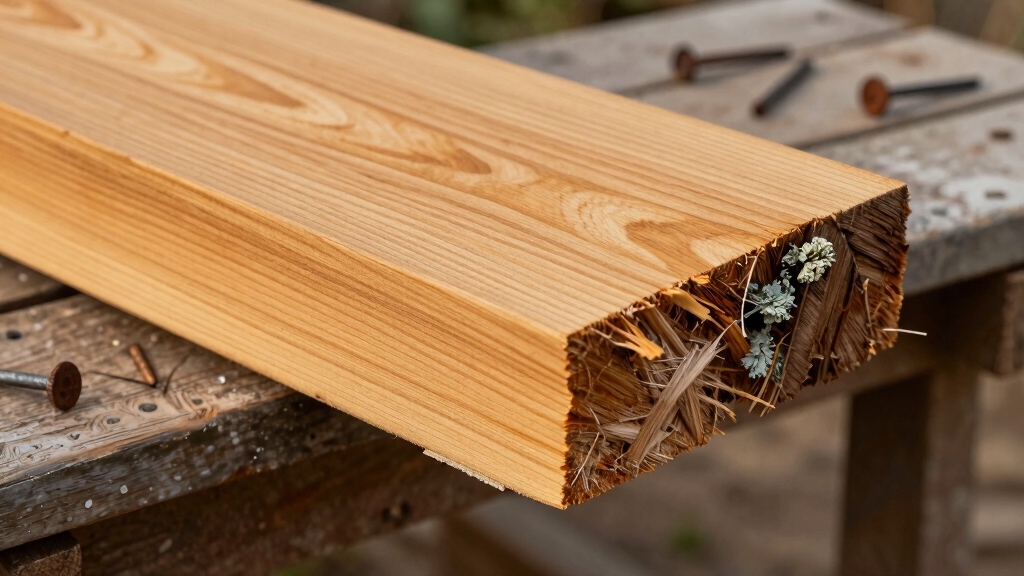
Although cedar is classified as a softwood due to its coniferous origin, this botanical status doesn’t diminish its notable strength and rot resistance.
You should understand that cedar’s Janka hardness ranges from 300 to 700 lbs, which, while lower than many hardwoods, still provides sufficient durability for structural applications. Its compressive strength spans 3,000 to 7,000 psi, and bending strength reaches up to 18,000 psi, ensuring adequate load-bearing capacity.
The softwood classification reflects growth characteristics, not mechanical weakness. Additionally, cedar’s cellular structure and low density contribute to its lightweight nature without compromising strength.
This unique combination enhances its resistance to rot by minimizing moisture absorption, an inherent advantage in outdoor uses. So, despite being a softwood, cedar effectively balances strength and decay resistance for demanding environments.
Furthermore, treatments such as thermal modification can improve cedar’s moisture resistance and durability in harsh conditions.
Why Cedar’s Natural Oils Improve Softwood Durability Outdoors?
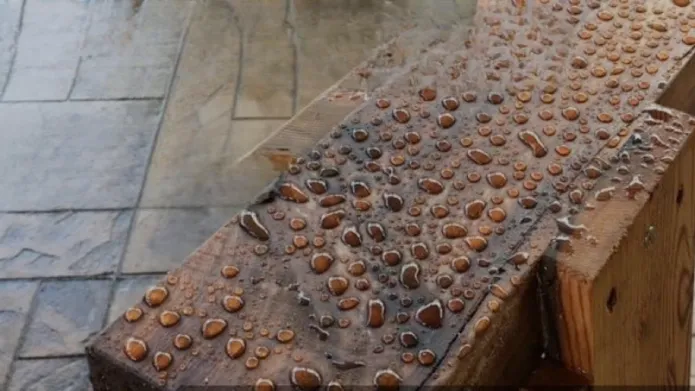
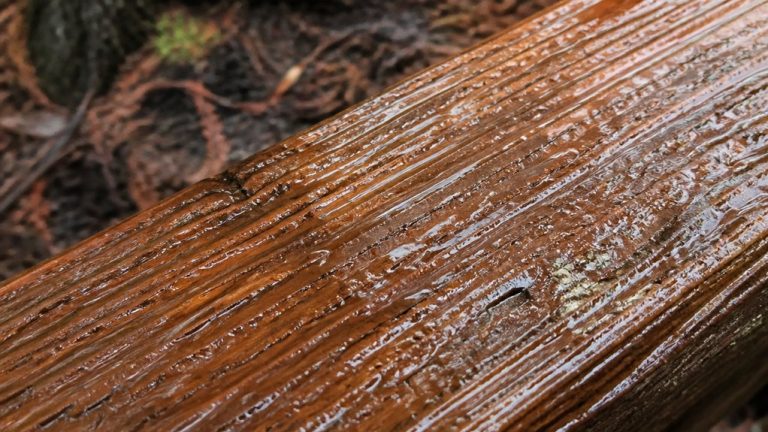
Harnessing the natural oils inherent in cedar markedly enhances its durability for outdoor applications. These oils create a chemical barrier that inhibits fungal growth, repels insects, and reduces moisture absorption.
When you work with cedar, you tap into its intrinsic protective mechanisms, which appreciably extend its lifespan without chemical treatments.
Key benefits include:
- Rot Resistance: Organic compounds such as thujaplicins hinder decay fungi, preserving structural integrity.
- Insect Deterrence: Natural oils emit aromas that repel termites and wood-boring insects, minimizing infestations.
- Moisture Management: Hydrophobic oils reduce water penetration, preventing warping and checking in fluctuating weather.
This combination explains why cedar outperforms many hardwoods outdoors despite its softwood classification, offering longevity and resilience in exposed environments.
For enhanced protection, many recommend applying penetrating oil-based sealers that complement cedar’s natural oils by adding UV resistance and water repellency.
How Cedar’s Lightweight Density Benefits Construction and Outdoor Use?
Cedar’s low density considerably reduces the overall weight of structures, making it easier for you to handle, transport, and install large components without compromising strength.
With densities ranging from 22 to 36 lbs/ft³ depending on species, cedar offers a lightweight alternative to hardwoods while maintaining impressive compressive and bending strengths (up to 7000 psi and 18,000 psi respectively).
This balance allows you to design sizable outdoor frameworks and components that remain structurally sound yet manageable. The reduced mass decreases load stress on foundations and supports, enhancing long-term durability.
Additionally, cedar’s lightweight nature improves construction efficiency by minimizing labor effort and transportation costs. Its favorable strength-to-weight ratio, combined with natural resistance to decay and insects, makes cedar an ideal choice for outdoor applications requiring both durability and ease of handling.
Best Uses for Cedar Based on Wood Type and Properties
Understanding cedar’s lightweight nature and strength sets the stage for selecting the best applications tailored to each wood type and its specific properties.
Western Red Cedar excels in outdoor projects requiring rot resistance and dimensional stability, such as siding, fencing, and playsets.
Alaskan Yellow Cedar, with higher compressive and bending strengths, suits structural timbers and fine furniture demanding durability.
Eastern Red Cedar, noted for its higher Janka hardness and aromatic oils, works well for interior paneling, closets, and specialty items.
- Western Red Cedar: Lightweight outdoor structures, siding, and fencing due to excellent weather resistance.
- Alaskan Yellow Cedar: Structural components and premium furniture, leveraging strength and density.
- Eastern Red Cedar: Indoor applications needing hardness and natural insect resistance, including closets and chests.
Choose cedar type based on load requirements, exposure, and durability to maximize performance.
Choosing Cedar or Other Woods for Outdoor Projects
When selecting materials for outdoor projects, you need to weigh factors like durability, resistance to rot and insects, and weight.
Cedar, especially Western Red and Alaskan Yellow varieties, offers excellent natural resistance to decay and pests due to its organic oils. This makes it ideal for exterior use without chemical treatments.
Its low density guarantees lightweight structures, facilitating easier handling and installation. Compared to hardwoods like oak, cedar provides superior weather resistance and longevity, typically 20 to 30 years without warping.
However, if you require higher hardness and bending strength, some hardwoods or denser softwoods might be preferable.
Ultimately, choose cedar when you prioritize sustainability, ease of workability, and natural protection. Consider other woods when extreme hardness or load-bearing capacity is critical for your project’s structural demands.
Frequently Asked Questions
How Should Cedar Be Maintained to Extend Its Outdoor Lifespan?
To extend cedar’s outdoor lifespan, you should regularly clean it to remove dirt and mildew using mild soap and water.
Apply a high-quality, breathable sealant or oil-based finish to protect against moisture and UV damage.
Inspect for any cracks or damage annually, repairing promptly.
Avoid ground contact to reduce rot risk.
Maintaining ventilation around cedar structures helps prevent mold growth, ensuring you preserve its natural rot and insect resistance effectively.
Can Cedar Cause Allergic Reactions or Respiratory Issues?
You might be surprised to learn cedar can trigger allergic reactions or respiratory issues in some people.
Its natural oils, while great for repelling insects and rot, release aromatic compounds that may irritate sensitive individuals.
Prolonged exposure to cedar dust during cutting or sanding can cause asthma-like symptoms or skin irritation.
If you’re prone to allergies, wearing a mask and gloves when working with cedar is essential to minimize risks and protect your respiratory health.
What Is the Environmental Impact of Harvesting Cedar?
You’ll find that harvesting cedar impacts the environment variably. Since cedar trees grow faster than many hardwoods, they offer a more sustainable timber source if managed properly.
However, overharvesting can disrupt ecosystems and reduce habitat diversity. You should seek cedar from certified sustainable forests to minimize deforestation and carbon footprint.
Responsible harvesting maintains soil stability and biodiversity, ensuring cedar remains a renewable resource with a lower environmental impact compared to slower-growing hardwoods.
How Does Cedar Compare in Cost to Other Common Woods?
You’ll find cedar generally costs more than common softwoods like pine but less than premium hardwoods such as oak or maple.
Its higher price reflects natural rot resistance, low density, and durability without chemical treatment, reducing maintenance costs.
While cedar’s upfront cost is moderate, its longevity and weather resistance make it cost-effective for outdoor projects.
Are There Eco-Friendly Treatments to Enhance Cedar’s Durability?
You won’t believe how eco-friendly treatments can supercharge cedar’s natural durability!
You can use natural oils like linseed or tung oil to enhance water resistance without toxic chemicals.
Borate-based preservatives offer excellent insect and fungal protection, safe for the environment.
These treatments maintain cedar’s rot resistance and longevity while keeping it sustainable.
They penetrate deeply, reinforcing fibers and extending outdoor lifespan without compromising cedar’s natural breathability or appearance.
The Timeless Appeal of Cedar: Beauty Backed by Performance
When working with cedar, remember that not all softwoods are created equal. Its natural oils give it remarkable resistance and durability despite being a softwood.
As the saying goes, “Don’t judge a book by its cover.” You’ll find cedar’s lightweight density and rot resistance make it ideal for outdoor projects where strength and longevity matter.
Choosing the right cedar species guarantees your construction benefits from both performance and lasting beauty.