
Best Way to Get Paint off Wood Floor: Starts with Care
Start by identifying your paint and wood floor type to choose safe methods. Gently soften paint spots with a steamer, wiping softened paint immediately with a damp rag.
Use a plastic scraper at a low angle to lift thicker paint without scratching the finish. For stubborn residue, apply a mild solvent like isopropyl alcohol mixed with lemon juice sparingly.
Then lightly scrub with wet steel wool and mineral spirits. Protect nearby surfaces and ventilate well throughout. Explore further for detailed step-by-step strategies to guarantee safe, effective paint removal.
Key Takeaways
- Identify the paint type and wood floor finish before starting removal to choose safe and effective cleaning methods.
- Use a steamer to soften paint spots briefly, then immediately wipe with a damp rag to prevent hardening.
- Gently scrape softened paint with a plastic scraper held at a low angle to avoid damaging the wood finish.
- Apply a tested solvent mixture (isopropyl alcohol and lemon juice) sparingly to loosen residual paint without oversaturating wood.
- Alternate steaming, wiping, gentle scraping, and light scrubbing with wet steel wool and mineral spirits while protecting floors and surrounding areas.
Identify Your Paint and Wood Floor Type
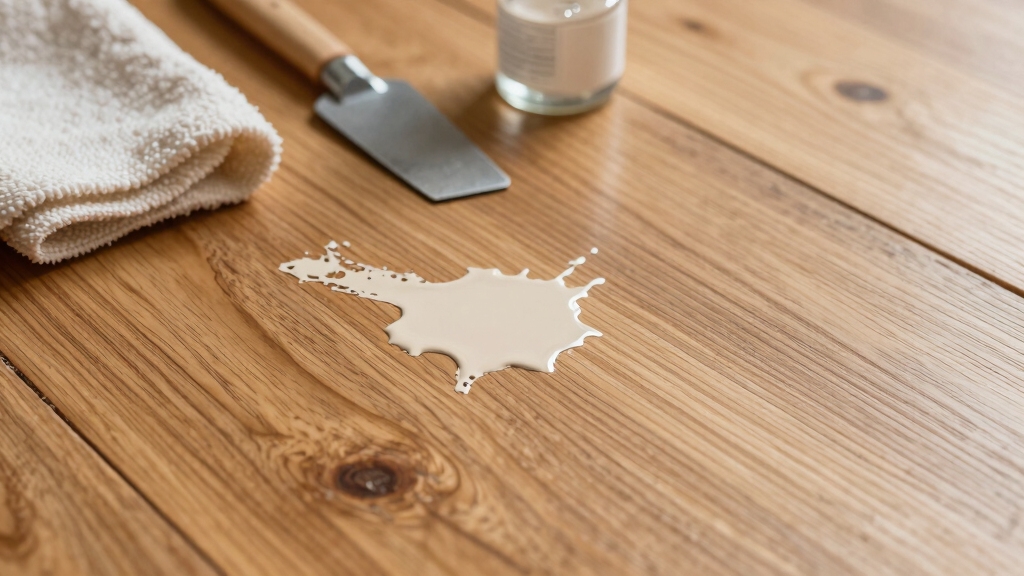
Before you begin removing paint from your wood floor, you need to identify both the type of paint and the wood finish you’re dealing with.
First, determine if the paint is water-based or oil-based, fresh or dried, as this affects your removal method. Inspect the paint’s texture and thickness for clues about its age and composition.
Identify if paint is water- or oil-based and note its texture to choose the best removal technique.
Next, assess the wood floor finish: varnish, polyurethane, shellac, or wax, since each reacts differently to solvents and heat.
Test a small, hidden area by applying a drop of water or solvent to check finish resistance. Note any changes, such as discoloration or softening.
Gathering this information guides your choice of removal tools and chemicals, preventing damage to your floor and ensuring an effective, safe paint removal process. Always follow safety precautions such as using personal protective equipment and ensuring proper ventilation when applying chemical solutions or heat.
Use a Steamer to Soften and Remove Paint Spots
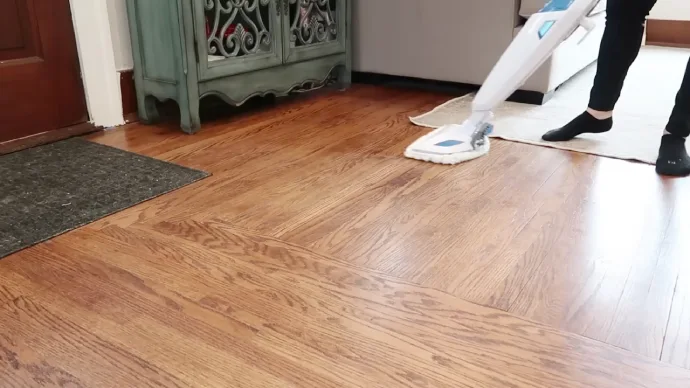
When tackling paint spots on your wood floor, applying a steamer directly to the affected area softens the paint efficiently within seconds.
Hold the steamer nozzle close but avoid prolonged exposure to prevent wood damage. Once the paint softens, immediately wipe it away using a damp rag to prevent re-hardening.
For larger or stubborn paint blobs, repeat steaming and wiping until the surface clears. This method requires less physical effort compared to scraping and works effectively on both fresh and dried paint splatters.
Make sure you move systematically across the floor, treating spots individually for best results. Although time-consuming, steaming minimizes mechanical stress on the wood, preserving the finish.
Gently Scrape Paint Without Damaging Your Wood Floor
When it comes to scraping paint off your wood floor, it’s important to choose the right tools. Opt for a plastic scraper that’s specifically made for wood surfaces. This helps to reduce the chances of scratching your beautiful floor.
As you start scraping, remember to apply gentle and consistent pressure. You want to lift the paint without gouging into the wood. It’s all about being careful and methodical. Don’t forget to take breaks every now and then.
Pausing to assess your progress can really help you avoid overexertion and ensure you’re not damaging the floor in the process. Using plastic or wooden tools instead of metal ones is advisable to prevent scratches while removing residues.
Choose Proper Scraper Tools
Select a plastic scraper designed to minimize the risk of scratching or denting your wood floor’s surface. Avoid metal scrapers as they can easily gouge the wood, damaging the finish and surface integrity.
Choose a scraper with a thin, flexible blade to allow controlled maneuvering under paint spots. Make sure the handle provides a firm grip to maintain steady pressure during use.
Consider scrapers with replaceable blades, so you can maintain sharpness without compromising safety. Before scraping, inspect the blade edge for nicks or roughness; a smooth edge reduces the chance of accidental floor damage.
Using the correct scraper tool is essential for effective paint removal while preserving the wood’s finish, preventing unnecessary repair or refinishing later in the process. Always wear safety glasses and dust masks as part of standard safety precautions when removing paint from hardwood flooring.
Apply Gentle Scraping Pressure
With the right scraper in hand, focus on applying gentle pressure to lift paint without harming your wood floor. Position the scraper blade at a low angle, sliding it carefully beneath the paint layer.
Avoid forcing the tool, as excessive pressure may gouge or scratch the wood surface. Instead, use controlled, steady movements to loosen the paint incrementally. If resistance increases, pause and consider softening the paint with heat or solvents before continuing.
Regularly inspect the scraper edge to make certain it remains smooth and free of debris, preventing unintended floor damage. Combining gentle scraping with periodic wiping helps remove loosened paint efficiently while preserving the wood finish.
This methodical approach maximizes paint removal while minimizing risk to your floor’s integrity. Additionally, after scraping, cleaning the area with a mild solution of dish soap and warm water can help remove any remaining residue without damaging the wood’s surface, supporting safe cleaning practices.
Loosen Stubborn Paint With Chemical Solvents
If you’re dealing with some stubborn paint, a great way to loosen it up is by whipping up a simple solvent mixture. Just mix isopropyl alcohol with a bit of lemon juice—make sure to get the proportions just right.
When you’re ready to tackle those dried paint spots, apply the solution sparingly. But before you go all in, it’s a good idea to test it on a hidden area first. You want to make sure it won’t mess with the finish.
And hey, don’t forget about safety! Always work in a well-ventilated space and protect the surrounding surfaces. Better safe than sorry, right?
For best results, use a gentle, non-abrasive sponge to apply the solution carefully and avoid damaging the wood surface.
Solvent Mixture Preparation
When preparing a solvent mixture to loosen stubborn paint, combine isopropyl alcohol with lemon juice in a controlled ratio to guarantee effective stain breakdown without damaging the wood.
Start with a 3:1 ratio, three parts isopropyl alcohol to one part lemon juice, to balance solvent strength and acidity. Mix thoroughly in a clean, labeled container.
Use fresh lemon juice to maintain acidity levels. Avoid excess lemon juice, as its acidity can discolor or weaken the wood finish.
Store the mixture in a sealed container away from heat and direct sunlight to preserve potency. Always test this solution on a hidden area of the floor to confirm compatibility with your specific wood finish.
This method assures controlled chemical action that loosens paint while minimizing risk to your floor’s integrity.
Additionally, avoid using acidic substances or harsh chemicals that can cause finish etching or irreversible damage to hardwood floors.
Application Techniques
Apply the solvent mixture carefully to dried paint spots using a clean cloth or cotton swab, ensuring even coverage without oversaturation.
Let it sit briefly to break down the paint’s bond with the wood. Avoid soaking the floor to prevent wood damage. After a few minutes, gently rub the softened paint with the cloth, repeating as needed.
Use sparingly and always monitor the wood’s finish. Proper cleaning solutions are essential to maintaining the polyurethane finish and preventing damage during paint removal.
| Step | Key Detail |
|---|---|
| Application Tool | Cloth or cotton swab |
| Coverage | Even, avoid oversaturation |
| Dwell Time | Short; monitor wood reaction |
| Removal Method | Gentle rubbing, repeat if needed |
| Solvent Amount | Minimal; prevent wood absorption |
Safety And Testing
Although chemical solvents effectively loosen stubborn paint, you must prioritize safety and testing before full application.
Begin by ventilating the area thoroughly to minimize inhalation of fumes.
Wear protective gloves and eye protection to prevent skin and eye contact.
Next, test the solvent mixture, such as isopropyl alcohol combined with lemon juice, on a small, inconspicuous wood section.
Observe for any discoloration, finish damage, or absorption over 24 hours.
Apply solvents sparingly to avoid wood saturation.
If adverse effects appear, discontinue use immediately.
Follow manufacturer guidelines strictly and never mix solvents beyond recommended ratios.
Keep in mind that chemical treatments can weaken the wood’s surface fibers, so always test reactions before proceeding with large areas.
Remove Tough Paint Using Steel Wool and Mineral Spirits
Tackle tough paint spots on your wood floor by using 000 steel wool dampened with mineral spirits to scrub the affected areas.
Begin by thoroughly wetting the steel wool with mineral spirits to reduce abrasion on the wood finish.
Apply gentle, consistent pressure while scrubbing in a circular motion to break down the paint without damaging the wood grain.
Work methodically over small sections, frequently checking your progress.
Avoid excessive force to prevent finish wear or scratches.
After scrubbing, wipe the area with a clean cloth to remove loosened paint and solvent residue.
Repeat as necessary on stubborn spots, allowing mineral spirits to penetrate and soften the paint.
Always guarantee proper ventilation when using mineral spirits and test on an inconspicuous area first to confirm finish compatibility.
For best results and to maintain floor integrity, it is important to dry thoroughly after cleaning to prevent any moisture damage.
Combine Methods for Hard-to-Remove Paint Layers
When steel wool and mineral spirits alone don’t fully remove layered or stubborn paint, combining multiple methods will improve results.
Begin by softening the paint with a steamer applied for a few seconds, then immediately wipe with a damp rag to lift loosened layers.
For thicker buildup, gently scrape with a plastic scraper to avoid damaging the wood.
If residue persists, apply a solvent mixture of isopropyl alcohol and lemon juice sparingly to break down remaining paint, ensuring to test in an inconspicuous area first.
Repeat steaming and wiping cycles as needed, alternating with light scrubbing using wet steel wool and mineral spirits.
This systematic layering of techniques maximizes paint removal efficiency while minimizing wood surface harm and excessive labor.
Always ensure to use soft-bristled tools and avoid abrasive scrubbers to protect the wood floor’s finish during cleaning.
Protect Your Wood Floor and Surroundings During Removal
Since paint removal involves heat, chemicals, and scraping, you need to protect both your wood floor and surrounding areas to prevent damage and contamination.
Begin by covering unaffected floor sections with drop cloths or plastic sheeting to catch drips and debris. Secure edges with painter’s tape to avoid shifting during work.
Shield baseboards, furniture, and walls similarly to prevent chemical or paint splatter contact. Make certain proper ventilation when using solvents to dissipate fumes safely.
Use gloves and eye protection to safeguard yourself from chemical exposure. When applying steam or scraping, work methodically to limit accidental gouges or burns on the wood.
Frequently Asked Questions
Can I Use a Heat Gun Instead of a Steamer for Paint Removal?
You can use a heat gun instead of a steamer to soften paint on wood floors, but you need to be cautious.
Heat guns reach higher temperatures, which can scorch or damage the wood finish if held too close or used too long.
Keep the gun moving steadily, maintain a safe distance, and test on a small area first.
Unlike steamers, heat guns dry the paint rather than add moisture, so immediate wiping is essential.
How Do I Prevent Paint From Spreading During Removal?
You prevent paint from spreading during removal by working carefully in small sections and applying steam or solvents directly onto the paint spots.
Use a damp rag to wipe softened paint immediately, avoiding excess moisture that could carry paint further.
Cover surrounding areas with drop cloths and use plastic scrapers gently to lift paint without smearing.
Keep tools clean between passes and ventilate the space to control any fumes from chemicals.
What Is the Safest Solvent for Pet-Friendly Homes?
You’ll find isopropyl alcohol mixed with lemon juice is the safest solvent for pet-friendly homes since it’s less toxic and breaks down paint effectively.
Apply sparingly to dried paint spots, avoiding excess to prevent wood damage.
Always test on a hidden area first to confirm compatibility with your floor’s finish.
Ventilate the area well and keep pets away during application to minimize exposure.
This method balances safety and efficiency precisely.
How Long Should I Wait Before Refinishing After Paint Removal?
You should wait at least 24 to 48 hours after paint removal before refinishing to make certain the wood is completely dry.
Any residual moisture can interfere with adhesion and finish quality.
If you used water-based methods like steaming or wet rags, allow extra drying time.
Test the surface for dryness by touching it or using a moisture meter.
Proper ventilation accelerates drying and prevents trapping moisture under the new finish.
Are There Eco-Friendly Alternatives to Chemical Solvents?
Imagine you gently remove paint using a mixture of white vinegar and baking soda.
Yes, that’s an eco-friendly alternative to harsh chemicals.
Vinegar’s mild acidity softens paint, while baking soda adds gentle abrasiveness, helping you scrub without damaging wood.
You’ll apply the mixture, let it sit briefly, then wipe with a damp cloth.
This method minimizes toxins, protects your floor’s finish, and reduces environmental impact compared to traditional solvents.
Right Way to Restore Your Wood Floors
So, while it might seem easier to just repaint over those stubborn paint spots, you now know that’s not the best fix. Removing paint from wood floors requires patience, the right tools, and careful technique because damaging the floor would be ironic after all this effort.
By identifying your paint type, softening, scraping, and using solvents methodically, you’ll restore your floor without harm. Sometimes, doing it right is ironically the quickest way to finish.