
What Causes High Humidity in a House in Winter?
You experience high humidity in your home during winter mainly because tightly sealed houses trap moisture from daily activities like cooking, showering, and drying laundry.
Without adequate ventilation or properly maintained HVAC systems, this moisture can’t escape, raising indoor relative humidity. Cold surfaces and poor air circulation worsen condensation, while basements and crawl spaces often contribute damp air to living spaces.
Heating systems generally add minimal moisture control, making balanced ventilation and dehumidification essential. Understanding these factors helps you address winter humidity effectively.
Key Takeaways
- Tightly sealed homes limit natural ventilation, trapping moisture generated indoors and raising humidity levels.
- Daily activities like cooking, showering, and indoor laundry release significant water vapor, increasing indoor humidity.
- Poor indoor air circulation causes stagnant, moist air pockets, promoting localized high humidity and condensation.
- Basements and crawl spaces can introduce moist air into living areas due to groundwater intrusion and poor drainage.
- Inefficient or poorly maintained ventilation and heating systems fail to remove excess moisture, allowing humidity to build up.
Impact of Tightly Sealed Homes on Indoor Humidity
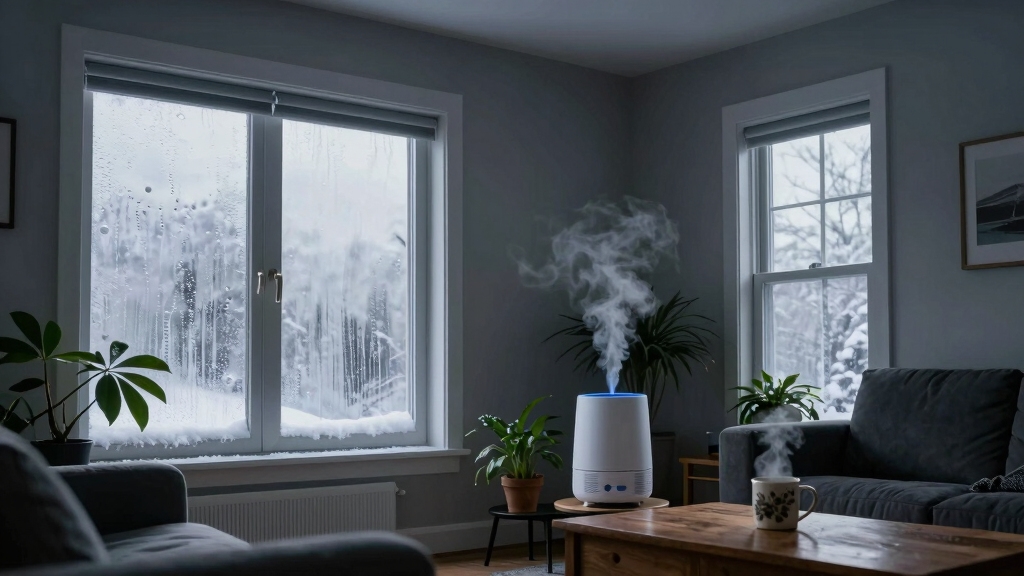
Because tightly sealed homes substantially reduce natural air infiltration, they trap internally generated moisture that raises indoor relative humidity (RH) levels during winter. This makes managing humidity levels inside the space even more critical to prevent expansion or damage to building materials.
Tightly sealed homes trap moisture, increasing indoor humidity during winter.
When air exchange decreases, your home’s moisture accumulates, pushing RH above the 35–45% threshold that heightens condensation risk on cold surfaces like windows and exterior walls.
This trapped moisture can migrate into assemblies, accelerating mold growth and material degradation.
Since natural ventilation drops, mechanical systems such as balanced or exhaust ventilation with heat or energy recovery ventilators become essential to control moisture.
Relying solely on intermittent window opening won’t maintain proper RH levels in airtight homes. Furthermore, limited airflow creates localized humidity gradients, especially in basements or closets, intensifying moisture problems.
Without adequate ventilation and dehumidification, your sealed home faces persistent high humidity and potential indoor air quality issues during winter. A comprehensive approach, including crawl space encapsulatio,n helps prevent moisture intrusion from below, reducing overall indoor humidity.
Moisture Generation From Daily Household Activities
Did you know that you create a lot of indoor moisture just by going about your daily routine? Activities like cooking, showering, and drying laundry really contribute to this, especially during the winter months when you mightn’t have as much ventilation.
For instance, when you cook, you can release hundreds of grams of water vapor every hour. That’s quite a bit! And then there’s showering; just five minutes can add up to 0.38 kg of vapor to the air.
Let’s not forget about drying clothes indoors. That can really pump out liters of water over several hours. All of this moisture builds up and can lead to elevated humidity levels inside your home.
It’s pretty interesting how our everyday activities can impact the air we breathe, isn’t it? Proper ventilation helps reduce the concentration of indoor moisture and maintain healthier air quality.
Cooking and Water Vapor
Cooking contributes markedly to indoor humidity during winter by releasing water vapor through boiling, steaming, and evaporation from food. When you prepare meals multiple times daily, the vapor load increases markedly, especially without proper ventilation.
Research shows cooking can raise indoor moisture by several kilograms per day, influencing relative humidity beyond 50%, which favors dust mite proliferation. Key points to contemplate include:
Boiling water and steaming release 0.20–0.38 kg of vapor quickly, spiking local humidity. Dishwashing, whether by hand or appliance, adds additional steam post-cooking. Open pots and inefficient exhaust systems trap moisture indoors.
Daily meal routines consistently elevate indoor moisture, amplifying winter humidity. Understanding these factors helps you manage humidity by improving ventilation and controlling cooking methods effectively. Using a ventilation system with proper exhaust can significantly reduce indoor moisture buildup during cooking.
Showering and Moisture Release
Releasing water vapor during showering markedly impacts indoor humidity levels, especially in winter months. A typical 5-minute shower emits 0.20–0.38 kg of water vapor, contributing appreciably to daily household moisture, often multiple kilograms per day.
Longer, hotter showers increase evaporation rates, generating higher vapor fluxes. When bathroom doors and windows stay closed, and ventilation is inadequate or fans are undersized or underused, moisture accumulates. This causes localized humidity spikes that spread to adjacent rooms.
Condensation forms on cooler surfaces like windows and walls, increasing moisture loading in building materials. This moisture can re-evaporate later, prolonging elevated humidity. Without effective ventilation and prompt moisture removal, repeated showers raise indoor absolute humidity.
This increases condensation risk and potential damage to porous surfaces, particularly in poorly insulated or thermally bridged areas. Using proper ventilation and moisture control methods, such as vacuuming and sweeping to reduce dust and moisture accumulation, can help maintain healthier indoor humidity levels.
Laundry Drying Effects
Beyond moisture generated by showering, daily household laundry activities markedly influence indoor humidity during winter.
You face slower evaporation rates indoors, as winter humidity hovers around 30-40%. This extends drying times and releases moisture gradually from clothes. Larger laundry loads increase moisture output, intensifying indoor humidity.
Choosing drying methods impacts moisture buildup considerably. Air drying indoors prolongs moisture release, raising room humidity due to low evaporation rates. Forced air circulation speeds drying, reducing moisture exposure and humidity accumulation.
Vented dryers cut drying time by 10% and improve efficiency, limiting indoor moisture more effectively than unvented models. Automatic moisture sensors prevent over-drying, minimizing excess moisture release into the home environment.
Managing these factors helps you control wintertime indoor humidity caused by laundry drying. Avoid excessive moisture and standing water indoors, as these can cause damage similar to the risks associated with excess moisture exposure.
Effects of Poor Ventilation on Humidity Levels
When ventilation is poor, stagnant air can really trap moisture indoors, and that’s when you’ll notice the relative humidity rising significantly. It’s kind of frustrating, right?
Inefficient ventilation systems just can’t keep up with all the excess moisture we generate through our daily activities. This situation can really make condensation issues worse, especially since reducing ventilation only raises RH by a few percent in typical settings. Using a waterproof sealant around windows and doors can help reduce moisture infiltration that worsens indoor humidity.
But here’s the good news: when we improve airflow, we can directly control those humidity levels. This helps keep them in a healthier range and reduces the risks associated with high humidity. So, making some changes to the ventilation can really make a difference!
Stagnant Air Impact
Although you mightn’t notice it immediately, stagnant air markedly raises indoor humidity by preventing moisture from dispersing effectively. When air remains still, moisture accumulates on cold surfaces like windows and basement walls, causing condensation that elevates localized humidity.
Basements are cooler and encourage condensation when contacted by warm indoor air, which further increases moisture levels in the home (basement moisture). This trapped moisture fosters damp microenvironments, ideal for mold growth above 40–50% relative humidity.
Additionally, stagnant air concentrates moisture from daily activities, such as cooking, bathing, and breathing, since limited air exchange fails to dilute indoor humidity. Using dehumidifiers and fans can help manage this moisture buildup by promoting evaporation and reducing humidity.
You’ll also find temperature stratification worsens this effect as warm, moist air layers near ceilings or enclosed rooms, creating pockets of high humidity.
- Condensation frequency rises without air circulation, promoting mold.
- Moisture from daily activities accumulates indoors with low ventilation.
- Weak circulation traps humid air, especially near ceilings and in enclosed spaces.
- Humid stagnant air heightens indoor pollutant and allergen risks.
Ventilation System Efficiency
Since ventilation systems play a critical role in controlling indoor moisture, inefficient or poorly maintained setups directly contribute to elevated humidity levels during winter.
Without a balanced whole-house ventilation strategy, such as HRV or ERV systems, humid indoor air isn’t adequately replaced by drier outdoor air, causing moisture buildup.
All Dantherm residential systems use automatic demand-controlled ventilation via built-in humidity sensors to adjust airflow based on moisture levels, improving humidity control.
Older or undersized units fail to meet air change requirements, allowing routine activities to increase humidity. Poor ducting, like exhaust fans venting into attics or convoluted duct runs, reduces moisture removal efficiency, letting humid air linger indoors.
Opening drain valves at the lowest points in piping branches is essential for proper moisture removal in fire sprinkler systems, illustrating the importance of careful airflow management in ventilation.
Additionally, HVAC systems lacking coordinated controls or with fouled coils reduce dehumidification capacity, worsening indoor moisture. Maintenance lapses, including clogged filters and leaky ducts, further degrade ventilation performance.
To control winter humidity effectively, you must make certain your ventilation system is properly designed, sized, maintained, and integrated with HVAC operations.
Role of Basements and Crawl Spaces in Moisture Build-up
Basements and crawl spaces often serve as hidden reservoirs where moisture can build up during winter, substantially contributing to high indoor humidity. Groundwater intrusion through foundation cracks and failed drainage systems increases moisture levels.
Additionally, condensation forms when warm indoor air contacts cold basement surfaces, raising relative humidity. This occurs because basements lack natural airflow compared with upper levels, trapping moisture.
Airflow patterns, such as the stack effect, draw damp air from these spaces into living areas. Finally, frozen or saturated soils impede drainage, heightening moisture penetration during thaw periods. Proper humidity control and ventilation in these areas are essential to minimize moisture accumulation and prevent damage to flooring and structural components.
Hydrostatic pressure forces groundwater into below-grade spaces via structural gaps. Temperature differentials cause condensation on cold concrete and uninsulated surfaces.
Negative pressure from stack effect pulls moist air from basements upward. Frozen soils exacerbate moisture intrusion during thaw cycles. Understanding these mechanisms helps you manage basement and crawl space moisture effectively.
Limitations of Heating Systems in Moisture Control
When managing indoor humidity during winter, you’ll find that standard heating systems have inherent limitations in moisture control. Forced-air furnaces and heat pumps primarily transfer sensible heat, lacking significant latent capacity for moisture removal.
Heat pumps operating at higher coil temperatures reduce condensation, limiting dehumidification during low-load conditions.
Hydronic systems provide heat without air circulation over coils, resulting in no active moisture removal. Their lack of airflow means they cannot regulate humidity levels effectively.
Additionally, typical HVAC setups focus on temperature setpoints, not humidity, so they can’t maintain recommended 30–50% relative humidity without supplemental devices.
Mini split heat pumps, while energy efficient and popular, are especially limited in dehumidification during humid seasons without additional equipment, highlighting the need for supplemental dehumidification.
Control systems compound these limits: conventional thermostats lack humidity settings, and short cycling reduces condensate formation. Duct leaks and poor insulation introduce unconditioned air, disrupting moisture balance.
Influence of Temperature Changes on Relative Humidity
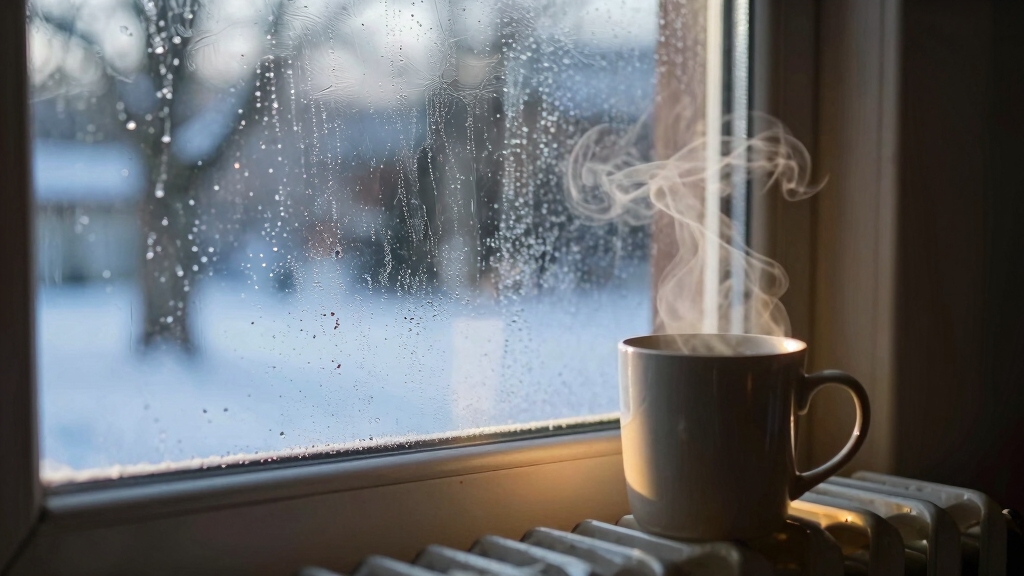
Although indoor moisture levels may remain constant, temperature changes directly affect relative humidity (RH) because RH measures the ratio of actual water vapor to the maximum the air can hold at that temperature.
When indoor air cools, RH rises even if absolute humidity stays the same, pushing air closer to saturation. Conversely, heating dry indoor air lowers RH by increasing the air’s capacity to hold moisture.
Small temperature shifts, like thermostat setbacks, markedly alter RH due to the exponential relationship between temperature and vapor pressure. Consider these effects:
- Cooling indoor air elevates RH, risking condensation if dew point is reached.
- Heating without adding moisture reduces RH, drying the air.
- Temperature stratification causes spatial RH variability inside your home.
- Rapid infiltration of cold outdoor air lowers indoor RH until reheated.
How Cold Surfaces Trigger Condensation Problems?
Since condensation forms whenever warm, moist air meets a surface cooler than the dew point, you need to understand how cold surfaces initiate this process inside your home.
When warm air contacts a surface like a metal window frame or poorly insulated wall, heat transfers from the air to the cold surface via conduction. This rapidly cools the adjacent air below its dew point.
This causes water vapor to saturate and condense into liquid droplets. Materials with low thermal resistance exacerbate this by allowing surface temperatures to plunge quickly, especially during winter when outdoor temperatures drop sharply.
Surfaces below about 7°C (45°F) attract moisture even from moderately humid air. This condensation often appears on windows and metal frames, triggering localized moisture buildup that can worsen indoor humidity conditions.
Improving insulation with a higher R-value can help maintain warmer surface temperatures and reduce condensation risk.
Consequences of High Indoor Humidity During Winter
Cold surfaces causing condensation don’t just create visible moisture; they set the stage for significant indoor humidity problems during winter.
Cold surfaces lead to condensation, triggering serious indoor humidity issues throughout the winter season.
When humidity rises above 50%, you encourage mold and dust mite growth, both of which worsen respiratory health. You also risk structural damage as trapped moisture leads to wood rot and damages furnishings.
Additionally, excess moisture drives up your energy costs by making indoor air feel damp and chilly, reducing comfort. Mold and dust mites flourish above 50% humidity, triggering allergies and asthma.
Prolonged exposure to these allergens increases respiratory infections and chronic issues. Condensation causes wood rot and damages furniture and flooring in tightly sealed homes.
High humidity levels raise energy bills due to decreased air quality and comfort. Maintaining indoor humidity below 60% is important as excess moisture can jeopardize structural integrity over time.
Strategies to Manage and Reduce Winter Humidity
Effectively managing winter humidity requires a combination of targeted strategies tailored to your home’s specific moisture sources and conditions. You should consider whole-house dehumidifiers sized to your home, local portable units for high-moisture areas, and ventilation adjustments.
Proper maintenance and controls guarantee efficient operation and prevent mold growth. Monitoring indoor humidity with a hygrometer can help you maintain it within the recommended range for comfort and health.
| Strategy | Key Action | Benefit |
|---|---|---|
| Whole-house dehumidifier | Match capacity, integrate HVAC | Continuous humidity control |
| Local dehumidifiers | Place near moisture sources | Targeted moisture removal |
| Ventilation | Use exhaust fans post-activity | Prevent moisture buildup |
| Dryer/Combustion vents | Ensure outdoor termination | Avoid indoor humidity increase |
| Maintenance | Clean filters, drains regularly | Maintain system efficiency |
Frequently Asked Questions
How Do Different Building Materials Affect Indoor Humidity in Winter?
Different building materials impact your indoor humidity by influencing moisture retention and vapor diffusion. Exterior insulation keeps walls warmer, reducing condensation. Poor insulation allows cold air infiltration, causing humidity swings.
Traditional stick framing stores moisture but risks condensation without proper air sealing. Vapor barriers control moisture flow; without them, thin foam limits vapor diffusion, stabilizing humidity.
Windows condense moisture at high indoor RH, signaling the need to lower humidity for balanced indoor air quality.
Can Indoor Plants Significantly Increase Winter Humidity Levels?
Wondering if indoor plants can really boost your winter humidity? Generally, they can’t raise whole-room humidity noticeably unless you have a high density of large-leaved plants in a small, enclosed space.
While plants release moisture through transpiration, their effect is minor compared to mechanical humidifiers. To maximize plant humidity, keep soil moist and cluster plants in humid rooms or terrariums. But don’t rely on them alone to combat dry winter air.
Does Using Humidifiers in Winter Worsen Condensation Problems?
Yes, using humidifiers in winter can worsen condensation problems if you don’t control humidity levels carefully. When humidifiers add excess moisture, warm indoor air contacts cold surfaces, causing condensation.
Oversized units or continuous operation without ventilation increase this risk. You should monitor indoor relative humidity with a hygrometer and adjust settings based on outdoor temperatures, keeping levels typically between 25% and 40% to avoid moisture buildup and related damage.
How Does Snow Accumulation Around a House Impact Indoor Moisture?
Snow accumulation around your house increases ground moisture as meltwater infiltrates soil near the foundation.
This raises vapor pressure, driving moisture indoors through walls, slabs, and air leaks.
The trapped meltwater vapor insulates and saturates exterior sheathing and insulation, reducing their effectiveness.
Consequently, you may notice elevated indoor humidity levels, especially if ventilation is poor.
This can potentially raise relative humidity near or above 60%, increasing condensation and mold risk during winter.
What Role Does Attic Ventilation Play in Controlling Winter Humidity?
Imagine your attic as a gust of revitalizing air, constantly exchanging stale, moist air with the outdoors.
Attic ventilation plays an essential role in controlling winter humidity by equalizing attic and outside temperatures. This prevents condensation on cold surfaces.
Proper airflow through ridge and soffit vents removes trapped moisture, protecting insulation and structural components.
By maintaining balanced humidity levels, you reduce risks of mold, wood rot, and energy loss. This ensures your home stays dry and efficient all winter long.
Protect Your Home From Mold and Moisture Damage
You might be surprised to learn that indoor humidity levels can rise above 60% in tightly sealed homes during winter, markedly increasing condensation risks.
Since everyday activities and poor ventilation add moisture that heating systems often can’t fully control, understanding these factors helps you manage humidity effectively.
By addressing ventilation, sealing leaks, and using dehumidifiers, you can prevent mold growth and structural damage, ensuring a healthier, more comfortable home throughout the cold months.