
Can You Put Radiant Floor Heat Under Hardwood? Expert Tips
You can put radiant floor heat under hardwood if you choose engineered wood or stable species like oak with narrow planks. These types handle heat and moisture changes better.
Proper acclimation, maintaining humidity between 30%-50%, and keeping surface temperatures under 85°F are vital to prevent warping or gaps.
Installation methods like floating floors with expansion gaps also help manage movement. If you want to understand the best wood types, heat transfer, and installation techniques, keep exploring these essential details.
Key Takeaways
- Radiant floor heat can be installed under hardwood if the wood species and construction are stable and approved by the manufacturer.
- Engineered hardwood is preferred over solid hardwood for radiant heat due to better dimensional stability and reduced expansion risks.
- Maintain indoor humidity between 30%-50% and keep surface temperatures below 85°F to prevent wood warping or damage.
- Narrow plank widths under 3 inches and proper acclimation to subfloor moisture enhance hardwood performance over radiant heat.
- Follow installation guidelines like leaving expansion gaps and using floating methods to accommodate natural wood movement.
Hardwood Flooring Compatibility With Radiant Heat
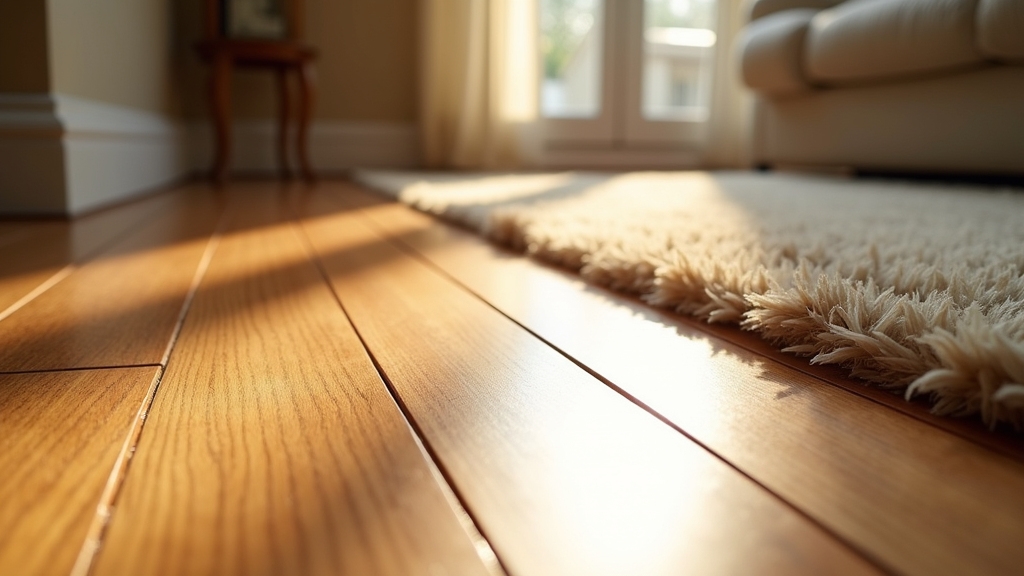
Although radiant floor heating offers efficient warmth, not all hardwood flooring types perform well with it. You need to choose species and constructions that maintain dimensional stability under fluctuating temperatures and humidity. A vapor barrier is also essential to prevent moisture from affecting the wood and to aid in heat distribution. Maintaining consistent humidity levels during and after installation helps minimize expansion and contraction issues.
Engineered hardwood is usually your best option because its layered construction minimizes expansion and contraction, reducing risks like warping or cupping.
Solid hardwood can be problematic unless the manufacturer explicitly approves it for radiant heat.
Denser species may conduct heat efficiently but require careful acclimation to avoid stress damage.
Additionally, narrow-strip hardwoods tend to fare better than wide planks, as their smaller dimensions help limit movement.
For installation, floating or glue-down methods allow necessary flexibility, while proper acclimation and adherence to manufacturer guidelines are vital to guarantee long-term performance over radiant heating systems.
Heat Conductivity and Thermal Performance of Hardwood
Understanding the heat conductivity and thermal performance of hardwood is key when selecting flooring for radiant heating systems.
Hardwood’s thermal conductivity ranges from 0.1 to 0.2 W/(m·K), markedly lower than tile or stone, which are over ten times more conductive. Care should be taken to avoid using double-sided carpet tape on hardwood floors as it may cause damage when heated.
Hardwood’s thermal conductivity is 0.1 to 0.2 W/(m·K), significantly less conductive than tile or stone.
Denser species like oak or maple transfer heat more efficiently than softer woods.
This lower conductivity means hardwood heats up more slowly but retains warmth well due to its insulating properties, contributing to consistent ambient temperatures.
Factors such as wood species, plank thickness, and moisture content influence heat transfer rates.
While hardwood reduces radiant system efficiency compared to high-conductivity materials, proper subfloor insulation and choosing denser hardwoods can mitigate these losses and optimize thermal performance without compromising comfort.
Engineered wood offers improved stability and heat transfer, making it a popular choice for radiant heated floors.
Managing Expansion and Contraction Challenges
When installing hardwood over radiant floor heating, you’ll need to carefully manage expansion and contraction to maintain flooring integrity.
Choose hardwood species with lower movement coefficients, like maple or hickory, or opt for engineered hardwood, which offers superior dimensional stability due to its layered construction.
Control indoor humidity rigorously, maintaining it between 30% and 50% to minimize moisture-driven wood movement.
Acclimate hardwood to the subfloor’s moisture content before installation, ensuring all components fall within a 3-4% moisture range.
Avoid wide planks, as boards over 3 inches are more prone to seasonal gaps.
Monitor temperature carefully, keeping surface temperatures below 85°F to prevent thermal stress. Radiant heat tends to keep floors closer to summer temperatures, which helps in reducing winter contraction.
Recommended Installation Techniques for Radiant Heat
Since radiant heat systems require careful coordination with flooring materials, you’ll need to select appropriate subfloor materials, wood species, and installation methods that guarantee durability and performance.
Start with a stable subfloor like 5/8″ plywood or 3/4″ oriented strand board, avoiding particleboard. Choose engineered hardwood for its dimensional stability or solid species such as American Red Oak, ensuring plank widths under 3″.
Acclimate wood for 2–3 days before installation.
Follow these installation techniques:
- Use floating installation to allow natural expansion and contraction.
- Run tubing perpendicular to planks and protect it with nail plates.
- Leave a 1/8″ expansion gap around the perimeter using spacers.
These steps ensure consistent heat distribution, prevent damage, and maintain floor integrity over time. Additionally, always dry floors thoroughly after any cleaning or installation to avoid moisture-related issues that can cause dark spots and discoloration.
Manufacturer Guidelines and Ongoing Maintenance
Following proper installation techniques, you’ll need to adhere strictly to manufacturer guidelines to guarantee your radiant floor heating system performs reliably and your hardwood floor remains protected. Regular cleaning methods, such as vacuuming hardwood floors with appropriate attachments, can help maintain the floor’s longevity alongside the heating system.
Strictly following manufacturer guidelines ensures reliable radiant heating and protects your hardwood flooring.
Manufacturers align with NWFA standards, specifying approved subfloor types, adhesives, wood species, and plank dimensions. The updated NWFA guidelines place installation responsibilities clearly on installers to verify radiant heat system compliance before proceeding.
Maintaining surface temperatures below 80°F–85°F and relative humidity between 35%–55% is critical to prevent wood damage.
During installation and operation, control room temperature within 65°F–85°F and avoid rapid fluctuations to minimize expansion and contraction.
For ongoing maintenance, operate the system per manufacturer and NWFA protocols, using exterior thermostats to prevent overheating and condensation.
Regularly monitor temperature and humidity, ramping system output gradually to reduce stress.
Failure to comply risks voiding warranties, so document adherence to all guidelines and obtain approval for any system modifications.
Frequently Asked Questions
Can Radiant Floor Heating Increase Hardwood Floor Lifespan?
Yes, radiant floor heating can increase your hardwood floor’s lifespan by providing consistent, even heat that reduces moisture fluctuations and limits expansion and contraction.
Lower operating temperatures eliminate thermal stress common with forced-air systems, preserving wood integrity.
Proper installation and maintenance guarantee your hardwood stays stable and durable.
Additionally, radiant heat’s silent operation and reduced airborne dust help maintain floor finishes, extending both the hardwood and heating system’s longevity effectively.
What Is the Average Cost Difference Installing Radiant Heat Under Hardwood?
You’ll typically pay about $3 to $10 more per square foot to install radiant floor heat under hardwood compared to laminate.
This difference primarily arises from hardwood’s higher material cost and the specialized installation needed to prevent heat damage and expansion issues.
Labor costs also climb due to moisture barriers and precise subfloor prep.
How Quickly Does Radiant Heat Warm a Hardwood Floor?
Radiant heat typically warms a hardwood floor within 30 to 60 minutes, depending on your system design.
If you use low thermal mass panels or mats, heat-up is faster, about six times quicker than concrete slabs.
Keep in mind hardwood’s higher thermal resistance slows surface warming, so you might need higher supply water temperatures (105°F to 140°F).
Proper insulation, flow rates, and zoning also impact how quickly your hardwood floor reaches comfort levels.
Are Certain Hardwood Finishes Better for Radiant Heated Floors?
Absolutely, some hardwood finishes outperform others on radiant heated floors. You’d want to avoid finishes that crack or peel under heat stress.
Water-based polyurethane is a superstar, offering flexibility and resistance to cracking.
Aluminum oxide and UV-cured finishes are also top-tier, providing durability and stability against temperature swings.
Prefinished hardwood with factory-applied finishes is your safest bet, as they’ve been rigorously tested for dimensional stability with radiant heat systems.
Can Radiant Heat Cause Discoloration in Hardwood Flooring?
Yes, radiant heat can cause discoloration in hardwood flooring if temperatures exceed 80°F (27°C) or fluctuate rapidly.
You’ll notice fading, darkening, or uneven color changes due to heat drying the wood and affecting finishes.
Certain species and finishes react differently, so managing temperature, humidity, and UV exposure is essential.
To prevent discoloration, keep floor temps steady, use UV-protective finishes, and maintain proper humidity between 30-50%.
Maximize Hardwood Longevity With Proper Radiant Heat Practices
You might think radiant floor heat and hardwood don’t mix, but with the right approach, they can create the perfect harmony beneath your feet.
Understanding heat conductivity, managing wood’s natural expansion, and following precise installation techniques are essential.
Before you start, make sure you’ve reviewed manufacturer guidelines carefully.
When done correctly, radiant heat under hardwood offers efficient warmth without compromising your floor’s integrity.
Are you ready to transform your space into a cozy, controlled environment?