
Coarse vs Fine Drywall Screws: Key Differences Explained
You should choose coarse drywall screws for wood studs and softer materials because their wide, deep threads grab securely and install faster with fewer turns.
Fine drywall screws are better for metal studs, offering a tighter grip on thin steel without damaging it, thanks to their closely spaced threads.
Both types need proper corrosion-resistant coatings for durability. Picking the right screw ensures strength and efficiency in your drywall project. Exploring further will reveal key tips and best practices for maximum results.

- SUPERIOR SCREW: Composed of high strength 1022A carbon steel. The heat-treated thread is very clear…
- VARIOUS SIZES: A kit of drywall screws in 6 commonly used sizes( #8 x 3 in, #6 x 2 in, #6 x…
- WIDE USE: The screw set can be used for plank, gypsum board, composite board, soft metal, plastic…
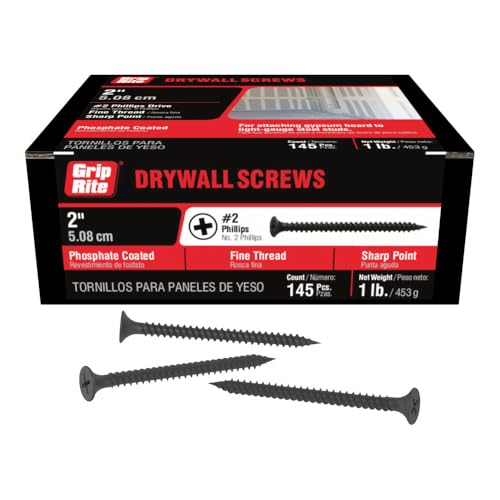
- FINE THREADS: For attaching drywall to light gauge steel studs
- PHOSPHATE COATED: For improved paint and mud adhesion
- BUGLE HEAD: #2 Philips Bugle head for easy countersinking into drywall
Key Takeaways
- Coarse drywall screws have wider threads ideal for wood studs, providing strong grip and faster installation.
- Fine drywall screws feature closely spaced threads designed for metal studs, ensuring better hold and reduced damage.
- Coarse screws resist stripping in softer materials; fine screws offer higher tensile strength in steel framing.
- Both screw types require appropriate corrosion-resistant coatings like zinc or phosphate for durability.
- Proper screw choice based on stud material prevents joint failure and ensures long-term drywall stability.
Coarse & Fine Drywall Screws Comparison
| Feature / Factor | Coarse Drywall Screws | Fine Drywall Screws |
|---|---|---|
| Best substrate | Wood studs and other softer framing materials, where the screw can bite deeply and hold firmly. | Metal studs and thin steel, where closely spaced threads can tap and grip without stripping. |
| Thread design | Wide, deep threads with larger pitch, meaning fewer threads per inch for faster penetration. | Narrow, closely spaced threads with more threads per inch, giving finer adjustment and consistent engagement in metal. |
| Installation speed | Typically faster to drive because the aggressive thread advances quickly through wood with fewer rotations. | Often slower to install as more threads engage the metal, but this delivers a controlled, secure bite. |
| Holding power | Offers excellent pull-out resistance in wood, reducing the risk of loosening, sagging, or screw pops over time. | Provides strong pull-out resistance in metal studs, where multiple contact points along the thread increase grip. |
| Typical screw point | Usually features a sharp point designed to pierce and cut into timber efficiently. | Often supplied with a self-tapping or self-drilling point to penetrate light‑gauge steel without pre‑drilling. |
| Surface finish and coatings | Commonly available with phosphate or zinc coatings; may require galvanized or stainless options in damp or exterior environments. | Frequently finished with black phosphate or zinc for metal framing; higher‑grade coatings are used where corrosion resistance is critical. |
| Ideal applications | Interior drywall to wood studs, ceilings on timber framing, and general residential framing where speed and strong bite are priorities. | Drywall to light‑gauge metal studs, commercial partitions, and steel framing systems that demand clean penetration and reliable hold. |
| Risk when misused | In metal, coarse threads can strip, wobble, or fail to seat properly, weakening the connection. | In wood, fine threads can pull out more easily and snap under load, reducing overall fastening reliability. |
Differences in Thread Design
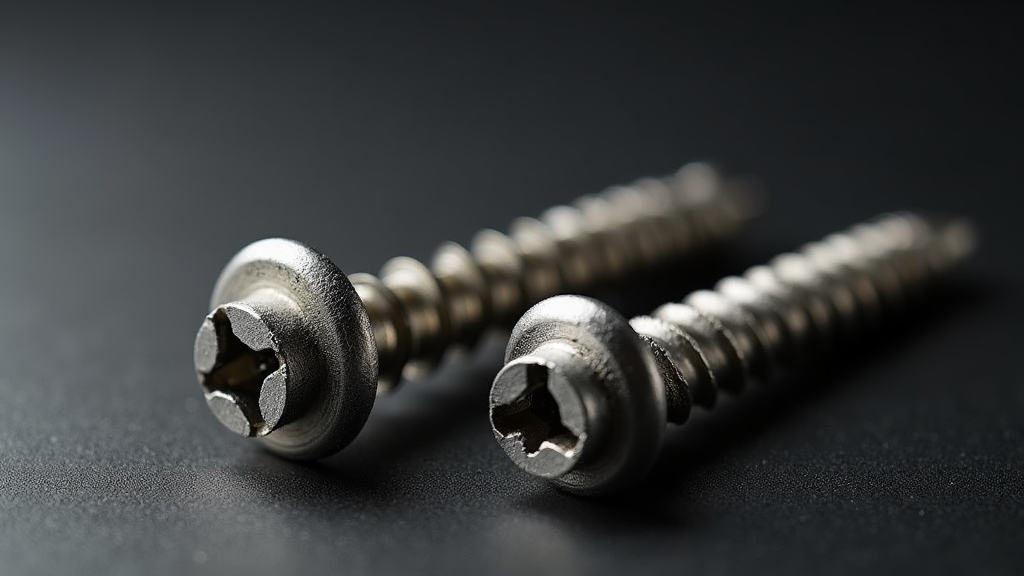
When choosing between coarse and fine drywall screws, you need to understand their distinct thread designs, which directly affect performance and application.
Coarse screws have a larger thread pitch with wider spacing and fewer threads per inch, enabling faster penetration into softer materials like wood. Their deeper, wider threads provide a robust bite and resist stripping or cross-threading.
However, it is important to consider that materials like wood can be chemically and structurally affected by certain treatments, which may impact fastening integrity over time, especially if exposed to chemical degradation.
In contrast, fine screws feature narrower thread spacing with more threads per inch, offering finer adjustments and a stronger grip in hard materials such as metal studs. Their shallower threads reduce cutting force, facilitating easier tapping into metals.
Additionally, coarse screws have sharp points for wood, while fine screws use self-tapping points for metal. This thread design difference impacts installation speed, grip strength, and suitability for specific framing materials. They are also made from hardened steel, which ensures durability and strength during fastening.
Material Suitability for Coarse and Fine Screws
Although both coarse and fine drywall screws serve to fasten drywall, their effectiveness depends largely on the material you’re working with.
Coarse-thread screws excel with wood studs, offering strong anchoring via wide, deep threads that penetrate soft timber easily. Fine-thread screws, by contrast, are engineered for metal studs, featuring narrow, closely spaced threads that self-tap and grip thin metal securely.
Their design makes them ideal for metal framing where durability and grip in thin materials are critical. Proper care and maintenance, such as avoiding excessive moisture, help preserve the integrity of fastening materials over time.
Consider these points when selecting screws:
- Use coarse-thread screws for wood studs and wood-based panels; they minimize splitting and stripping.
- Opt for fine-thread screws for metal studs to ensure tight fit and reduce damage risk.
- Avoid coarse-thread screws on metal and fine-thread screws on wood for ideal hold.
Selecting the right screw thread type ensures efficient fastening and material compatibility.
Strength and Holding Power Comparison
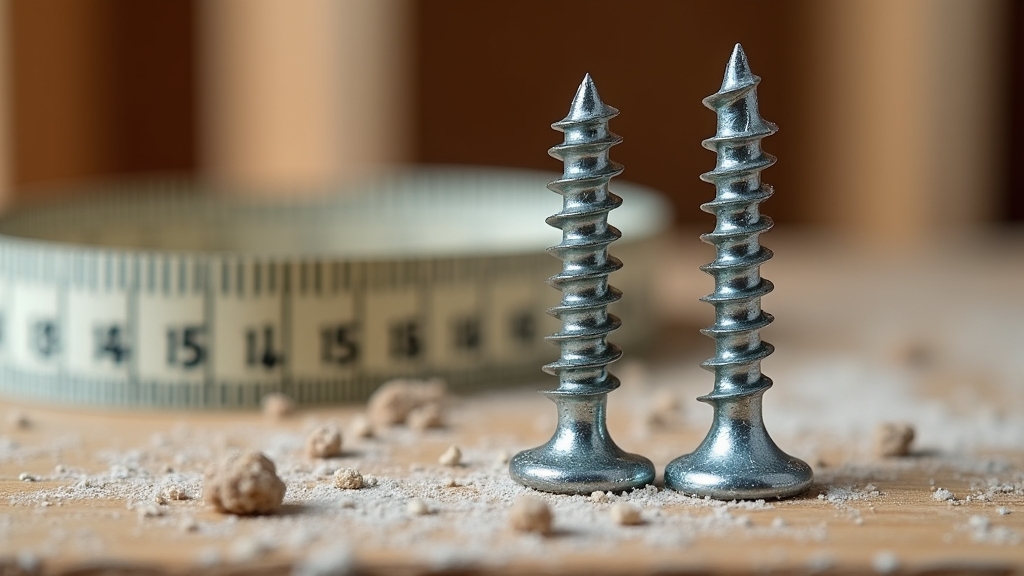
Because screw strength and holding power directly impact fastening reliability, choosing between coarse and fine drywall screws depends on your application’s material and load requirements.
In wood, coarse-thread screws provide superior holding power due to wider threads that enhance grip and resist stripping. This ensures long-term stability and offers better pull-out resistance in thin materials through a clamping action that fine threads can’t achieve.
Conversely, fine-thread screws excel in metal applications, especially steel studs, where their closely spaced threads create more contact points and superior pull-out resistance.
Although fine-thread screws generally have higher tensile strength from their larger minor diameter, coarse-thread screws’ larger cross-sectional area delivers sufficient strength for most wood projects.
Select coarse screws for wood framing and fine screws for metal to optimize fastening performance. Handle and dispose of construction materials responsibly to avoid health and environmental risks associated with improper practices.
Installation Techniques and Tips
Since proper installation techniques directly affect drywall durability and appearance, mastering screw selection, placement, and tool use is essential.
Choose coarse-thread screws for wood studs to speed installation with fewer rotations. Fine-thread screws suit metal studs, requiring more turns but guaranteeing a secure fit. It is important to use fine thread screws on light gauge steel studs to ensure solid fastening and reduce issues like screw pops.
Additionally, treating wood with fire retardant products can enhance safety in installations involving wooden framing. Use a drywall screw gun or cordless drill with correct torque to prevent damage.
Follow these key steps:
- Locate and mark studs precisely; maintain consistent screw spacing: 300 mm on vertical studs and 200 mm near stress points.
- Position screws 10-15 mm from drywall edges; drive screws just below the surface without breaking the paper.
- Use self-tapping or self-drilling screws on metal studs to reduce pre-drilling and improve speed.
Corrosion Resistance and Durability
When selecting drywall screws, you need to focus on the material and coating to guarantee corrosion resistance, as thread type alone doesn’t determine rust protection.
Both coarse and fine thread screws rely on external coatings such as zinc, phosphate, or galvanization for corrosion defense. Fine thread screws often feature black phosphate or zinc coatings, especially for metal stud use where rust prevention is critical.
Note that corrosion resistance is primarily determined by the fastener’s material and plating or coating, not the thread profile. Choosing the correct coating is essential to ensure long-term performance and to prevent rust-related failures.
Both coarse and fine thread screws depend on coatings like zinc or phosphate to resist corrosion, crucial for metal studs.
Coarse threads, while providing superior grip and durability on wood studs, are prone to rust if left uncoated, particularly in humid environments. High-carbon steel with phosphate coating offers balanced corrosion resistance and strength for interior use.
For exterior or moist conditions, opt for stainless steel or hot-dip galvanized screws. Ultimately, durability depends on thread design matching substrate and the corrosion-resistant coating applied.
Recommended Applications by Screw Type
Selecting the right drywall screw goes beyond corrosion resistance and durability. It hinges on matching screw type to your specific application. Using the appropriate screw ensures maximum holding power and structural integrity.
- Coarse Thread Screws: Ideal for wood stud framing and ceiling drywall installation. Their wider threads embed deeply into softwood, providing superior pullout resistance and quick installation. Use them for residential projects and overhead applications requiring sustained load support. Coarse thread screws typically measure 6 or 8 gauge, with lengths from 1 1/4 to 2 1/2 inches, optimizing their grip in softwood fibers.
- Fine Thread Screws: Designed for metal stud framing, these screws feature tighter threads for a secure grip on steel studs. Their self-threading capability eliminates pilot holes, enhancing installation speed and precision in commercial or light gauge steel structures.
- Specialized Applications: Employ coarse threads for heavy gauge steel framing where rapid installation and strong connections are necessary. Fine threads suit high-tolerance steel frame systems demanding enhanced tensile strength and stability. Choosing the proper screw based on stud material and environmental factors is essential for project success.
Common Mistakes When Choosing Drywall Screws
Although drywall screws may seem straightforward, choosing the wrong type or size can severely compromise your installation’s strength and durability.
Avoid common mistakes like incorrect screw length, improper thread type, and poor spacing. Over-driving or under-driving screws weakens joints and affects finish quality. Selecting screws with the appropriate thread design tailored for drywall ensures optimal performance.
Using the right fastener type is as crucial as using pH-neutral cleaning agents to maintain surface integrity in other home improvement contexts. Always match screw type to stud material and maintain proper spacing to guarantee stability.
| Common Mistake | Consequence |
|---|---|
| Wrong screw length | Weak hold or stud splitting |
| Incorrect thread type | Reduced fastening effectiveness |
| Poor screw spacing | Drywall sagging or bulging |
| Over/under-driving screws | Joint weakening and surface damage |
| Ignoring pilot holes | Panel cracking and weak joints |
Frequently Asked Questions
Can I Mix Coarse and Fine Screws in the Same Drywall Project?
You shouldn’t mix coarse and fine drywall screws in the same project. Using both creates inconsistent fastening strength and uneven material engagement, which compromises structural integrity.
It also complicates quality control and increases the risk of installation errors. To guarantee reliable performance and a professional finish, stick to one screw type matched to your substrate.
Use coarse screws for wood studs and fine screws for metal studs. This approach simplifies installation and maintains load-bearing capacity.
Are There Differences in Screw Head Designs Between Coarse and Fine Screws?
No, you won’t find differences in screw head designs between coarse and fine drywall screws.
Both use the same bugle head, engineered to prevent tearing the drywall paper and guarantee the screw sits flush or slightly below the surface.
This head design is standardized across drywall screws, maintaining consistent diameter and compatibility with standard drywall screw bits.
How Do Coarse and Fine Drywall Screws Affect Drywall Finishing Quality?
You’ll notice coarse screws grab wood studs fast but may leave larger dimples needing more mud. Fine screws glide into metal studs with precision, creating smaller, neater dimples.
Using coarse screws on wood guarantees strong fastening and reduces screw pops.
Fine screws in metal studs prevent cracking and vibration loosening.
Selecting the right screw type and driving depth ensures a durable, smooth drywall finish with minimal surface defects and rework.
What Tools Are Best for Driving Coarse Versus Fine Drywall Screws?
You should use cordless drills with clutch control and Phillips drive bits for coarse drywall screws to prevent overdriving and guarantee secure placement.
Auto-feed screwdrivers speed up coarse screw installation.
For fine drywall screws, opt for low RPM cordless drills with precise torque control and Pozidriv or Phillips bits to avoid stripping.
Magnetic bit holders and adjustable-depth auto-feed screwdrivers help maintain consistent countersinking and accuracy during fine screw driving.
Do Coarse or Fine Screws Impact Drywall Soundproofing Performance?
Coarse and fine drywall screws don’t substantially impact soundproofing performance.
Your choice should match stud type: coarse for wood, fine for metal, not acoustic benefits.
Both create similar holes, minimally affecting sound transmission.
To optimize soundproofing, focus on proper screw depth, spacing, and sealing holes with acoustic caulk.
Avoid Common Fastening Mistakes With the Right Screw Choice
When choosing between coarse and fine drywall screws, remember they’re not just different threads; they’re tailored tools. Coarse screws bite into wood like a hawk’s talons, offering superior grip. Fine screws excel in metal framing with precision.
Understanding their strengths and applications guarantees your project stays solid and secure. Avoid common pitfalls by matching screw type to material, and you’ll fasten with confidence every time. No guesswork, just reliable results.

- ENHANCED MUD AND PAINT ADHESION: Grip-Rite coarse drywall screws feature phosphate coating for…

- [ Strong and Durable ] Our wood screws are made of high quality Carbon Steel with black phosphate…
- [ Superior Process ] These drywall screws are #6 in diameter and 1-5/8 inches in length. Our flat…
- [ Application ] Fine thread self-tapping screws can easily pass through various materials, such as…
Last update on 2026-10-13 / Affiliate links / Images from Amazon Product Advertising API